 Sign In



 Australia; VIC; SA; WA; TAS; ACT
Expert Reaction
These comments have been collated by the Science Media Centre to provide a variety of expert perspectives on this issue. Feel free to use these quotes in your stories. Views expressed are the personal opinions of the experts named. They do not represent the views of the SMC or any other organisation unless specifically stated.
Associate Professor Vinod Balasubramaniam is a Molecular Virologist and the Leader of the Infection and Immunity Research Strength from the Jeffrey Cheah School of Medicine & Health Sciences at Monash University in Malaysia
Current Epidemiological Status
"Highly pathogenic H5 bird flu reached mainland Australia in June 2026, first confirmed in a migratory seabird in Western Australia. By 22 August, 298 positive events had been recorded nationally, with South Australia most affected. More than 1,000 greater crested terns have died in mass mortality events. On 23 August, the virus was confirmed in a long-nosed fur seal at Beachport, the first mainland mammal case followed by a second suspected seal near Kangaroo Island. No cases have been found in poultry or farm animals. Public health authorities assess the risk to people as low, with no local human infections reported.
What makes this virus noteworthy is its unusual ability to move between species. Influenza viruses carry their genetic material in eight separate pieces. This design allows two things to happen quickly: small copying errors during replication create mutations, and when two different influenza viruses infect the same cell they can swap whole pieces of genetic material. The result is a virus that can adjust its surface proteins and internal machinery to suit a new host in a relatively short time. Crossing from birds into seals, cattle or other mammals therefore becomes possible, especially when animals share the same environment or food sources.
However, efficient spread between people is a higher barrier. The virus still prefers the receptors found in birds and has not acquired the specific changes needed for easy human-to-human transmission. Most human infections recorded overseas have come from close contact with infected animals, not from person-to-person spread. That is why the risk to the general public in Australia remains low."
Genomic Origins and Transmission Dynamics
"CSIRO sequencing data places Australian viruses in genotype B3.2, closely related to isolates from Heard Island, where the virus caused high mortality among southern elephant seal pups (more than 13,000 estimated deaths) and multiple seabird species from late 2025. At least six or seven independent introductions from the south have been identified; near-identical genomes among South Australian greater crested terns indicate established local transmission. This southern pathway invalidates prior surveillance emphasis on the East Asian-Australasian Flyway. The critical scientific questions now centre on whether mammalian isolates carry adaptive polymerase mutations (PB2-E627K, D701N, Q591K or M631L) and whether repeated seal infections represent independent bird-to-mammal spillovers or the onset of mammal-to-mammal transmission.
International Lessons for Australian Response
"South America illustrated the cost of delayed action: an estimated 30,000 sea lions died within six months from 2022, and more than 17,000 southern elephant seal pups perished in Argentina in 2023, contributing to IUCN Vulnerable listing. Uncollected carcasses amplified transmission via scavengers. North America demonstrated the risk of unmonitored hosts when the virus entered dairy cattle, infecting over 1,000 herds and 167 million birds by April 2025, with 70 occupational human cases and low PPE compliance. European mink-farm outbreaks confirmed sustained mammal-to-mammal transmission under high-density conditions; an ecological parallel to Australian pinniped rookeries during pupping."
Priority Actions Required Immediately.
"Publish weekly genomic surveillance data, with deep sequencing of every mammalian isolate and transparent release of variant frequencies. Initiate a dedicated pinniped package within weeks: a sea-lion vaccination feasibility trial at Seal Bay (drawing on existing cattle-vaccine safety data from North American pinniped trials), systematic carcass removal, and controlled access to rookeries. Expand active serological surveillance and mandatory PPE for wildlife responders, poultry workers and carers; maintain seasonal influenza vaccination to reduce reassortment risk; and secure antiviral stockpiles. Broaden sentinel testing to pigs, domestic carnivores and scavengers while reinforcing poultry biosecurity as the primary agricultural barrier. National animal-health advisers have already concluded that eradication from wildlife is no longer technically feasible; further geographic and species expansion should be expected."
Species-Specific Immunological Considerations. Should we have blanket vaccinations for all species of birds for example?
"Black swans (Cygnus atratus) illustrate why generic assumptions fail. A 2023 Genome Biology study (Karawita, Short et al.) generated the first chromosome-length black-swan genome and transcriptomes. Compared with mute swans and mallards, black swans lack an expanded immune-gene repertoire, show undetectable TLR7 expression in endothelial cells (despite the gene being present), and mount a dysregulated pro-inflammatory response to highly pathogenic avian influenza. TLR7 is a key pattern-recognition receptor for viral single-stranded RNA. These findings, combined with experimental evidence of rapid mortality, underpin the species’ ranking as very high risk in national assessments and its status as a potential indicator species in Western Australia. Any decision to vaccinate black swans must therefore be preceded by species-specific serology, cellular-immunity assays and shedding studies; antibody generation alone does not guarantee reduced transmission."
Vaccination Strategy and Limitations
"Victoria’s programme targeting more than 5,000 little penguins on Phillip Island and at St Kilda is logistically viable because colony attendance permits recapture for the required second dose; approximately 1,000 birds had received the first dose by late August 2026. Vaccination can reduce severe disease and local extinction risk but does not eliminate infection or shedding, and efficacy varies by species. Current Australian policy prioritises certain captive and managed avian populations; no publicly announced trials exist for seals or sea lions. Vaccines remain a targeted firebreak, not a population-wide firewall, and must stay matched to circulating genotypes."
Public Health Guidance and One Health Coordination
"Individual risk remains low because the haemagglutinin (H5N1 surface protein) changes required for efficient human-to-human transmission have not been detected. Do not handle sick or dead birds or marine mammals; keep dogs leashed on beaches; and report clusters immediately to the Emergency Animal Disease Hotline. Sustained coordination across wildlife, veterinary and human-health systems grounded in open genomic data, rapid carcass management and evidence-based, species-specific interventions offers the best remaining opportunity to limit ecological and economic consequences while Australia still retains a degree of control."

Dr Jane Younger is a Lecturer of Southern Ocean Vertebrate Ecology at University of Tasmania
“The first confirmed H5 bird flu infection in a mainland Australian mammal is devastating news for wildlife, but not unexpected. The suspected second case in a fur seal off Kangaroo Island makes this even more worrying, but we need to be careful not to get ahead of the evidence.
What we do know is what this virus is capable of. H5N1 killed more than 17,000 southern elephant seal pups in Argentina in 2023, and around 13,000 pups died at Australia’s Heard Island in 2025. Antarctic fur seals have also suffered enormous losses across the Southern Ocean.
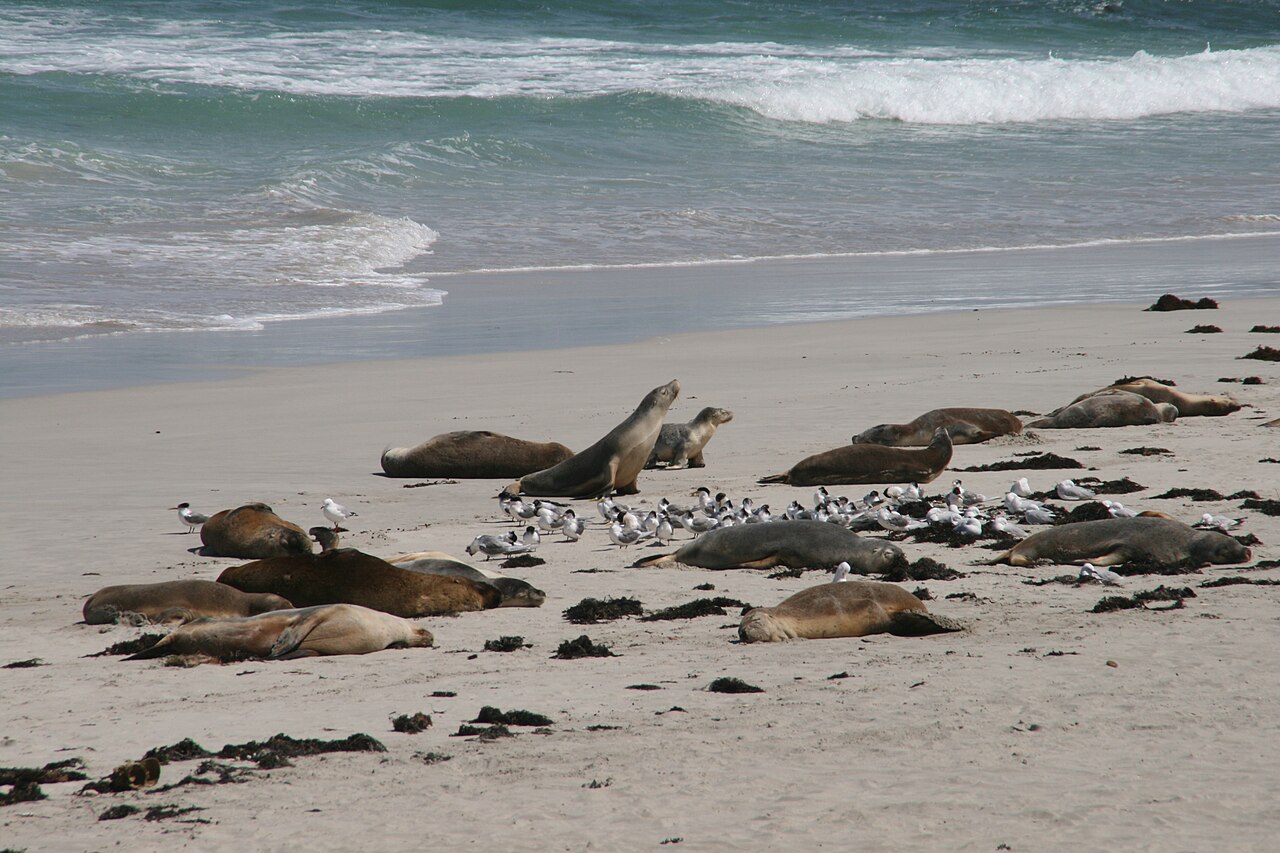
My biggest concern now is the endangered Australian sea lion, which is found nowhere else in the world. Infected and dying seabirds have already been found at important sea lion breeding sites around Kangaroo Island. If the virus enters a breeding colony, there is no way to stop it spreading.
Australia now needs intensive surveillance of seal and sea lion colonies, rapid genome sequencing of mammal cases, and urgent investigation of whether targeted vaccination could protect the small number of populations where it is both feasible and most valuable.”
Associate Professor Bill Bateman is from the Behaviour and Ecology Research Group in the School of Molecular and Life Sciences at Curtin University
"The H5 bird flu jump from birds to marine mammals – the long-nosed fur seal (Arctocephalus forsteri) in this case - was expected but is still horrifying.
When this strain of the virus reached the subantarctic Heard Island in late 2025, it winnowed the populations of southern elephant seals savagely; approximately 75% of the pups died.
This is comparable to what has been seen in other parts of the world, particularly in South America, as the virus has spread. And now it is in Australia: we will see mass mortalities – sealions are susceptible to the virus and, being colonial, it will spread rapidly through their populations.
The particular worry is that, as for some bird species, low population numbers will suffer disproportionately if hit by H5 flu, leaving very few individuals to contribute to any post-virus recovery. For example, Australian sealions Neophoca cinerea are endemic to Australia and are considered Endangered."
Dr Robyn Alders, AO, is an Honorary Professor with the Development Policy Centre at the Australian National University
"The detection of HPAI H5N1 in wild mammals is concerning, but not unexpected given the virus’s ability to infect a wide range of bird and mammal species. Australians can all play a part in reducing the risk of further spread.
If you are visiting wetlands, beaches, farms or wildlife areas, observe wildlife from a distance and avoid contact with sick or dead animals. Clean footwear and equipment with detergent or disinfectant, removing organic material first. Save the Emergency Animal Disease Hotline (1800 675 888) in your phone and report unusual illness or deaths promptly.
We can also help protect our pets and wildlife by keeping dogs on a leash when walking, keeping cats indoors and reducing opportunities for scavenging by feral animals. Cat owners should be particularly mindful that cats are susceptible to H5N1 and, internationally, infection has resulted in high mortality.
People who keep poultry or livestock should prevent contact with wild birds and mammals, protect feed and water from contamination, maintain good hygiene and biosecurity, and report illness promptly.
Wild animals should not be blamed or killed. Surveillance, early reporting, good biosecurity and protecting domestic animals are our most effective tools for reducing the spread of HPAI H5N1.
Now is the time for Australians to work together to limit the spread and impact of this virus. Looking ahead, we also need to understand why this highly virulent strain has emerged and spread so widely across different species, and what we can do to reduce the risk of similarly virulent strains emerging and spreading in the future."
Dr Michelle Wille is an ARC Future Fellow and Outreach Coordinator at the WHO Collaborating Centre for Reference and Research on Influenza at the Doherty Institute, and the University of Melbourne
"The genotype of HPAI H5N1 clade 2.3.4.4b, called B3.2, has unfortunately emerged in pinniped (seal and sea lion populations) in both South America and in the sub-Antarctica. In South America, this virus caused a decrease of 17% in the population of South American Sea Lions and a 31% decrease in the population of South American Fur Seals in Patagonia. A feature of the B3.2 lineage infecting marine mammals in South America that was concerning was some mutations that were likely important in facilitating seal-to-seal spread across the continent.
The lineage of B3.2 that emerged in the sub-Antarctica caused a 47% decline in the number of adult breeding female Southern Elephant Seals on South Georgia Island, and was implicated in the deaths of ~13,000 Elephant Seal Pups on Heard Island. Therefore, it was not entirely unexpected that this virus jumped from seabirds into seals in Australia, given the track record of this particular genotype.
Given the high likelihood that HPAI H5N1 would jump into seals, particularly if the virus arrived through the Antarctica route, my colleague Rachael Gray from the University of Sydney and I have been doing some surveillance for avian influenza in seals in South Australia over the last two years [e.g. this study].
Despite the high likelihood that a virus jump into marine mammals would occur, it is devastating to actually arrive at this milestone.
Now that we are here, it is critical to undertake detailed analysis of the genome sequences from this seal (and all future seals) for two reasons. First, we need to carefully monitor for the emergence of mutations that improve infection of HPAI H5N1 in mammals. These include (but are not limited to) PB2 E627K, which is often described in HPAI H5N1 sequences in foxes and other predators that have been infected, and PB2 D710N, which was critical in the transmission of HPAI H5N1 in seals in South America. Second, we need to identify whether any future detections in seals are due to spillover from birds to seals, or are indicative of seal-to-seal transmission, as this raises the risk of mammalian adaptation."
