 Sign In



 Australia
Expert Reaction
These comments have been collated by the Science Media Centre to provide a variety of expert perspectives on this issue. Feel free to use these quotes in your stories. Views expressed are the personal opinions of the experts named. They do not represent the views of the SMC or any other organisation unless specifically stated.
Dr Michelle Wille is a Senior Research Fellow from the Centre for Pathogen Genomics at The University of Melbourne
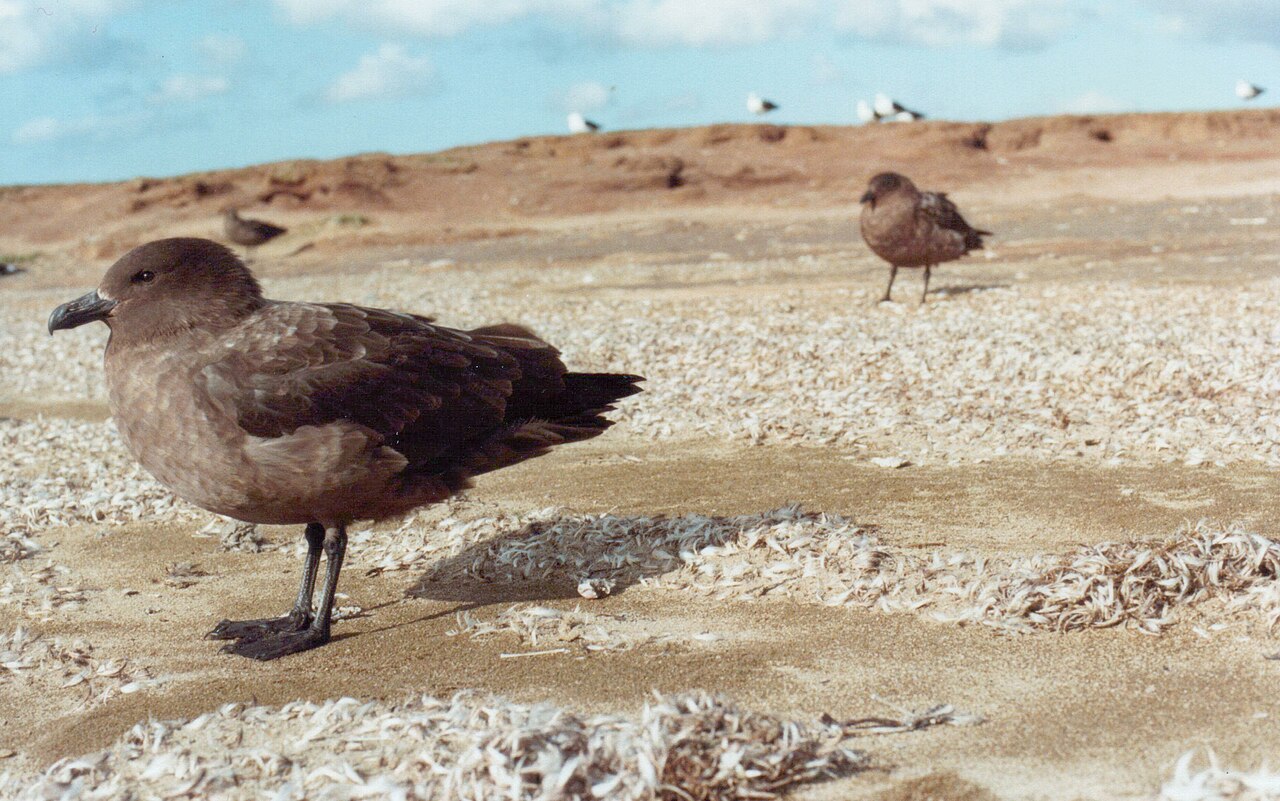
"Unfortunately, it has now been confirmed the brown skua found in Esperance, Western Australia is positive for highly pathogenic avian influenza (HPAI) H5NI by the CSIRO’S Australian Centre for Disease Preparedness, Australia's avian influenza reference laboratory. A giant petrel found in the same area has also been tested, but is not yet confirmed.
Globally, HPAI H5N1 is causing an animal pandemic and has now been detected on all continents.
Since 2024, Australia has undertaken significant preparedness activities in anticipation of the virus’ arrival. A dedicated Australian Government taskforce was established in 2024 to strengthen preparedness for a possible incursion, jointly led by DAFF, Department of Climate Change, Energy, the Environment and Water (DCCEEW), the Australian Centre for Disease Control (CDC) on behalf of the Department of Health, Disability and Ageing (DHDA) and the National Emergency Management Agency (NEMA).
Australian governments have worked together to strengthen national governance to work collaboratively in the event of an outbreak in wildlife and have tested these arrangements through scenario-based exercises.
In expectation of the virus’ arrival to Australia there has been a significant increase in surveillance activities in the last few years, including surveillance conducted by myself in my role at the University of Melbourne at the Doherty Institute and colleagues from Deakin to rapidly detect HPAI H5NI if it were to arrive. This included catching and sampling over 800 migratory seabirds and shorebirds during spring 2025. Spring has been identified as a high-risk period due to the arrival of millions of migratory birds, annually. This work was published on Thursday in Influenza and Other Respiratory Viruses – http://dx.doi.org/10.1111/irv.70281.
Unfortunately, everywhere this virus has emerged has been really catastrophic, with mass mortality events in wildlife, and in some places, we've seen species-level reductions in population.
There have also been significant impacts on industry. For example, since the arrival of the virus in the US, more than 200 million chickens have been culled, which, of course, is bad for birds, bad for farmers and bad for consumers. It has also caused a number of human cases, and generally these human cases are people who work with infected poultry, so poultry workers, or in the US in particular, people who work in the dairy industry, and are exposed to infected cattle.
But overall, the World Health Organization (WHO), Food and Agriculture Organization (FAO), and World Organisation for Animal Health have confirmed that the risk to the general population from this virus remains low. The link to the risk assessment can be found here.
It is really imperative that farmers, people with chooks and wildlife site managers follow the directives of their jurisdictional Departments of Primary Industries and/or Environment. Furthermore, if the public see sick or dead wild birds or marine mammals, it is very important that this is reported. The way to do that is to call the Emergency Animal Disease Hotline, which is 1800 675 888. It works in every state and territory in Australia. Please don't touch the carcasses, but definitely have a look and take some notes about what it is - reporting is the really critical part."

Professor Cassandra Berry is Professor of Immunology at Murdoch University
"As the sample has been confirmed positive for H5N1 it is important to also know the virulence of the virus strain. If the test result confirms a highly pathogenic avian influenza (HPAI) strain, then it is highly lethal for avian species, including susceptible poultry. It is also a biosecurity concern with the potential to be transmissible to some mammalian species.
However, this doesn’t necessarily mean that the next pandemic has started. Contraction of H5N1 influenza in humans usually requires close contact with sick or dying birds. So, it is cautionary to be alert and stay away from distressed birds. Although human-to-human transmission has occurred in other countries, it is rare. Bird-to-human transmission has been associated with a high fatality (~60%). There have been nearly 1,000 cases of human H5N1 infection reported over the last three decades, since H5N1 jumped the species barrier in 1997.
Any feathers, droppings, blood, saliva or environmental soil can be possible fomites, carrying the virus. The virus has a long survival time in the cold, being viable at 4°C for 100 days in places like Antarctica. Skuas were heavily devastated by a recent outbreak in the Antarctic Peninsula.
It was inevitable that the virus was eventually going to enter Australia from the South, especially as it was found on sub-Antarctic Heard Island, only 4,000km from the southwest mainland."
Dr Lauren Roman is a Seabird researcher in the Institute for Marine and Antarctic Studies at the University of Tasmania
"The H5N1 strain of Highly Pathogenic Avian Influenza (HPAI) “bird flu” has killed hundreds of thousands, potentially millions, of wild animals around the world across the last few years. Among the most devastating impacts have been on sea lions and seabirds, especially pelicans, cormorants, terns and gannets.
This incursion does not mean Australia has an outbreak yet, but that we should be all the more vigilant.
We hold high concerns for threatened species such as the Australian sea lion, fairy tern and little terns. In Tasmania, we are particularly concerned for the threatened shy albatross as well as the culturally significant yula/short-tailed shearwater.
Additionally, Tasmania is home to large breeding populations of fur seals, gannets and terns – which have been devastated overseas by this virus.
Winter brings many seabirds from the sub-Antarctic, where there are active outbreaks of HPAI, to the seas off southern Australia.
Now is the time to be extra vigilant to report sick wildlife and mortalities to the 24-hour Emergency Animal Disease Hotline on 1800 675 888, and for Australia to invest in research and actions to protect our unique wildlife."
Dr Eric Woehler OAM is with the Australasian Seabird Group and the Australasian Wader Studies Group, both Special Interest Groups of BirdLife Australia.
"The arrival of bird flu in Australia signals the next phase in the spread of this global pandemic. Australia's unique and remarkable birds are now at risk. We are fortunate to be the last continent on which the virus has arrived, as this has given Federal, State and Territory authorities time to prepare appropriate responses for this day.
In light of the species involved (Brown Skua and Giant Petrel), it appears that the virus has arrived from subantarctic Heard Island, but this will have to be confirmed."
Associate Professor Sanjaya Senanayake is a specialist in Infectious Diseases and Associate Professor of Medicine at The Australian National University
"People should be aware of but not alarmed by this story. This H5 variant of avian flu had already made an incursion into the Australian territory on Heard Island a few months ago. But this is the first time that a diseased bird has been found on the Australian mainland. The positive points to take away from this are:
1. The diseased bird is not near any poultry farms to infect domestic poultry.
2. The chance of this bird leading to human infection is negligible.
3. The fact that we know about this skua bird having H5N1 shows how effective our surveillance is at identifying such emerging infections.
The concern about the clade 2.3.4.4b of H5 avian influenza has been its ability to infect and devastate aquatic mammal populations around the world, and an unexpected incursion into the US cattle industry.
Also, its ability to decimate domestic poultry farms, like so many other strains of avian influenza, means that if the next incursion of an infected wild bird is close to domestic poultry farms, then the consequences could be devastating.
Human cases have occurred, but they aren't frequent. Thankfully, the virus hasn't developed the ability to effectively spread from person-to-person.
Globally, avian influenza has long been identified as a leading candidate for the next pandemic. Like most of these pathogens, it is a zoonosis, being transmitted from animals to humans.
This story highlights the importance of a One Health Approach to address such emerging threats where agricultural, veterinary and human health authorities work together to combat such pathogens.
Australia's new Centre for Disease Control is well placed to work with agricultural and veterinary authorities to keep tabs on this infection."
Sanjay
Associate Professor Vinod Balasubramaniam is a Molecular Virologist and the Leader of the Infection and Immunity Research Strength from the Jeffrey Cheah School of Medicine & Health Sciences at Monash University in Malaysia
"The confirmation of H5N1 on mainland Australia is a biosecurity threshold, not a public-health panic point. Australia has dealt with highly pathogenic avian influenza before, but its poultry outbreaks have historically been H7 events that were contained and eradicated. H5N1 is different. It is not simply a farm outbreak virus; it is now a wildlife, mammal, agriculture and pandemic-preparedness virus.
The confirmed brown skua case in Western Australia, with another sick seabird under confirmatory investigation, should be interpreted as an incursion signal. The critical question is no longer whether H5N1 can reach Australia. It has. The question is whether Australia can stop detection from becoming establishment.
A Virus Testing Ecological Boundaries
H5N1 remains fundamentally avian-adapted. For the general public, the immediate risk remains low. But low public risk must not be mistaken for low biological significance. Since 2021, H5N1 clade 2.3.4.4b has behaved unlike earlier avian influenza waves: it has moved through wild birds at scale, repeatedly spilled into mammals, devastated seabird colonies, infected marine mammals, and entered dairy cattle overseas. That pattern matters. Influenza is an RNA virus with a segmented genome, meaning it can mutate and reassort. Every spillover into a new host is an evolutionary trial. Most trials fail. A few create viral signatures that deserve close attention.
What “Signatures” Should Australia Look For?
The public often hears about “mutations” as if one change creates a pandemic. That is too simplistic. Virologists look for constellations of risk.
First, ecological signatures: repeated detection across species, sites and time. Second, genomic signatures: reassortment with local avian influenza viruses, which may create new genotypes. Third, mammalian-adaptation signatures: changes in polymerase genes such as PB2 that can improve replication in mammalian cells. Fourth, receptor-binding signatures: changes in haemagglutinin that would shift the virus towards human-type receptors in the upper airway. That final shift remains the major missing step for sustained human-to-human spread. In other words, H5N1 is not a human pandemic virus today. But it is a virus actively exploring the biological routes that could make it more dangerous tomorrow.
Preparedness Must Now Become Operational
Australia’s response must move from preparedness documents to live stress-testing. Every positive animal sample should be sequenced rapidly and shared transparently. We need to know the clade, genotype, route of introduction, relationship to Heard Island or other global lineages, and whether there are mammalian-adaptation or antiviral-resistance markers.
Surveillance should expand immediately around seabirds, migratory shorebirds, raptors, scavengers, marine mammals, backyard poultry and commercial poultry interfaces. The poultry sector must tighten exclusion from wild birds: protected feed and water, movement controls, rapid mortality reporting and readiness for housing orders.
Human preparedness should focus on exposed groups, not the general public: wildlife carers, rangers, veterinarians, poultry workers, laboratory staff and responders. They need PPE, testing pathways, antiviral access, seasonal influenza vaccination, and clear occupational monitoring. Seasonal flu vaccination will not prevent H5N1, but it reduces the chance of co-infection with human influenza, the scenario in which reassortment risk becomes more concerning.
Australia has pandemic influenza vaccines and antivirals in its stockpile, but there is no routine H5N1 vaccine for the general public. Stockpiled vaccines are a preparedness tool for targeted deployment if risk changes; they are not a substitute for surveillance, genomics and biosecurity.
The wrong response is panic. The greater danger is complacency. H5N1 has now entered mainland Australia’s risk landscape. The scientific test is how quickly Australia can convert this first detection into genomic intelligence, ecological containment and public trust."
Simon Gorta is a PhD candidate and ecologist in the Centre for Ecosystem Science at UNSW Sydney
"The confirmation of H5 bird flu from the Brown Skua in Western Australia is of significant concern to Australia's wildlife - particularly birds and marine mammals - and poultry industry.
Brown Skuas are a subantarctic breeding seabird that routinely visit our cold temperate waters all around southern Australia in our cooler months, and breed on Australia's external territory of Heard Island and McDonald Islands in the South Indian Ocean, as well as Macquarie Island to the south-east of Tasmania. Skuas are ecologically important predators and scavengers, and are also well known for stealing food from other birds, all of which represent risk factors for them contracting H5 bird flu. Globally, skuas have been hit hard by H5 bird flu, with massive population declines documented in closely related species to the Brown Skua. It was predicted that skuas may represent some of the earliest detected cases of H5 bird flu in Australia - this situation is not unexpected.
In mainland Australia, they spend the vast majority of their time at sea and rarely come to land unless sick or injured. They routinely interact with other seabirds at sea, however, which may represent a transmission pathway for H5 bird flu. Additionally, sick birds coming ashore or floating on the water could be scavenged by other seabirds, seals/sea lions, and terrestrial birds and mammals (e.g., gulls, ravens, kites, eagles), which could also facilitate spread. Importantly, spread has not yet been detected, but everyone should remain on high alert. It is unclear how the skua that tested positive contracted the virus and where it came from. We do know that they breed on Heard Island and other subantarctic islands in the South Indian Ocean, where H5 bird flu has been detected.
Still, the most important thing to do is to remain calm and follow the advice of the authorities. Until now, mainland Australia has been free from H5 bird flu and has benefited from lessons learned from elsewhere in the world, where this virus has spread widely. The government, alongside scientists, have developed protocols and refined surveillance approaches for this exact scenario, which is now unfolding.
If you find a sick or dead bird, follow the government advice here: https://www.agriculture.gov.au/biosecurity-trade/pests-diseases-weeds/animal/avian-influenza/report, via the 24-hour Emergency Animal Disease Hotline on 1800 675 888."
Ricardo J. Soares Magalhães is Professor of Zoonotic Disease Epidemiology and Biosecurity and Director of the Queensland Alliance for One Health Sciences
Professor Ricardo J. Soares Magalhães is Professor of Zoonotic Disease Epidemiology and Biosecurity, and Director of the Queensland Alliance for One Health Sciences at the University of Queensland.
"The fact that this is a sub-Antarctic species indicates a southern pathway of introduction, which is good news in terms of the likelihood of spread. The northern migratory pathway of introduction (ie. via Broome nesting sites) can result in a much wider probability of spread within the Australian continent.
Molecular results on the virus will be able to confirm this as the most likely pathway of introduction by comparing with viruses from cases detected in the Heard Island region.
Indoor raising orders will be a possible repercussion of this detection for free-range systems and intensification of active surveillance in poultry raised in these systems.
The fact that the bird was still alive demonstrates that there are migratory species to Australia that are somewhat more tolerant to the infection, and it is possible that there are others that are in this situation.
Our team has initiated a study to look at variation of immunotolerance to understand the vulnerability to this virus across a range of Australian wild bird species to inform risk assessment and surveillance efforts."
Dr Emma Grant is a Research Fellow and Group Leader within the La Trobe Institute for Molecular Science (LIMS) at La Trobe University
"The Australian Government has reported a confirmed case of H5N1 avian influenza in WA on Saturday. This represents the first detection of the H5N1 virus on mainland Australia, following a confirmed outbreak on Heard Island in late 2025.
H5N1, commonly known as “bird flu,” is a highly pathogenic avian influenza virus that has spread widely across the globe. This strain differs from previous H7 viruses that have caused outbreaks in Australia. Australia has successfully managed HPAI outbreaks before and is well prepared to respond to H5N1 avian influenza.
The risk to human health remains low. Globally, human infections with H5N1 are rare, and there is no evidence of human-to-human transmission.
Australia maintains robust biosecurity systems to protect agriculture and human health. Ongoing surveillance by Wildlife Health Australia plays a critical role in the early detection of avian influenza in wild bird populations.
Members of the public should avoid contact with sick or dead birds and report unusual animal symptoms to authorities. Farmers are advised to minimise contact between domestic poultry and wild birds wherever possible."
Dr Jane Younger is a Lecturer of Southern Ocean Vertebrate Ecology at University of Tasmania
"Testing has confirmed this is the same H5N1 strain that has caused millions of deaths in wild birds and marine mammals globally. Genetic analysis will be essential to tell us where this virus has come from, and whether it is linked to the outbreaks now occurring across the Southern Ocean.
The species involved are important. A brown skua has tested positive, and a sick southern giant petrel from the same area is also being tested. These are Southern Ocean and sub-Antarctic species, suggesting the virus probably reached mainland Australia through Southern Ocean wildlife movements, rather than through the northern hemisphere migratory shorebird route we have been watching closely.
This is a serious development for Australian wildlife. We have already seen devastating mortality in seals and seabirds across the Southern Ocean, with seals dying in the tens of thousands. We should be particularly concerned about vulnerable seabird colonies and Australian fur seal populations.
The public message is simple. Do not touch sick or dead birds or marine mammals. When walking dogs on the beach, be careful to keep them away from carcasses. Record the location, take photos from a safe distance if possible, and report it through official channels."
