 Sign In



 Australia; NSW; QLD; WA
News release
From:
K’gari dingo cull ‘unwise’ and fails to address underlying causes
By Steven Mew, the Australian Science Media Centre
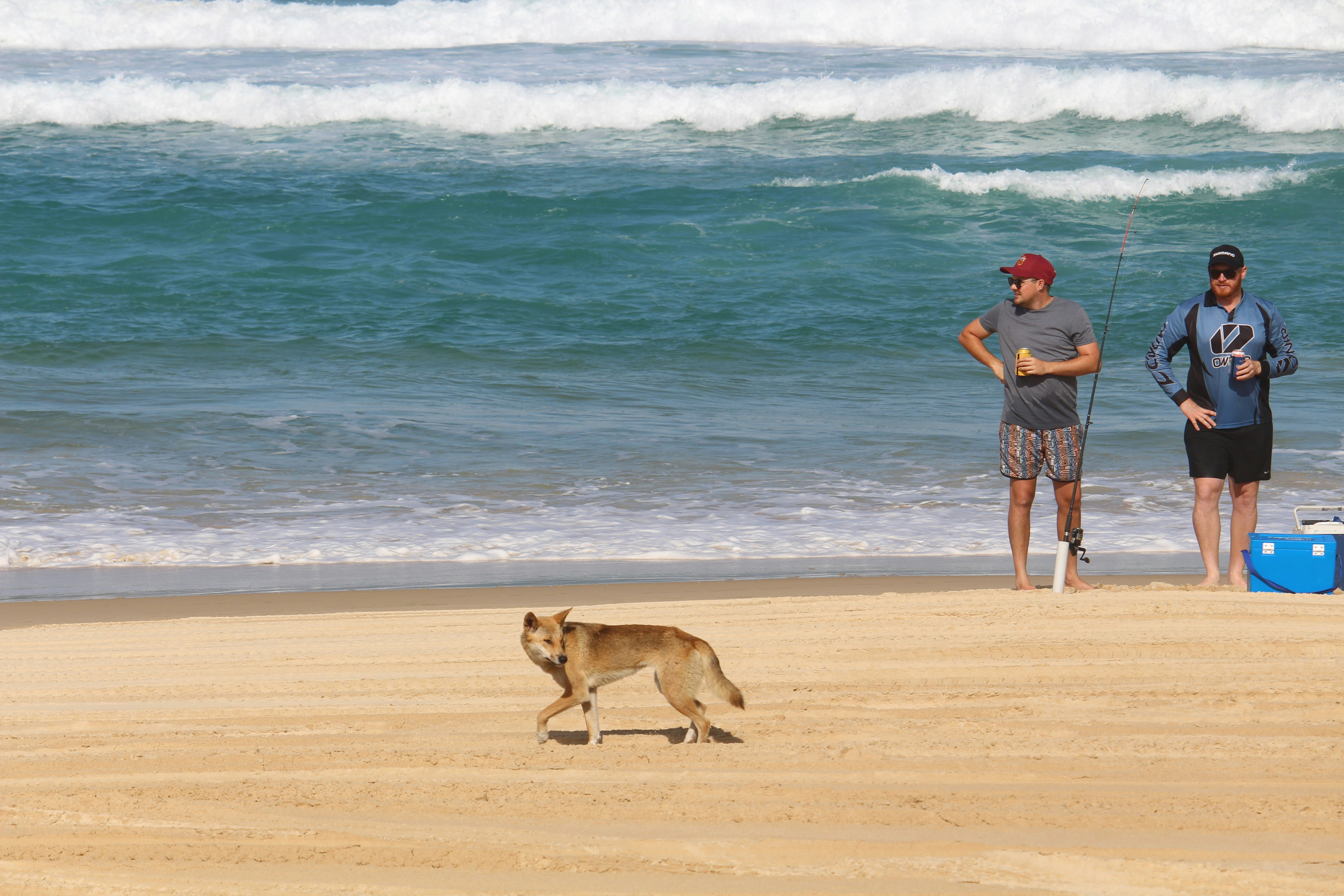
The Queensland Government has culled dingoes involved in the tragic death of Canadian backpacker Piper James.
Ms James’s body was found on the island on January 19, reportedly surrounded by a pack of dingoes. But the coroner’s report found that, although the 19-year-old was bitten before she died, drowning was the most likely cause of death. Despite this, the state government went ahead with the cull.
Experts contacted by the AusSMC said they do not believe that culling the dingoes is the right approach.
Dr Mathew Crowther from the University of Sydney told the Centre the decision was "unwise" and taken without consulting the traditional owners of K’gari, the Butchulla people, or experts in dingo biology.
“The dingo population on K’gari is small (at most ~200 individuals) and has low genetic diversity, meaning that culling poses a genuine threat to the long-term viability of the population,” he told the AusSMC.
“Culling will do little to prevent aggressive behaviour, as it does not address the underlying causes of dingo–human conflict.”
According to Assoc Prof Bill Bateman from Curtin University, it is unlikely that culling the dingo pack will have any effect other than driving down dingo numbers.
“What needs to be done is the introduction of clearer, safer rules for visitors and perhaps a cap on their numbers,” he said.
Reports of difficult interactions with dingoes on K’gari go back as far as 2001, when a boy named Clinton Gage was killed after wandering away from his family.
Dingoes were culled in response to that incident as well.
Aussie experts say the situation on K’gari is complex and there are no simple solutions.
Prof Rowland Cobbold, from Southern Cross University, said that any response should be based on evidence and expert opinion across multiple fields, including wildlife ecology, animal welfare and ethics, human health protection, and tourism, among others.
“Experts in each of these fields need to be consulted, along with key stakeholders such as local wildlife rangers, traditional owners and land care groups, and users and managers of K’gari’s assets,” he said.
People should be treating potentially dangerous animals, such as dingoes, in the same way as crocodiles are in northern Australia, or bears in other parts of the world, according to Dr Mike Letnic from the University of New South Wales.
“By that, it probably means we avoid potentially harmful interactions by discouraging feeding, and modifying our behaviour so we don't end up being alone, especially at night or in the early hours, which could make people vulnerable to groups of dingoes,” he told the AusSMC.
Dr Kylie Cairns from the University of New South Wales agreed that, rather than culling dingoes, we should change how we interact with them, as a more effective harm-reduction strategy.
“We cannot stop dingoes from behaving like wild predators, but us humans can behave in ways to limit the risk to ourselves and others," she said.
You can read the full AusSMC Expert Reaction below.
This article originally appeared in Science Deadline, a weekly newsletter from the AusSMC. You are free to republish this story, in full, with appropriate credit.
Expert Reaction
These comments have been collated by the Science Media Centre to provide a variety of expert perspectives on this issue. Feel free to use these quotes in your stories. Views expressed are the personal opinions of the experts named. They do not represent the views of the SMC or any other organisation unless specifically stated.
Dr Kylie Cairns is a Research Fellow at the Centre for Ecosystem Science, UNSW
"We know that the K’gari dingo population is threatened by isolation, a small population size and genetic decline. Removing significant numbers of dingoes from such a small population may have a serious negative impact on the genetic health and viability of the K’gari dingo population. We cannot stop dingoes from behaving like wild predators, but us humans can behave in ways to limit the risk to ourselves and others."

Professor Rowland Cobbold is the Professorial Program Director of Veterinary Medicine at Southern Cross University
"The recent dingo cull on K’gari raises two important points:
- Responses to the problem need to be evidence-based.
- It is a complex problem that won’t be effectively resolved with a simple solution.
Finding the best solution to the K’grai dingo problem needs to be based on empirical evidence, expert opinion, and application of a rational process to identify solutions. The response needs to be justifiable, as well as transparently derived and applied.
The complexities associated with the K’gari scenario involve expertise that range across several specialised fields, including: wildlife ecology; population genetics; animal welfare and ethics; animal behaviour and the human-animal bond; human health protection; risk analysis; and tourism and hospitality. Experts in each of these fields need to be consulted, along with key stakeholders such as local wildlife rangers, traditional owners and land care groups, and users and managers of K’gari’s assets.
Cross-consultation and synthesis of opinions from all inputs is then needed to define practical, ethical, and acceptable solutions. Beyond being an appropriate approach to managing the issue, it provides opportunities for all involved parties to have a seat at the table and assume a level of ownership of the problem, and its resolution."
Dr Mike Letnic is from the School of Biological, Earth & Environmental Sciences at the University of New South Wales
"It's been a terrible tragedy, what's happened up in K’gari last week.
People love to experience places that are genuinely wild and see animals there. But doing that comes with risks. We've really got to be mindful that it can be dangerous. There's been a long history on K’gari (Fraser Island) of difficult interactions with dingoes and people having issues with their behaviour.
The same way that we have to be careful in northern Australia with crocodiles, or in other parts of the world with animals like bears, we need to make sure that we are fully aware of the need to manage the risks when in situations with potentially dangerous animals.
By that, it probably means we avoid potentially harmful interactions by discouraging feeding, and modifying our behaviour so we don't end up being alone, especially at night or in the early hours, which could make people vulnerable to groups of dingoes."
Associate Professor Bill Bateman is from the Behaviour and Ecology Research Group in the School of Molecular and Life Sciences at Curtin University
"The tragic death of Piper James on K’gari by drowning does indeed seem to have involved an attack by dingoes. We don’t know exactly what transpired, and so speculation should be avoided. It is important to note that previous attacks and deaths on K’gari have usually involved children, and often when the child is alone or separated by some distance from family members. Small individuals, lone individuals, and running or turning one’s back on a dingo can trigger an attack. Tragic as the death of Piper is, the issue is less to do with dingoes and more to do with human behaviour – ultimately, one should never be alone around what are predators capable of attacking humans. It is unlikely that culling the dingo pack will have any effect other than driving down the dingo population on K’gari. What needs to be done is the introduction of clearer, safer rules for visitors and perhaps a cap on their numbers."
Dr Mathew Crowther is Professor of Quantitative Conservation Biology in the School of Life and Environmental Sciences at the University of Sydney
"The decision to cull dingoes on K’gari was unwise. It was undertaken without consultation with the Butchulla people or experts in dingo biology. The dingo population on K’gari is small (at most ~200 individuals) and has low genetic diversity, meaning that culling poses a genuine threat to the long-term viability of the population.
Rather than resorting to lethal control, greater emphasis should be placed on educating visitors that dingoes are dangerous wild animals and that close interaction must be avoided. Culling will do little to prevent aggressive behaviour, as it does not address the underlying causes of dingo–human conflict."
