 Sign In



 International
News release
From:
A new device can detect UV emissions from fires, ignoring sunlight to catch the ignition stage
Science Advances
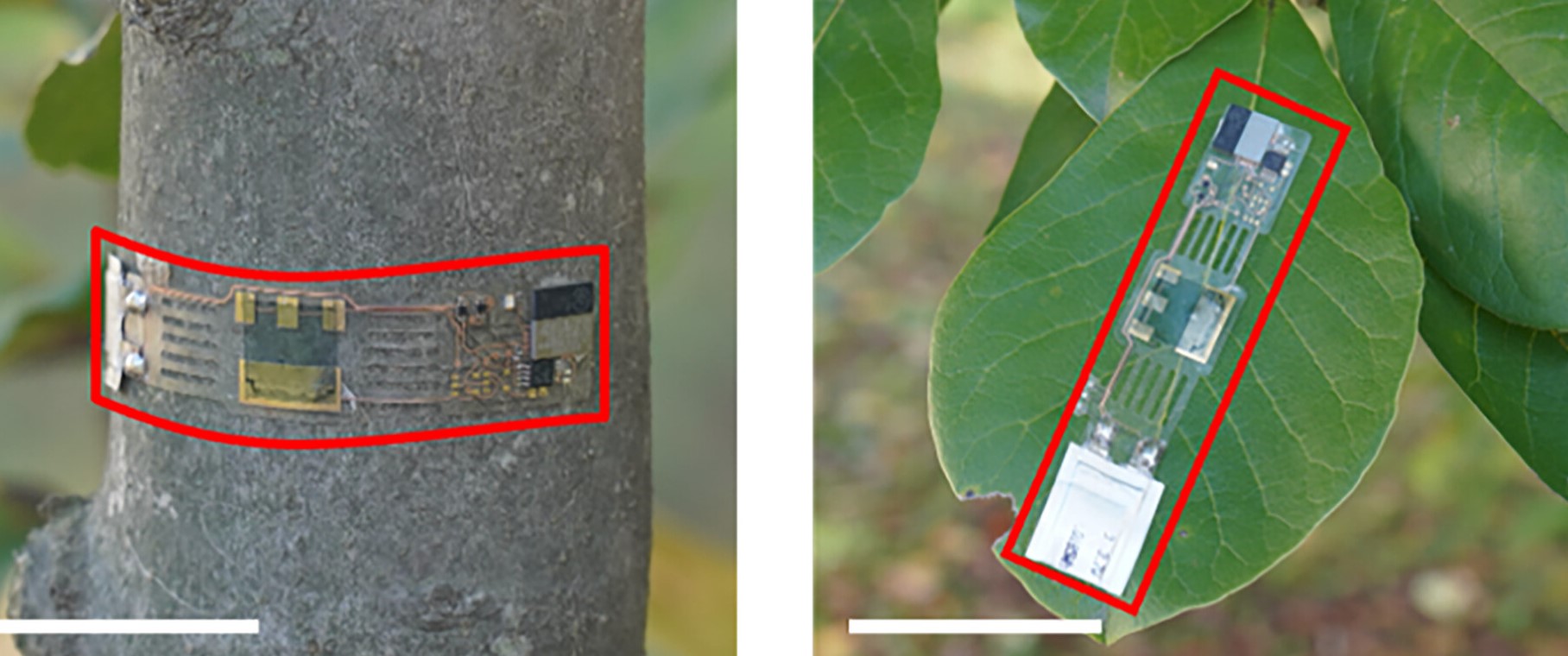
A new “electronic sticker” designed to be placed on industrial buildings or trees can detect fires at the ignition stage before they begin to spread uncontrollably. It tracks the emissions of deep-ultraviolet (DUV) radiation specifically emitted by flames and ignores UV from the sun, offering promise for applications in environmental and industrial fire monitoring. When uncontrolled, fires – both industrial and wild alike – can be devastating to ecosystems, human health, and the economy. However, existing detection techniques, such as smoke detectors and thermal infrared cameras, do not reliably catch the moment of fire ignition.
Being able to identify fires at this early stage and learn about their combustion characteristics before they spread could provide critical information to help early management efforts. Here, Taehyun Park and colleagues introduce a sensing platform that can quickly detect flames through their emissions of deep-ultraviolet (DUV) radiation. The wireless, flexible sticker-like device then communicates information, interpreted through machine learning models, about the flames’ source and combustion type. In tests, the sticker successfully ignored solar UV, which has longer wavelengths than DUV. It operated consistently under repeat mechanical stress tests and performed stably for more than 180 days under changing conditions such as temperature and humidity. This latter result indicates its compatibility for outdoor use.
Park et al. determined that the photodetector could distinguish between flames from a variety of fire types, including a butane blowtorch, a natural gas stove burner, and a burning ethanol-based fuel block. “Through [machine learning], we extended the device’s functionality from simple detection to an information-rich analysis, capable of predicting flame source, intensity, and relative distance,” the authors write. They suggest that the device could be slapped like a sticker on trees or on industrial structures.
Attachments
Note: Not all attachments are visible to the general public. Research URLs will go live after the embargo ends.


