 Sign In



 Australia; International; VIC
News release
From:
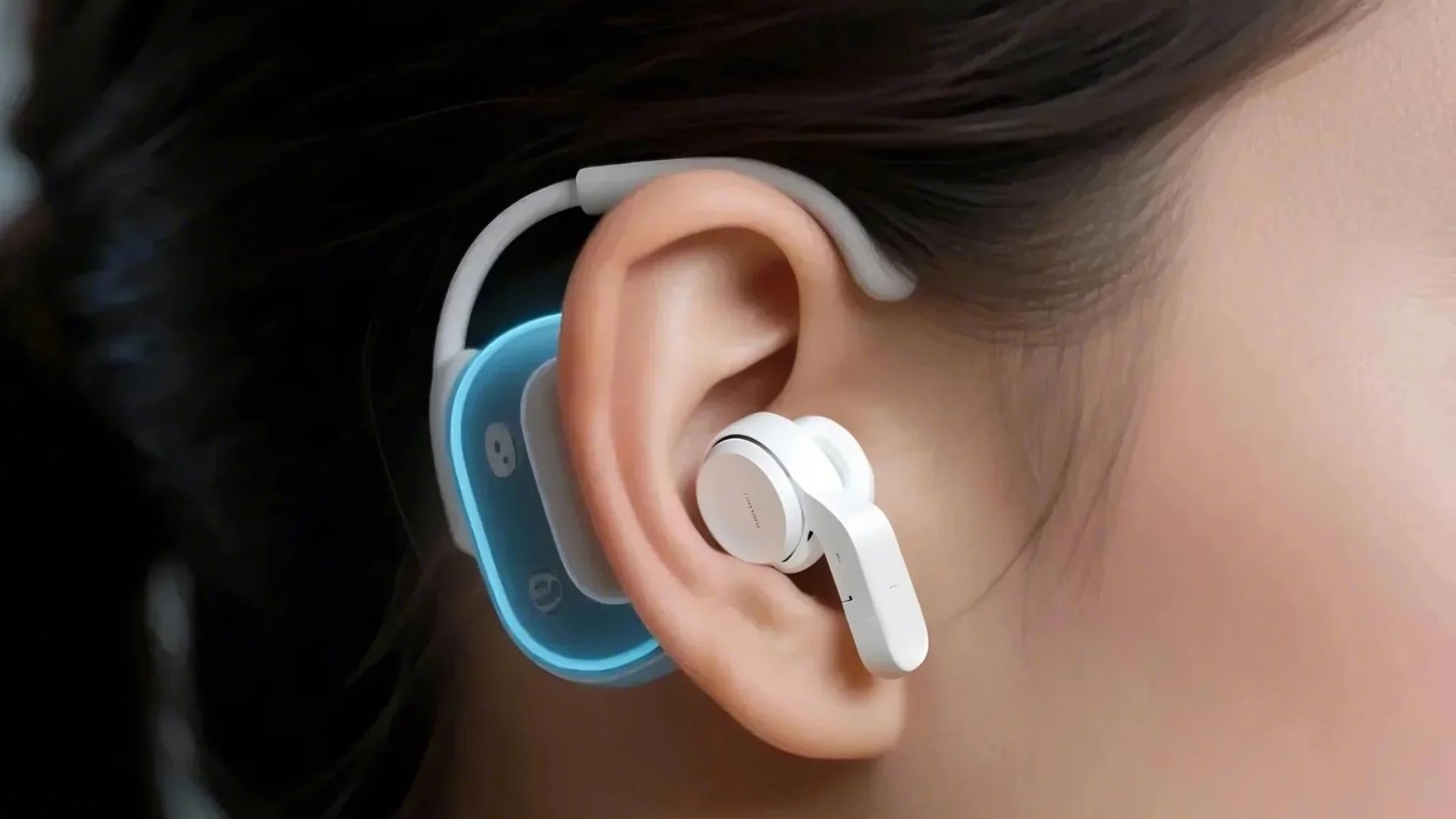
An international research team has uncovered the next frontier in monitoring brain health, and the key is in technology that millions of people are already using every day – earbuds.
The world-first study found that commercially available earbuds have the capability to detect and classify brain activity, simply by measuring subtle changes in users’ hearing. The team used acoustic sensors in earphones to assess cognitive load – the mental effort that shapes learning, task performance and early cognitive decline.
The finding could lead to new ways to improve performance in sectors such as education, aviation, healthcare, user experience design or the armed forces by identifying when people are overwhelmed, or when they have capacity to learn more.
The project was co-led by University of Melbourne Senior Lecturer in Digital Innovations Dr Ting Dang (corresponding author) and PhD student Xijia Wei at University College London. They worked with researchers from Nokia Bell Labs at Cambridge University and the University of Washington to design the experiment and collect, analyse and model the data.
“Some commercial earbuds are already being used to track movement and heart rate. Our research shows that soon earbuds may be able to monitor people’s brains,” Dr Dang said.
“Ear-worn devices could be used to reduce mental strain and improve efficiency, safety and overall human-computer interaction. They are quietly becoming the next major health platform, with the market expanding quickly and big tech moving rapidly into health.”
The team used sensors in commercially available earphones to measure tiny cochlear responses (otoacoustic emissions), which indicate strain on the brain and central nervous system. They attached a 10mm speaker and sensitive microphone into an earable prototype and designed listening tasks to induce varying levels of cognitive load for the 19 test subjects (aged 20-55).
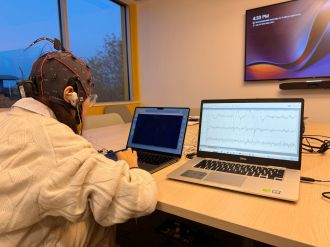
They designed an AI model to categorise the cochlear responses into four levels of cognitive load and used EEG headsets to collect data to validate the findings.
The team found that increased cognitive load led to greater auditory sensitivity, with patterns varying across demographic subgroups, such as age and gender, which may lead to additional opportunities for personalised monitoring.
“This work points to a future where your earbuds become real-time, personalised, cognitive monitors, adjusting lessons to your mental capacity, enhancing productivity, helping workers manage overload, or offering early warnings of brain health issues,” Dr Dang said.
For the next steps of this research, the team hopes to expand the frequency range of their auditory testing by exploring the use of broadband or wider frequency stimuli. The findings also need to be validated on larger, more diverse cohorts to ensure the feasibility of cognitive monitoring at scale.
The findings were published in proceedings from the Association for Computing Machinery’s joint conference on Pervasive and Ubiquitous Computing (UbiComp), held in October at Aalto University, Finland: UbiComp Companion '25: Companion of the 2025 ACM International Joint Conference on Pervasive and Ubiquitous Computing (29 Dec 25).
Multimedia

Attachments
Note: Not all attachments are visible to the general public. Research URLs will go live after the embargo ends.


