 Sign In



 Australia; QLD
News release
From:
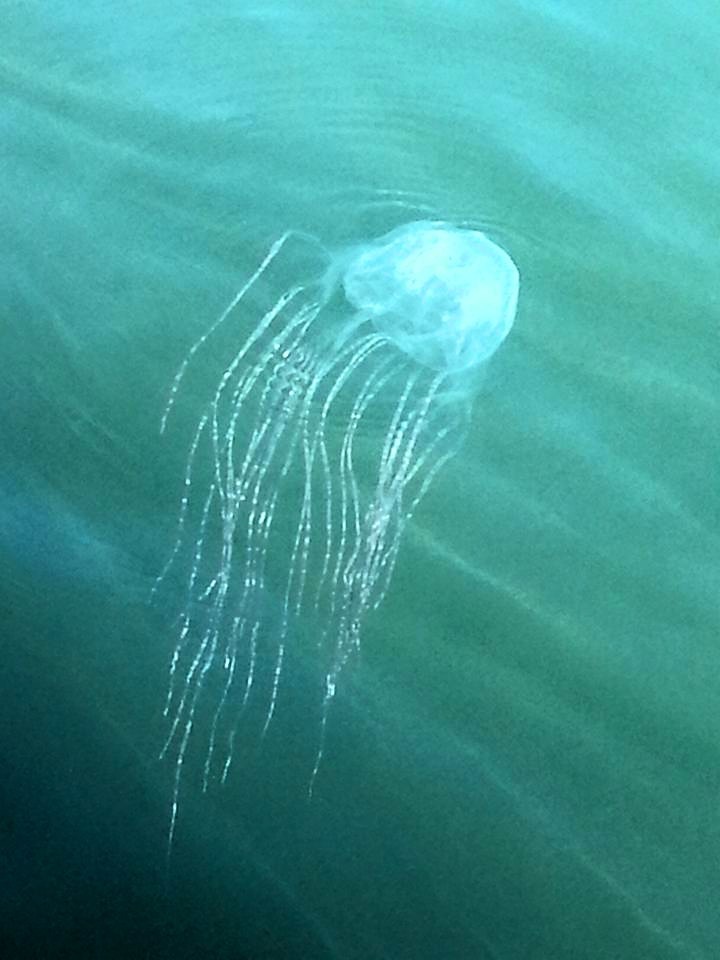
Follow the tracks-Fragments of DNA shed into water could be used to monitor the movements of deadly Australian box jellyfish. By combining environmental DNA (eDNA) detections with weather and sea current data in Horseshoe Bay, Magnetic Island, researchers found jellyfish eDNA remained detectable between hundreds of meters to a few kilometres from the source before rapidly decaying. This highlights the value of eDNA as a detection tool for these dangerous jellyfish species. Interface
Estimating transport and detectability of Chironex fleckeri eDNA in an open coastal bay
RSIF
This study reveals how environmental DNA (eDNA) from the deadly Australian box jellyfish (<i>Chironex fleckeri</i>) moves and persists in an open coastal bay. By combining biophysical modelling with real-world eDNA detections, researchers showed that the jellyfish’s eDNA remains detectable only within hundreds of metres to a few kilometres of the source and disappears within a day due to natural decay and dilution. The findings highlight the value of eDNA as a detection tool for dangerous jellyfish species and underscore the importance of understanding local ocean conditions when interpreting eDNA results.
Attachments
Note: Not all attachments are visible to the general public. Research URLs will go live after the embargo ends.


