Sign In



 Australia; NSW
News release
From:
From whale songs to lion roars, animals have evolved to stretch their voices across distances so that friends – and sometimes foes – can hear them.
Each sound is coded with messages like ‘Come here!’, ‘Back off!’, ‘Danger’s lurking!’, or ‘Want to hang out?’.
But why can some communicate over thousands of kilometres, and others mere metres?
Scientists from UNSW set out to answer this question by tracing the evolutionary drivers of long-distance calls from 103 mammals around the globe, including lions, blue whales, koalas, and even humans.
The study, published today in Journal of Mammalian Evolution, pulled together data from 81 different research papers to find an interesting large-scale pattern: the same pressures aren’t driving evolution underwater as they are on land.
“Environmental factors generally played the biggest evolutionary role in deciding how far land mammals can communicate, but biology – specifically, size – was the biggest influence for underwater mammals,” says Dr Ben Walker, lead author of the study and evolutionary ecologist at UNSW.
“In other words, land mammal calls have evolved mainly in response to environmental pressures, while aquatic mammal calls evolved in response to changes in body size.”
Underwater, the pattern was simple: the bigger the mammal, the further their calls reached. At the top of this list are blue whales, which weigh about 150 tonnes, and have songs that can travel up to 1600km away on a perfect day. On the smaller end of the scale are otters, which weigh about 28kg and have calls that only travel 1km away.
But up on land, the story was more complex: the size of a mammal’s ‘home range’ (in other words, how big their turf was) was the leading factor in how far their calls travelled – but this distance was also heavily influenced by the animal’s type of habitat, the purpose of their call, and whether they were social beings.
For example, territorial calls – that is, calls warning others to back off from their domain – travelled further than other types of calls.
And social species, like elephants, had the ability to communicate further than solitary species.
“The type of habitat land mammals lived in also played an important role, but not in the way we expected,” says Dr Walker.
“Mammals that call in closed environments, like rainforests, have evolved to have relatively further calls than mammals in open environments, like savannahs. This really surprised me, as I was expecting the opposite.”
The findings challenge long-held scientific assumptions that only environmental factors affect the evolution of animal sounds – and they shine a light on how animal communication might be impacted by future evolutionary pressures.
“We build on recent research showing that the environment’s role on land is more nuanced than previously thought,” says Dr Walker.
“We also show for the first time that mammals in aquatic environments are following their own rule set entirely.”
Unique evolutionary challenges
Human-caused habitat changes are already affecting animal behaviour across the globe, like bats reducing their use of echolocation during music festivals, and ship noises causing stress in whales, says Dr Walker.
The new findings can give insights on how the mammals studied might cope – or indeed, struggle – with future environmental challenges.
“Our finding that land mammals in closed habitats have evolved to have relatively further sound distances than those in open habitats is important, because if land clearing happens in a closed habitat, a mammal call might travel further than the animal intended, with deadly consequences,” says Dr Walker.
“For example, an unsuspecting possum could make a call that accidentally reveals itself to potential predators. Without its usual abundance of nearby trees, the possum might not be able to escape vertically, as closed-in habitat species tend to do.
“Without meaning to, the possum has inadvertently risked becoming someone’s dinner.”
Underwater, past research has shown mammals are experiencing stunted growth due to human whaling activities and environmental impacts.
Dr Walker says this size change might have a ripple effect on how the mammals are able to communicate.
“North Atlantic right whales have reduced in maximum body length by 7.3% since 1981,” he says.
“The link we found between aquatic mammal size and maximum call length suggests that a reduction in a species’ size may also be linked to a reduction in how far its sounds travels.
“This means that smaller whales may have to work harder to make their calls reach their friends or family members, and in some cases might not be able to reach them at all.”
Improving biodiversity monitoring
Dr Walker was fast asleep in a field camp in Botswana when he got the idea for this project.
Or rather, the idea called out to him at 3am, when he was woken by the sound of a baboon – and had no idea where it was.
He couldn’t shake his curiosity, and wanted to solve the mystery.
“Trying to figure out where an animal is based on its sound is something that everyone does,” says Dr Walker. “You might be walking at night and hear something in the distance and wonder where its coming from. Where is that frog? Where is that possum? Where is that bird?”
The data and insights gained from this research can also help other researchers and citizen scientists work out where a mammal might be calling from – and improve biodiversity monitoring along the way.
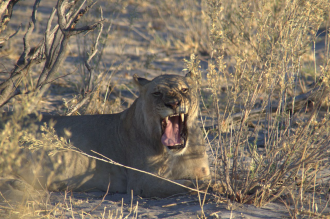
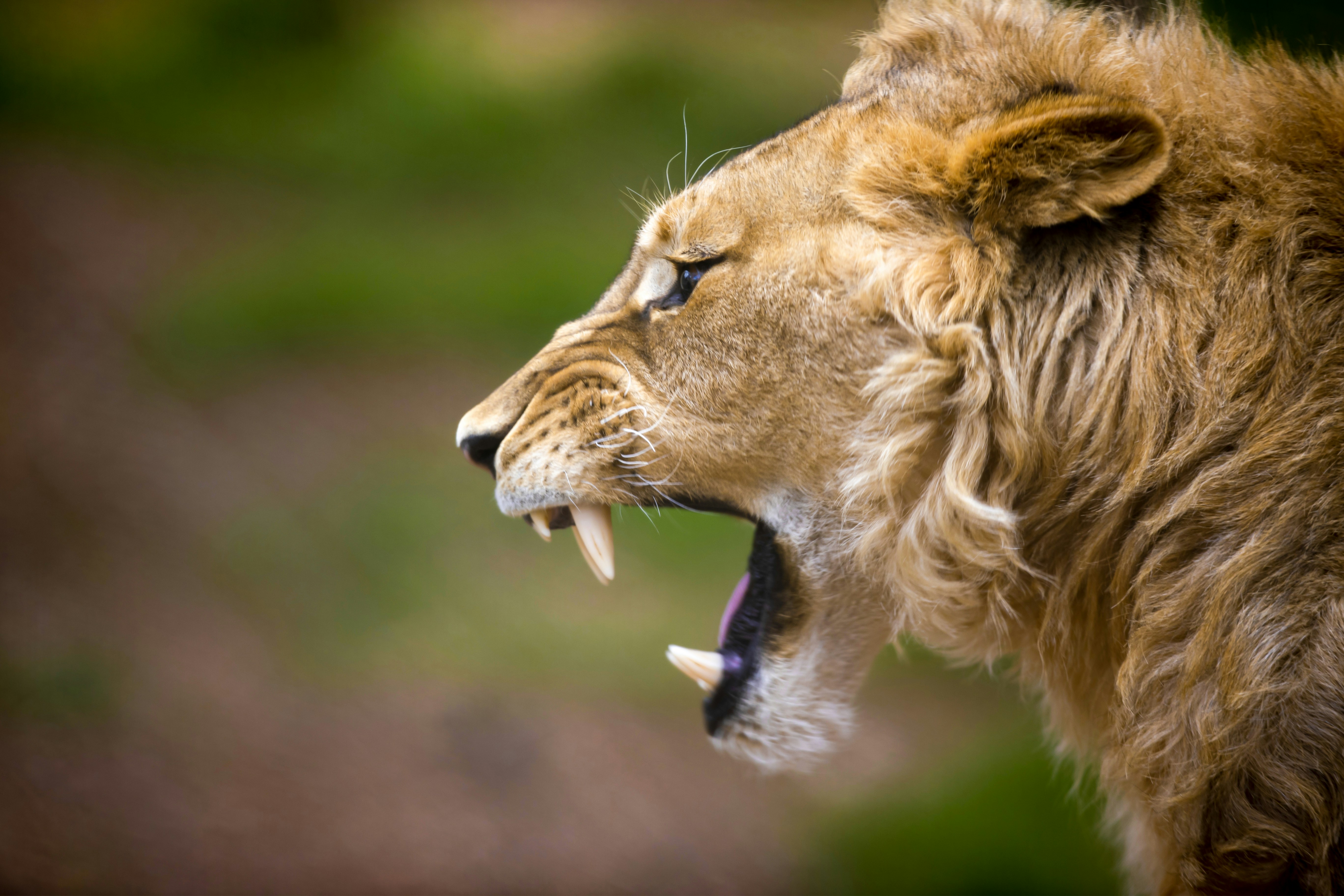
For example, lions are social creatures, make territorial calls, and have a vast home range size of over 50,000 acres. If you hear one of their territorial calls, you’ll know it’s within 8km (and that it might be time to scuttle).
A koala, on the other hand, is a solitary animal with a much smaller home range size of about 2.5 acres. If you manage to hear its call, you’ll know it’s close – 150m away at most.
And as for us humans, we can expect our loudest calls to reach about 434m.
“Our findings could help improve the information we infer from acoustic monitoring data, like how far away the animals might be, how far their sounds are reaching, and if there’s more than one individual recorded,” says Dr Walker.
“It comes at a good time, as the NSW National Parks and Wildlife Service is currently undertaking one of the largest scale biodiversity monitoring programs to date.”
While this project looked at mammals, Dr Walker hopes to expand the work in future to include other animal groups. Birds are at the top of his list.
“There are over 11,000 different bird species out there, and birding tourism is booming. I think it’d be wonderful to start working out where birds are,” he says.
“Often when a birder goes out to find a rare bird, they’ll listen first and then try to see it. I want to help people not just rely on their eyes, but also their ears, and have some sort of free knowledge about how far away the bird might be before they go out to find them.”
As for solving the baboon mystery, Dr Walker did learn the maximum call length for two other baboon species, Guinea baboons (1km) and yellow baboons (2.5km).
But unfortunately, there was no data available on Chacma baboons, the species at his camp site.
“In total, there are about 6500 mammal species globally, but recording sounds for all those mammals is very difficult. Our sample size of 103 long-distance mammal calls is all that exists in 60 years of research,” he says.
“We hope our study stimulates more research and encourages scientists to collect more data on mammals into the future.”
Multimedia