 Sign In



 Australia; SA
News release
From:
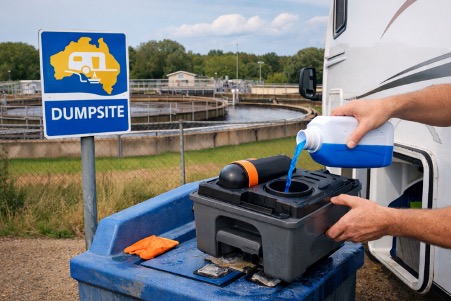
When people using caravans empty their toilet waste at roadside dumpsites, caravan parks and regional dump stations, the wastewater – which contains concentrated detergent, deodoriser and sanitiser chemicals – is transported to local wastewater treatment plants.
Flinders University researchers focused on whether caravan toilet chemicals such as bronopol, a powerful disinfectant chemical, may disrupt wastewater treatment microbes.
“While these products help maintain hygiene inside caravans, the chemicals may interfere with the beneficial microbes used in wastewater treatment systems,” says researcher Rajshekar Indela, a PhD student in Flinders University’s College of Science and Engineering.
A study published in the Journal of Environmental Management has investigated how caravan travellers across Australia use toilet detergents, deodorisers and sanitisers (DDS products) to understand what this could mean for the environment.
The research surveyed 160 Australian caravan users and found that most travellers regularly use chemical toilet additives to control odours and improve hygiene. The most commonly used products contained bronopol, a disinfecting chemical that can break down into formaldehyde and other potentially harmful compounds.
“The findings highlight a growing challenge for regional towns that manage caravan wastewater,” says Mr Indela. “Regional wastewater plants are often smaller and designed mainly for household wastewater, but caravan toilet wastewater is much more concentrated and can contain high levels of disinfectants and other chemicals.
“Given that bronopol can degrade into persistent and toxic by-products, including formaldehyde, 2-bromo-2- nitroethanol, and related nitro-alkane derivatives, these antimicrobial compounds may inhibit microbial communities critical to primary treatment processes in regional soakage pits and septic tanks.”
As a consequence, the researchers mention that during peak holiday periods, increased volumes of chemically treated caravan wastewater could reduce treatment efficiency and potentially affect nearby environments if wastewater is not properly treated.
This could have significant effects because study found that 65% of caravan users routinely use DDS products and while 83% follow the recommended dosage instructions, bronopol-based products were the most popular choice among users.
Research co-author Professor Kirstin Ross says the findings can help regional councils and wastewater operators better prepare for increasing caravan-based tourism.
“Understanding what chemicals are entering wastewater systems is important for protecting public health, wastewater infrastructure and the environment,” says Professor Ross.
The research team says further studies are needed to better understand how caravan toilet chemicals behave in wastewater systems and how treatment plants can adapt to increasing tourism pressures.
The research – “Caravan toilets and chemical choices: Exploring user perspectives and preferences to understand wastewater quality from dumpsites”, by Rajshekar Indela, Harriet Whiley, Howard Fallowfield and Kirstin Ross – has been published in the Journal of Environmental Management. DOI: 10.1016/j.jenvman.2026.129874

