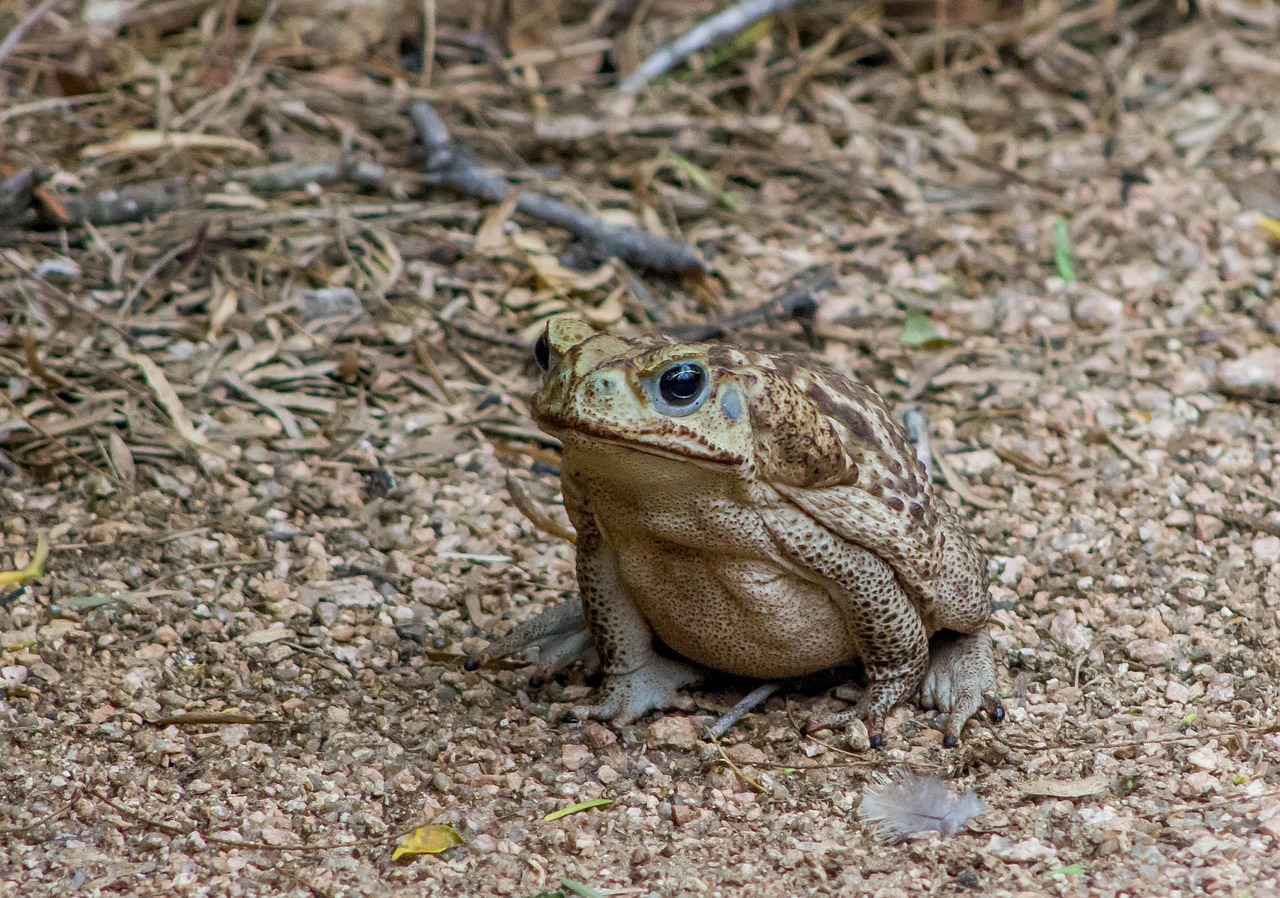
Cane toads are not consistant cannibals

Publicly released:
Australia; NSW
Image by Kathy Detweiler from Pixabay. Story by Lyndal Byford, Australian Science Media Centre

The tadpoles of cane toads are known to eat the eggs of other cane toads, but not all cane toads do this to the same extent. Australian research has shown that rates of cannibalism by invasive Australian cane toad tadpoles are variable—older, more developed tadpoles are more cannibalistic, as are larger tadpoles and those from resource-stressed ponds. The researchers also found that larger tadpoles are more cannibalistic, whether they are from Australia or their native French Guiana in South America, clarifying how this behaviour evolved, although Aussie toad tadpoles do eat more of their own at any one size.

News release

From: The Royal Society

Plasticity in expression clarifies the ecological drivers and evolutionary history of cannibalism in invasive cane toads (Rhinella marina)

In Australia, invasive cane toad tadpoles rapidly evolved to consistently and intensely cannibalize the eggs of other cane toads. The consistency of this behavior is surprising because rates of cannibalism by amphibian larvae are usually variable. Here, we use laboratory experiments and analyses of published data to show that rates of cannibalism by invasive Australian cane toad tadpoles are variable—older, more developed tadpoles are more cannibalistic, as are larger tadpoles and those from resource-stressed ponds. We also show that some of this variation exists in the toads’ native range, clarifying the pathway through which the behavior evolved in Australia.

Attachments

Note: Not all attachments are visible to the general public. Research URLs will go live after the embargo ends.

Research The Royal Society, Web page Please link to the article in online versions of your report (the URL will go live after the embargo ends).
Journal/
conference:
Royal Society Open Science
Research:Paper
Organisation/s: Macquarie University, The University of New South Wales
Funder: This work was funded by the Australian Research Council (LP220100164) and the Minderoo Foundation. The corresponding author is also supported by a scholarship from the American Australian Association
Media Contact/s
Contact details are only visible to registered journalists.