 Sign In



 Australia; VIC
News release
From:
Peter Mac's Biomedical Animator, Dr Maja Divjak, has launched her latest animation to help explain one of the most complex areas of cancer biology.
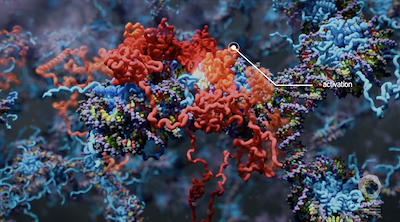
Epigenetic Mechanisms of Cancer Development, Part 1: DNA Methylation takes viewers inside human cells to reveal the hidden molecular processes that help control our genes.
Dr Divjak said DNA methylation is the process where chemical tags are added to the DNA within our cells to alter the way our genes behave.
“Epigenetics is such a complex field and there’s so much going on so having a tool like animation makes it much easier to understand because the processes are unfolding before your eyes,” Dr Divjak said.
“This animation shows a part of epigenetics called DNA methylation which is a process that allows the DNA in our cells to turn on or off.
“Epigenetic processes control DNA and sometimes these processes become damaged or mutated which can lead to cancer,” she said.
Dr Divjak is Peter Mac’s inaugural Biomedical Animator and creates 3D animations about cellular and molecular mechanisms relevant to cancer and cancer treatment.
“I start with the science so I do a lot of background reading and I talk to the scientists extensively,” she said.
“It can take years of research, scientific collaboration and design to bring what is an otherwise invisible world to life and development of custom-made animation tools has allowed me to recreate the extraordinary complexity inside our cells.
“Parts of this latest project use animation to show the workings of an individual cell magnified almost 12 million times – making it like a telescope that looks inside the human body.
“Hopefully by using motion technologies to explain what is taking place in such detail, we are making science more accessible and easier to understand,” Dr Divjak said.
The full animation was made possible by support of the Peter Mac Foundation and can be found here.
Credits:
🎬 Dr Maja Divjak – Director & Biomedical Animator
💻 Dr Brady Johnston – Technical Artist
🔬 Jesse Rudd-Schmidt – Microscopy
🎧 Ryan Granger – Sound Design
🎙️ Dr Clare Fedele PhD – Voice
🧬 Scientific Advisors: Dr Dane Vassiliadis and Professor Mark Dawson.
Attachments
Note: Not all attachments are visible to the general public. Research URLs will go live after the embargo ends.


