 Sign In



 Australia; VIC; QLD
News release
From:
A new international study has found that Indigenous oral traditions, some thousands of years old, hold valuable and often overlooked insights into volcanic eruptions – offering important lessons for modern disaster preparedness.
The research, published in the journal Volcanica, led by Museums Victoria Research Institute volcanologist, Dr Heather Handley, draws on case studies from Australia, Fiji, Hawai'i, Papua New Guinea, the Solomon Islands and Vanuatu to demonstrate how Traditional Knowledge and scientific data can be integrated to better understand volcanic history and hazards.
Oral Traditions, often dismissed as myth or legend, frequently preserve detailed observations of past volcanic activity, including eruption sequences, environmental impacts and warning signs, the study's authors argue. The research team, which includes geoscientists, Traditional Knowledge holders and social scientists from across the region, found that in several cases these traditions identified eruptions that geological surveys had previously unrecognised.
Dr Heather Handley, Senior Curator of Geosciences at Museums Victoria Research Institute and lead author of the study, says the findings challenge conventional approaches to hazard science.
‘For too long, Traditional Knowledge has been undervalued in scientific research. Our study shows that these knowledge systems can provide detailed, place-based insights into past volcanic activity that are often difficult to obtain through scientific methods alone. And in several cases, modern science has simply re-discovered eruptions that Indigenous communities had already encoded in their Oral Traditions, centuries or millennia ago.’
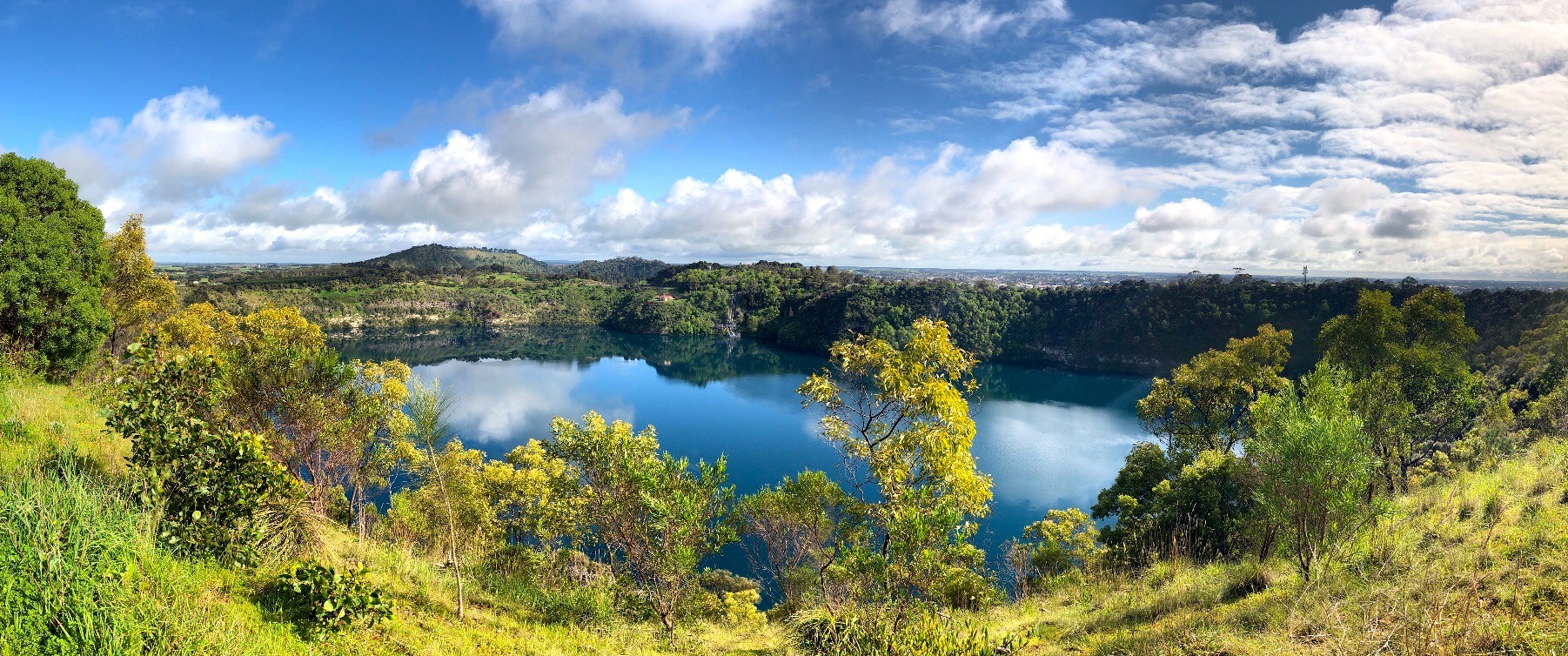
Across the region, oral traditions recorded precise warning signals that communities used to anticipate and respond to eruptions, many of which modern science has since corroborated. In Vanuatu, stories of the catastrophic 1453 CE Kuwae eruption had been preserved by neighbouring communities for generations, yet when French geologists found evidence of it in the 1990s they called it l'éruption volcanique oubliée — the forgotten eruption. In northeast Queensland, First Peoples Oral Traditions of the Lake Eacham maar volcano describe darkened skies, forceful winds and rupturing ground consistent with maar-forming eruptions, and critically reveal there was little warning before people camped at the site were lost. In southeastern Australia, the piercing shriek of the Bullin bird, recorded in a living Boandik Oral Tradition still shared by Elders today, is thought to have signalled imminent eruption and helps resolve the sequence of volcanic activity at Mount Schank (Parreen) and Mount Gambier (Berrin) that scientific dating methods alone could not determine.
Boandik Elder and Traditional Owner Aunty Michelle Jacquelin-Furr, a co-author of the study, said the research highlights the importance of Traditional Knowledge particularly in educating younger generations and ensuring cultural knowledge continues to be passed on.
‘The story of Craitbul and his family has been carried by Boandik people across generations — it is our history, written into the land itself. When our knowledge and scientific knowledge walk together, we build a stronger understanding of Country and a safer future for everyone who lives on it.’
The value of this knowledge extends beyond Australia. The research also examines how Indigenous knowledge has historically functioned as a practical risk management system. Communities on Savo Island in the Solomon Islands developed an empirical method of gauging eruption recurrence by monitoring coastal erosion — when the shoreline retreats to the extent of 'Old Savo', an eruption is considered imminent. This kind of culturally encoded early warning system predates modern volcanological monitoring by hundreds of years.
The paper calls for a fundamental shift in how volcanologists and emergency managers engage with local communities, emphasising two-way knowledge sharing, participatory research models, and the ethical documentation of traditional knowledge. The authors stress that as societies change and intergenerational transmission of oral traditions is disrupted, there is an urgent need to preserve and actively incorporate this knowledge before it is lost.
Lynley Crosswell, CEO and Director, Museums Victoria said: ‘This research shows how powerfully First Peoples knowledge, carried across generations, can strengthen and deepen modern scientific understanding, not as a footnote to Western science but as a body of evidence in its own right. By bringing Traditional Knowledge and contemporary research together, we gain a richer, more complete picture of our region's history, and a stronger foundation for protecting communities into the future.’
The study aligns with the UN's Sendai Framework for Disaster Risk Reduction 2015–2030, which explicitly recognises the value of Indigenous and local knowledge in building community resilience. For the millions of people living in the shadow of active volcanoes across Australasia and the Pacific today, this research supports that much knowledge needed to help keep communities safe already exists — carried across generations in the stories of those who have lived alongside these landscapes the longest.
Publication details Handley et al. (2026) ‘Integrating long-lived traditions and scientific knowledge to improve understanding of volcanic history and hazards: examples from Australasia and the Pacific Islands’, Volcanica, 9(1). DOI: 10.30909/vol/iemv5087

