Sign In



 Australia; WA
News release
From:
A new collaborative research project between Murdoch University and Walailak University (WU) aims to restore seagrass meadows in Thailand using 3D-printed pods made from bioplastics.
The seagrass meadows around Koh Lidi, a pair of islands inside Mu Ko Phetra National Park in Satun Province, are a nursery for shrimp, crab, and fish which sustain nearby coastal fishing communities.
Seagrass is also the primary food source of Thailand’s declining dugong population. In recent years, unprecedented numbers of dugongs have washed up dead along Thailand's Andaman Coast as seagrass meadows have been lost due to a range of environmental pressures.
Seagrass restoration efforts in the area are often thwarted, as young shoots are washed away, buried in sediment, or eaten by marine life before their roots can establish.
The project is being undertaken by Walailak University PhD candidates Patsakorn Jeenchuay and Leoniel Jude Giray under the supervision of Professor Mullica Jaroensutasinee, and Professor Krisanadej Jaroensutasinee, Directors of WU's Centre of Excellence for Ecoinformatics, in collaboration with Dr Alexandra Gulizia and Professor Andrew Macrae from Murdoch University's Bioplastics Innovation Hub (BIH).
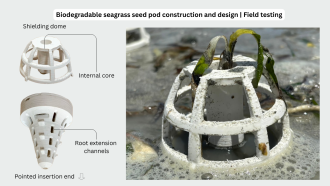
By designing and installing a 3D-printed biodegradable pods, the project aims to protect young seagrass transplants and increase their survival rates.
BIH Deputy Director Professor Macrae, who spent more than two decades working on mangrove restoration in Brazil, said restoration efforts generally fail for a variety of reasons.
"One of the biggest challenges in seagrass restoration is helping young plants survive long enough to establish roots," Professor Macrae said.
"These biodegradable pods are designed to protect transplants from waves, sediment movement, and grazing animals during those critical early stages."
The biodegradable prototype features a protective dome-and-anchor design that is inserted into the seabed with a seagrass shoot enclosed inside. The dome has structural slots in its sides, allowing for roots to grow outwards, while the plant is shielded from crabs, fish, and turtles until it can fend for itself.
Made from a bioplastic called polyhydroxyalkanoate (PHA), the dome is designed to completely biodegrade once the plant is established.
"The bioplastic is produced through bacterial fermentation using locally sourced microbial strains in Western Australia," Dr Gulizia said.
"By tailoring the material’s properties, we can create a pod that's durable enough to withstand marine conditions while remaining fully biodegradable."
The PHA required for the project can be produced at Murdoch University’s BIH and at the Joint Laboratory of Waste and the Circular Economy (WACE), at Naresuan University in Thailand.
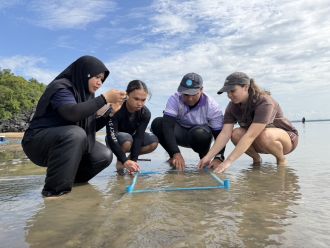
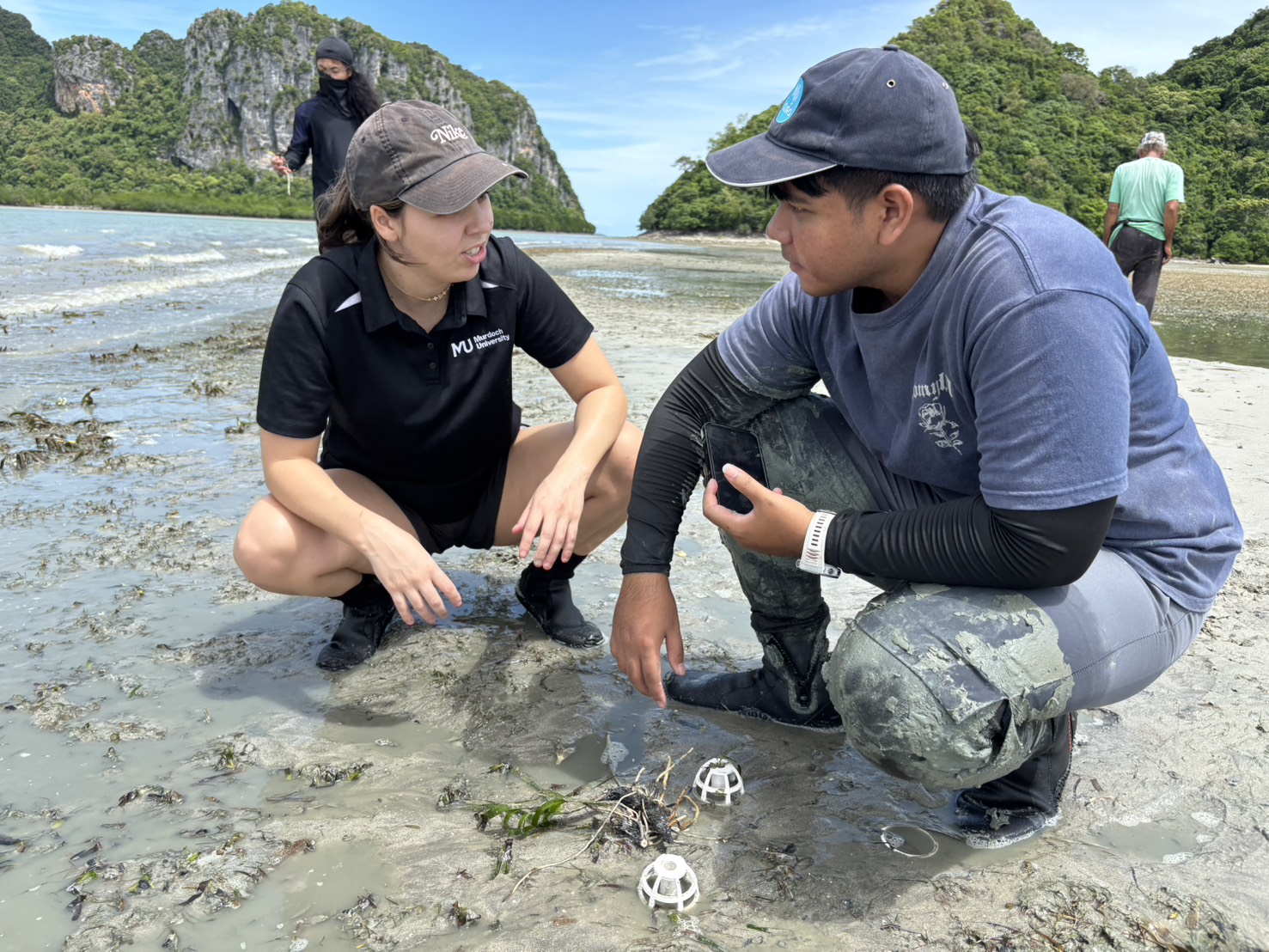
This month, Murdoch’s Professor Macrae, Dr Gulizia, and Dr Samantha Vijjoen visited Koh Lidi to survey the site and meet with the Thai research team.
The pods remain at the prototype stage and are undergoing safety and packaging testing before field trials commence.
Leading seagrass expert, Murdoch University Pro Vice Chancellor, College of Environmental and Life Sciences Professor Jennifer Verduin, will provide expert guidance and mentorship throughout the project.
"If successful, this technology could provide a scalable and environmentally friendly solution for restoring seagrass ecosystems across Southeast Asia and other coastal regions facing similar challenges," Professor Verduin said.
The research is jointly funded by the National Research Council of Thailand, and Murdoch’s Bioplastics Innovation Hub, supported by the CSIRO.
Multimedia