Sign In



 New Zealand
News release
From:
Dr Jo Monks, Senior Lecturer, Department of Zoology, Ōtākou Whakaihu Waka | University of Otago (author of this research)
Te reo Māori:
"Kātahi anō ka puta ētahi rangahau hou e hāngai ana ki tētahi o ō Te Tara-o-te-ika-a-Māui taonga, ko te mokomoko ‘toropuku’. Nā Harriet Wills (Tainui) mā i puta ki te ao mārama. He mea whai e Harriet ngā mokomoko 32 ki te pūrere tuku irirangi e mākari ana i ngā marama e toru. Ka mutu, he whānui ake te whakamahinga o te nohoanga i tā mātou i whakaaro ai. Ko tō te mokomoko tino hiahia, te tapa ngahere me te taekai pururua.Me uaua ka kitea ēnei mokomoko i a Tamanuiterā e puta ana. Engari, mā ngā pūrere tuku irirangi e mākari ana, kua mōhio haere tātou, huna ai ēnei mokomoko i te paparanga otaota i ngā rā, engari kei te karamatamata hoki ētahi. Mā reira ka puta te whakaaro, he taupori mokomoko ‘toropuku’ i te Tara-o-te-ika-a-Māui kāore anō kia tūhuratia. Ko te tūmanako ia, he whaitake tēnei rangahau hei āta whakamahere me pēhea ēnei hapori mokomoko e aroturuki ai, hei whāomoomo hoki i tēnei momo onge."
English:
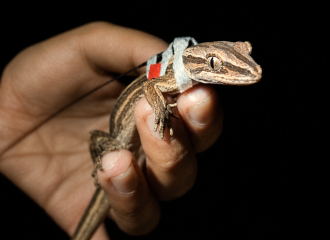
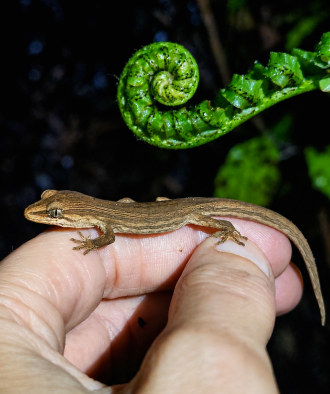
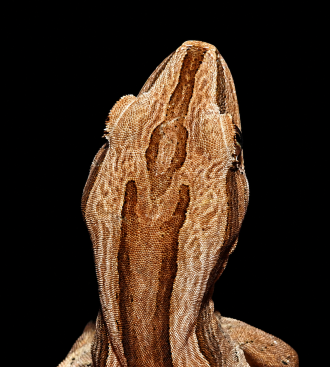
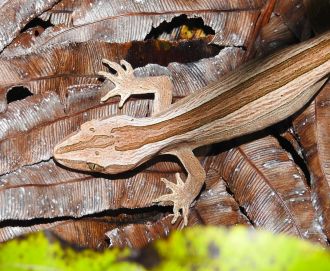
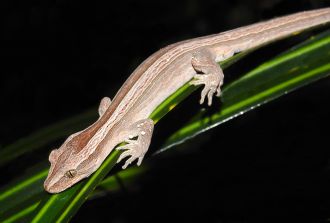
"New research has revealed important insights into the secretive northern striped gecko (Toropuku inexpectatus), one of Aotearoa New Zealand’s most elusive reptiles.
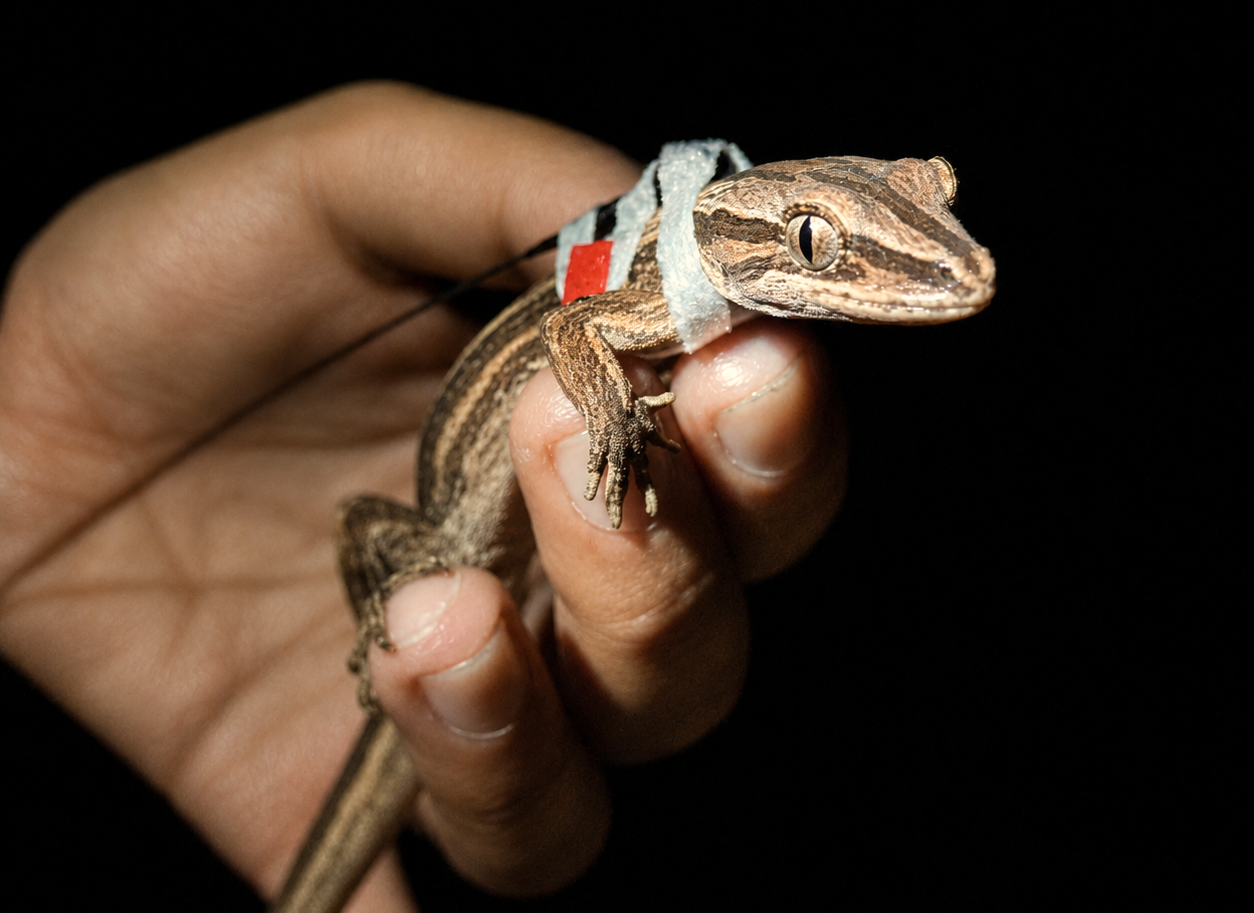
Found only in the northern North Island and formally described as a species in 2020, the gecko is primarily known from just one closely monitored population on the Coromandel Peninsula. Using radio-tracking technology to follow 32 geckos over three months, we discovered that the species uses a much wider range of forest habitats than previously known. The geckos showed a preference for forest edges and dense shrub-like vegetation. During the day, geckos near forest edges sheltered under leaf litter on the ground, while those deeper in the forest spent time high in the canopy. We also found that standard night-time search methods are biased towards detecting geckos near forest edges, meaning many individuals in dense or elevated vegetation may be missed. Our findings suggest undiscovered populations could exist in remote Coromandel forests and will help improve future monitoring and conservation efforts for this rare and remarkable species."
Multimedia