Early fossils reveal more about the evolution of bony fish

Publicly released:
Australia; International; SA
Credit Brian Choo
Credit Brian Choo

The oldest-known articulated bony fish, and an early example of teeth from a bony fish, have been found in a collection of fossils from China, according to two papers, including one with Aussie authors, with the fossils dating to around 444 to 419 million years ago. Bony fish, known as osteichthyans, make up around 98% of all vertebrates (backboned species), including most fish and all land vertebrates. The articulated bony fish fossil found in the collection, named Eosteus chongqingensis, is less than 3cm long and has fin spines, which are found in both bony fish and fish that just have cartilage and no bones. The researchers say this suggests it was around during the earliest stages of bony fish evolution. In a separate paper, researchers investigated an entire skull and trunk of a similar bony fish named Megamastax amblyodus, finding that the way the teeth are attached to the skull is different from the teeth of modern bony fish, revealing a critical step in the evolution of bony fish.

News release

From: Springer Nature

Palaeontology: Evidence of early bony fish evolution caught in Chinese fossils *IMAGES & VIDEO*

The oldest-known articulated bony fish and an early example of teeth from a bony fish have been detected in a collection of fossils from China, dating back to the Silurian period (around 444 to 419 million years ago). The findings, reported in two Nature papers this week, offer new insights into the origins of bony fish.
Bony fish, known as osteichthyans, make up around 98% of all vertebrate species (including most fish and all land vertebrates). Information about the early stages of osteichthyan evolution has been limited by a lack of stem osteichthyan fossils. Pre-Devonian (beyond around 419 million years ago) fossils are rare, and many early specimens are fragmented and incomplete. New fossil materials from two sites in southwestern China help to improve the understanding of the sequence of early evolutionary steps that shaped the osteichthyan lineage.
You-an Zhu, Min Zhu, and colleagues describe a small, near-complete, articulated bony fish skeleton from the Chongqing Lagerstätte fossil site, dating to the early Silurian (around 436 million years ago). The authors say this specimen represents the oldest known osteichthyan reported to date. The fish, named Eosteus chongqingensis, is less than 3 cm long. Eosteus has traits seen in different classes of bony fish, such as fin spines seen in both osteichthyans and chondrichthyans (cartilaginous fish), the combination of which place it close to the earliest stages of bony fish evolution.
In a separate paper, Jing Lu, Per Ahlberg, Min Zhu, and colleagues present newly discovered fossil materials from a fish called Megamastax amblyodus, the largest pre-Devonian vertebrate known to date. The fossils were found in the Kuanti Formation in Yunnan province and date to around 423 million years ago. Previous Megamastax fossils have yielded limited jawbone examples. The latest specimens include an entire skull and trunk, with teeth and jaws. The specimens have a row of discrete tooth cushions (tooth-bearing structures) on individual attachment bases, which differs from the tooth architecture of modern bony fish. This evidence for early osteichthyan dental organization reveals a critical step in the evolution of osteichthyans.
Together, these discoveries advance our understanding of the transformations that shaped the osteichthyan lineage.

Multimedia
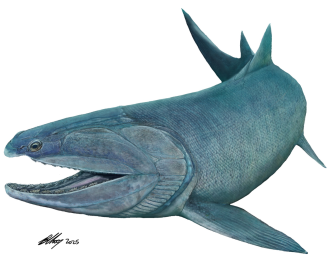
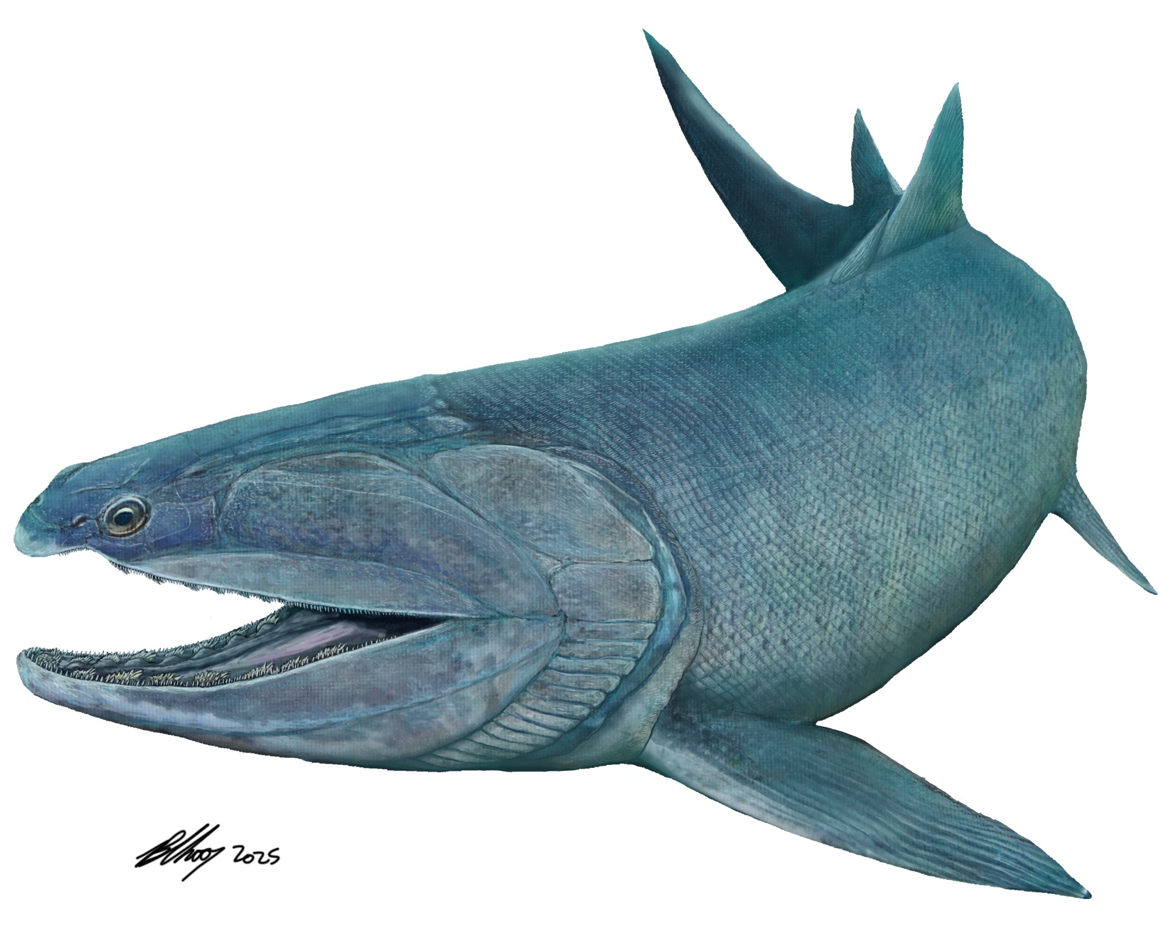
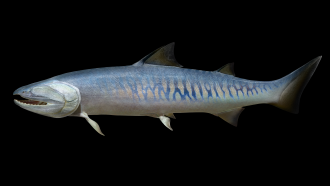
Megamastax graphic by Brian Choo
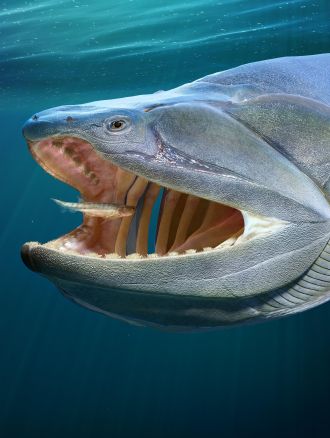
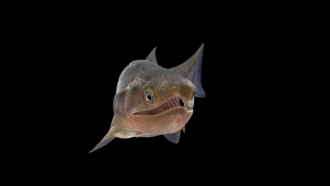
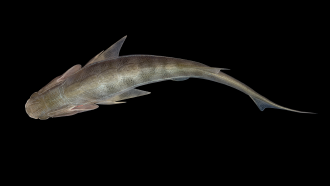
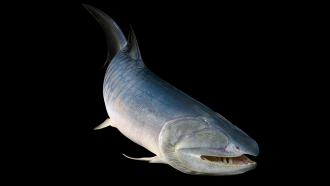
Megamastax amblyodus
Eosteus chongqingensis (left) and Megamastax amblyodus (right)
Life reconstruction of the oldest osteichthyan Eosteus chongqingensis
Life reconstruction of the biggest Silurian vertebrate Megamastax amblyodus
Life restoration animation of Eosteus chongqingensis
Life restoration animation of Megamastax amblyodus
Journal/
conference:
Nature
Research: Link to Paper 1 | Paper 2
Organisation/s: Flinders University, Institute of Vertebrate Paleontology and Paleoanthropology, China
Funder: Paper 1: This research was supported by the National Science Foundation of China (42130209, 42272028); the Open Research Program of the International Research Centre of Big Data for Sustainable Development Goals (CBAS2023ORP01) and the Key Program for Technological Innovation and Application Development of Chongqing (CSTB2023TIADKPX0098). P.E.A. acknowledges the support of a Wallenberg Scholarship from the Knut and Alice Wallenberg Foundation. Paper 2: This research was supported by the Open Research Programme of the International Research Center of Big Data for Sustainable Development Goals (CBAS2023ORP01), the National Science Foundation of China (42130209, 92255301). P.A. acknowledges the support of a Wallenberg Scholarship from the Knut and Alice Wallenberg Foundation.
Media Contact/s
Contact details are only visible to registered journalists.