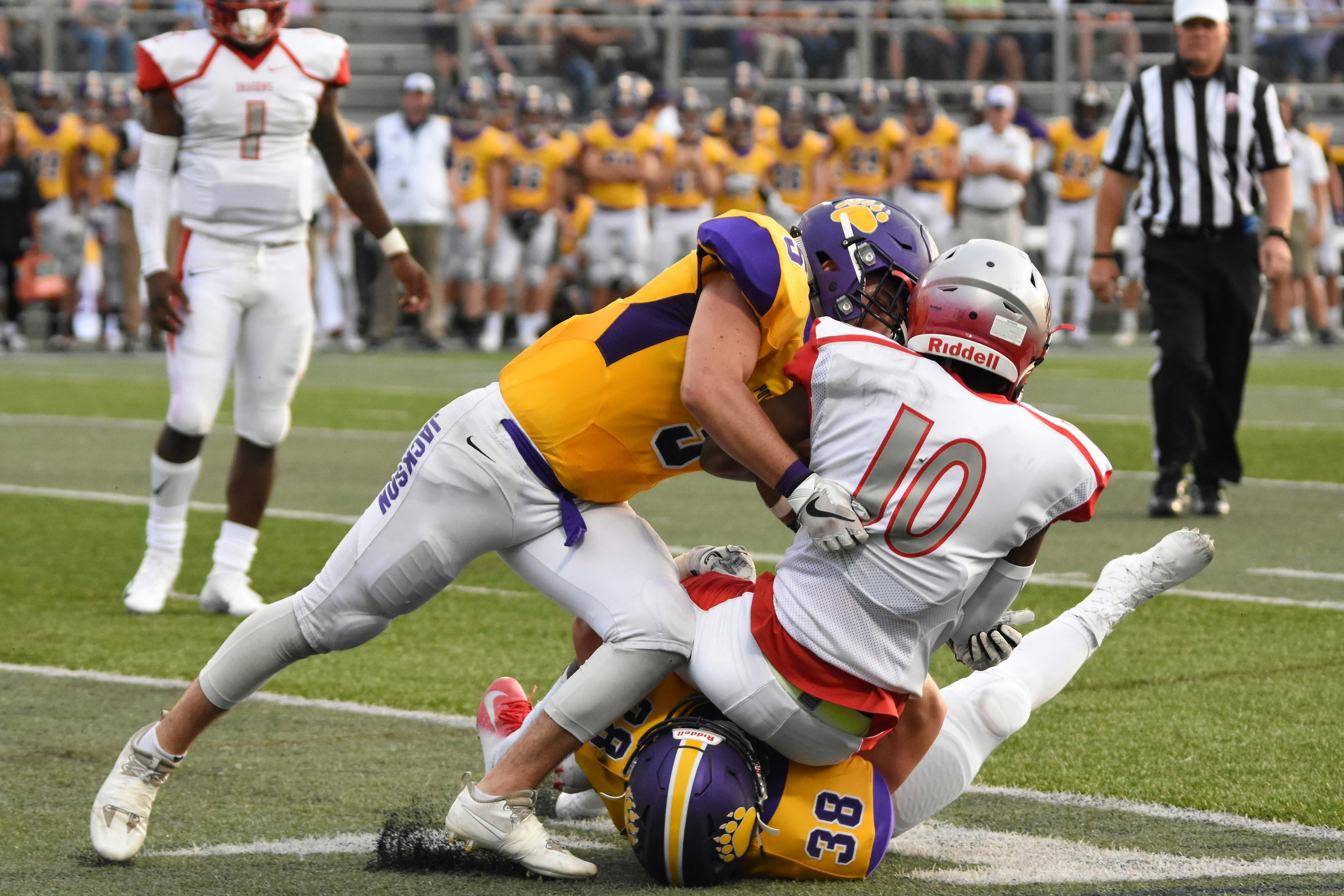
Playing American football linked to poorer mental health and lower brain function in middle age

Publicly released:
International
Photo by Chris Chow on Unsplash

People who played American football in their younger years score worse on tests measuring brain function and mental health, according to US researchers who say this link is stronger for those who had a career in the sport. The team recruited 3970 male former American footballers who were now over 40 - including those who just played as juniors all the way up to professional players. They put the participants through several tests aimed at measuring brain function, memory and depressive symptoms, and in a second study compared the results of 661 of the footballers with 282 men who didn't play football. The researchers say the footballers performed worse on the brain tests than the controls, and this link strengthened the longer a participant had played the sport.

News release

From: JAMA

Cognitive and Neuropsychiatric Function in Former American Football Players

About The Study: In this cross-sectional study of former American football players, prior American football participation was associated with worse later-life cognitive and neuropsychiatric function. These findings support a dose-response association with years and level of play, providing context to help clinicians and researchers assess the risk of symptoms among former players.

Attachments

Note: Not all attachments are visible to the general public. Research URLs will go live after the embargo ends.

Research JAMA, Web page The URL will go live after the embargo ends
Journal/
conference:
JAMA Network Open
Research:Paper
Organisation/s: Boston University, USA
Funder: Data collection for the Head Impact and Trauma Surveillance Study is funded by the grants R01NS119651 and R01NS132290 from the National Institute on Aging.
Media Contact/s
Contact details are only visible to registered journalists.