 Sign In



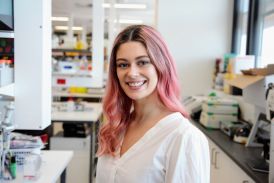
Dr Amy Wilson
Contact details are only visible to registered journalists. To register click hereExpertise
ovarian cancer, ovarian cancer immunotherapy, cancer biology and therapies.Media
More Media Info
Previous media experience
Beyond my professional roles, I am deeply committed to fostering meaningful scientific engagement and communication to the broader public. I take any opportunity to talk about current research and scientific concepts, and have been invited to participate in several talks and panel discussions at community fundraising events, high school and corporate visits. Examples include: an SBS Croatia interview, world ovarian cancer day public panel discussions for the Witchery White Shirt campaign, and public talks for various fundraiser events.
In parallel, I have prioritised mentorship and training, supervising undergraduate and graduate students and actively participating in educational initiatives aimed at inspiring the next generation of scientists. I am passionate about nurturing future generations in STEMM, particularly for girls, young women, and gender-diverse individuals. To provide some examples, I was involved in a workshop as an ‘Emerging Scholar’ at Ruyton Girls’ School where I spoke to year 9-10 girls interested in STEMM, I spoke at a University of Melbourne career night as an early-career woman in STEMM, and I am part of the STEMpals program for grade 5 girls interested in science.
Links to media clippings
Biography
Amy is an ovarian cancer researcher, research advisor, and science communicator working at the intersection of research, strategy, and public engagement.Originally trained as a cancer biologist, Amy was drawn to science by a simple question: what happens when the cells in our body stop following the rules? That curiosity led her to ovarian cancer, one of the deadliest cancers affecting individuals assigned female at birth.
During her PhD, Amy studied ovarian cancer leader cells, aggressive cancer cells that drive spread and resist treatment. Her research explored how these cells interact with the immune system and contribute to poor patient outcomes, with the aim of finding smarter and more effective treatments for this disease.
Amy is a science communicator, contributing to conversations about cancer research, equity, and women’s health through talks, panels, podcasts, and education-focused content.
Her work is informed by lived experience. Amy is neurodivergent, part of the LGBTQIA+ community, grew up in regional Victoria, and lives with endometriosis and adenomyosis — perspectives that shape her advocacy for inclusive research systems and better visibility for under-researched conditions and under-represented individuals.
Alongside her professional work, Amy is involved in STEM outreach and mentoring, including the Superstars of STEM program (2025-26).