 Sign In



 Australia; NSW
News release
From:
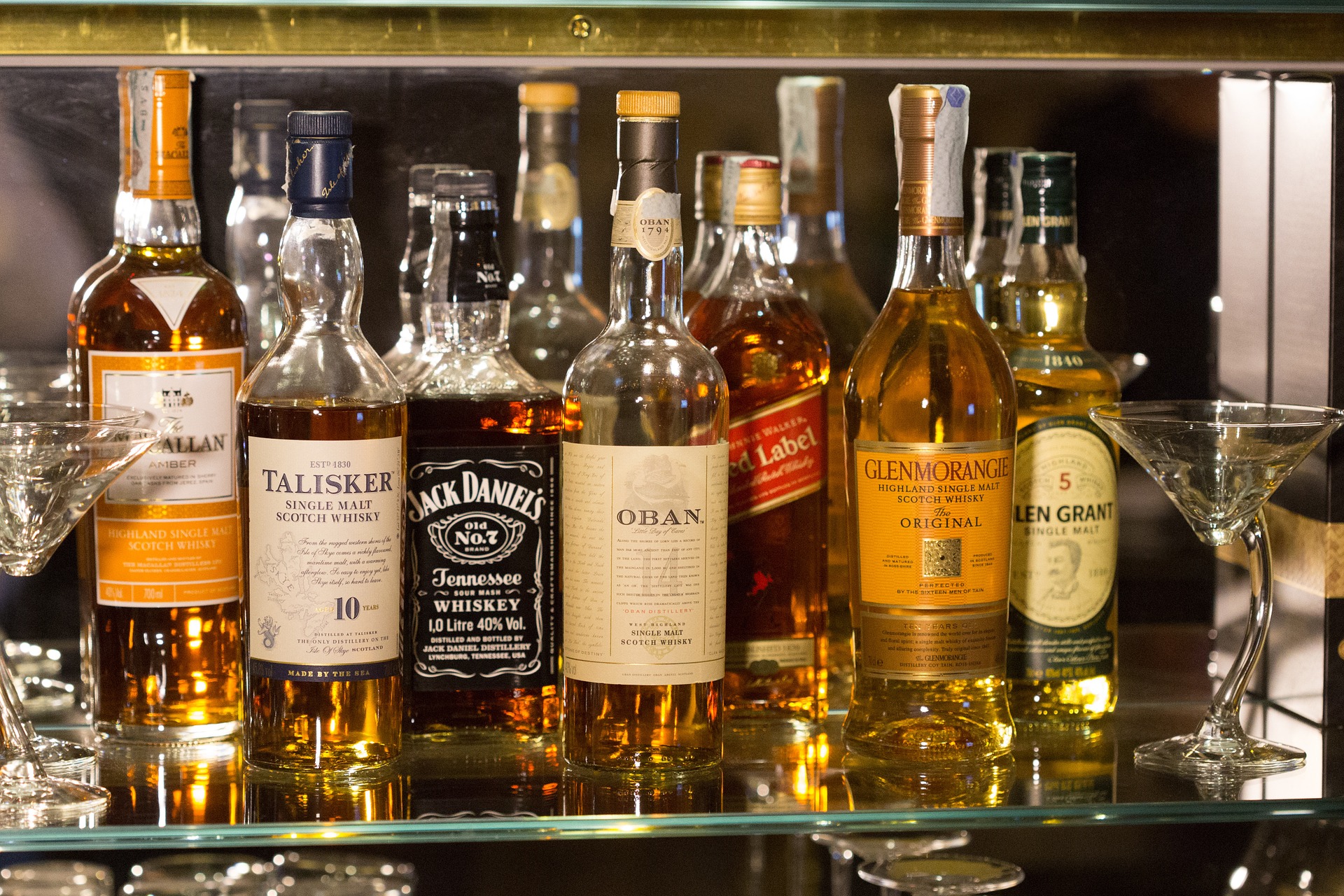
Scotch or Irish, single malt or blended? While the rare whisky enthusiast might be able to distinguish the good stuff from run-of-the-mill by smell alone, most tipplers rely on the label, black or otherwise.
Whisky is one of the most popular alcoholic beverages worldwide and, with some high-end brands fetching five or six figures, it’s also a favourite target for fraud. It’s been estimated that up to a third of rare and collectible whiskies could be fakes.
To combat this, researchers have developed an electronic nose (e-nose) that can distinguish between different brands, origins, and styles by “sniffing” the liquor.
The project was led by Associate Professor Steven Su with PhD students Wentian Zhang and Taoping Liu, from the University of Technology Sydney (UTS), in collaboration with chemists Professor Shari Forbes and Dr Maiken Ueland.
“Up until now, detecting the differences between whiskies has required either a trained whisky connoisseur, who might still get it wrong, or complex and time-consuming chemical analysis by scientists in a lab, said Associate Professor Su.
“So to have a rapid, easy to use, real-time assessment of whisky to identify the quality, and uncover any adulteration or fraud, could be very beneficial for both high-end wholesalers and purchasers,” he said.
The team used a new e-nose prototype (called NOS.E), developed at UTS, to identify the differences between six whiskies by their brand names, regions, and styles in less than four minutes.
The experiment used samples of three blended malts and three single malt whiskeys, including Johnnie Walker red and black label whiskey, Ardberg, Chivas Regal and a Macallan's 12-year-old whisky.
A rapid, easy to use, real-time assessment of whisky to identify the quality, and uncover any adulteration or fraud, could be very beneficial for both high-end wholesalers and purchasers.
The study, recently published in the journal IEEE Sensors, showed the e-nose reached 100% accuracy for detecting the region, 96.15% accuracy for brand name and 92.31% accuracy for style.
NOS.E is designed to mimic the human olfactory system, using eight gas sensors to detect odours in a vial of whisky. The sensor array generates the unique signal matrix according to the different odour molecules it comes into contact with.
It then sends the data to a computer for analysis, with a machine learning algorithm trained to recognise whisky characteristics.
The researchers confirmed the NOS.E findings using state-of-the-art lab tests on the whisky samples: time-of-flight mass spectrometry paired with two-dimensional gas chromatography, which yielded similar results.
The technology has applications not only in the alcohol industry, with beverages such as wine and cognac as well as whisky, but also for other products that are subject to counterfeiting such as high-end perfume.
The e-nose technology has also been used to detect illegal animal parts sold on the black market, and has great potential for health applications and disease detection.
Wentian Zhang, Taoping Liu, Amber Brown, Maiken Ueland, Shari L. Forbes and Steven Weidong Su, “The Use of Electronic Nose for the Classification of Blended and Single Malt Scotch Whiskey,” in IEEE Sensors Journal.
Attachments
Note: Not all attachments are visible to the general public. Research URLs will go live after the embargo ends.


