 Sign In



 International

News release
From:
Microbiology: DNA analysis indicates origins of the Black Death *PRESS BRIEFING* *IMAGES*
recently updated!
Please note that this is an uncorrected proof, and the final version may be altered. Please check back for the final PDF, which will be added here as soon as it is ready.
Related documents (3)Related images (2)
DNA analysis of seven individuals who died in the 14th century suggests that the Black Death may have originated in central Eurasia. The research is published in Nature.
The Black Death, caused by the bacterium Yersinia pestis, swept across Eurasia between AD 1346 and 1353 and is estimated to have cost the lives of up to 60% of the population. Despite extensive research using historical records, ancient DNA and modern genomics, the geographic origin of the Black Death remains uncertain, with suggested potential sources ranging from western Eurasia to eastern Asia.
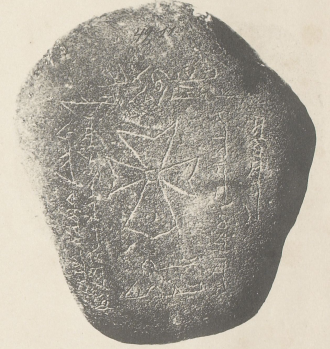
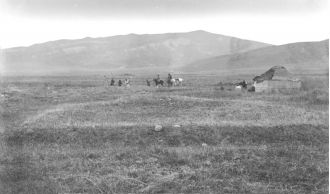
Johannes Krause, Philip Slavin and colleagues explored whether Lake Issyk-Kul in modern-day Kyrgyzstan may have been the potential source of the 14th century Black Death pandemic. Archaeological evidence from the nearby cemeteries of Kara-Djigach and Burana, located in the Chu Valley, identified a disproportionally high number of burials between 1338 and 1339 and a number of the tombstones noted the cause of death as ‘pestilence’.
The authors translated and analysed surviving archival data about the excavations and combined this with ancient DNA analysis of seven individuals buried at the sites. They found traces of the plague bacterium in three of the DNA samples and suggest that it played a role in the epidemic event. The authors suggest that the Y. pestis genomes represent a single strain and are the most recent common ancestor of a diversification event commonly associated with the pandemic’s origins. Comparison with current Y. pestis strains in the region indicate that the ancient strain had a local origin. On the basis of historical data and artefacts, including tombstone inscriptions and coin hoards, the authors propose that the region had diverse communities that relied on trade with regions across Eurasia. They suggest that this may have contributed to the spread of the disease during the 14th century.
**Please note that an online press briefing for the paper below will take place UNDER STRICT EMBARGO on Tuesday 14 June at 3 pm London time (BST) / 10 am US Eastern Time**
Authors Johannes Krause, Philip Slavin and Maria Spyrou will discuss the research. This will be followed by a Q&A session. You can register to attend the briefing at the following link.
Multimedia

Attachments
Note: Not all attachments are visible to the general public. Research URLs will go live after the embargo ends.


