 Sign In



 International
News release
From:
Geology: Antarctica’s Blood Falls reveals an ancient marine community
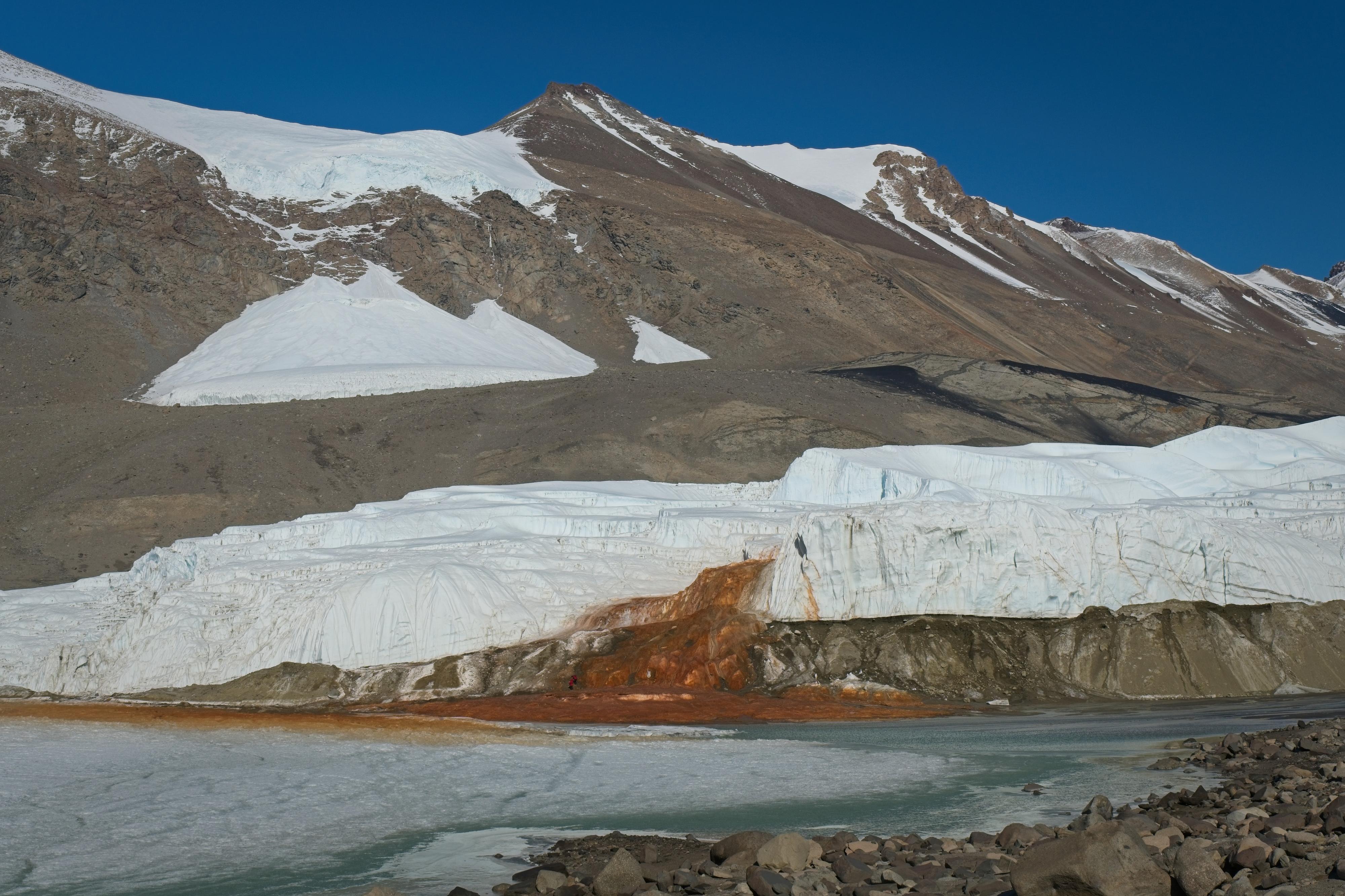
Salty water flowing through Antarctica’s Blood Falls contains a distinct community of marine-specific microorganisms, providing evidence that the brine system beneath the glacier has a marine origin, according to a paper published in Nature Geoscience. The findings offer new insights into how microbial communities can persist through major environmental transitions.
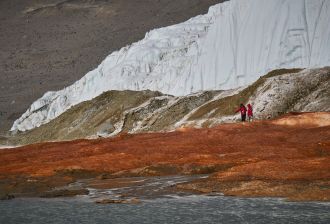
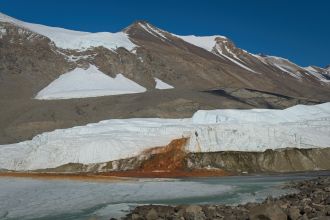
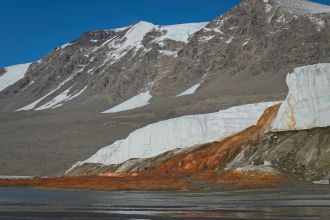
Blood Falls, located at the edge of the Taylor Glacier in the McMurdo Dry Valleys of Antarctica, features a dramatic outpouring of crimson water into the proglacial Lake Bonney below. While the waterfall’s colour has been explained by the presence of iron-rich brine that’s emitted from beneath the glacier, where that water came from remains unclear. Prior geochemical studies have suggested that the subglacial brine that feeds Blood Falls likely originated when seawater inundated Taylor Valley during past warm periods before becoming isolated beneath the advancing Taylor glacier when sea-levels fell.
Angela Zoumplis and colleagues analyzed 167 samples of water, sediment, and air from the McMurdo Dry Valleys region to assess the origins of the microbes at Taylor Glacier and Blood Falls. By applying a suite of genetic techniques to identify eukaryotic and prokaryotic taxa in each sample, they found that microorganisms in the red-hued ice, mud and sediment at the terminus of the glacier were almost entirely associated with marine environments, whereas surrounding sites were dominated by freshwater and terrestrial populations. More specifically, the proportion of eukaryotes shared with nearby oceanic samples was higher at the glacier terminus, where Blood Falls flows, than at other Dry Valleys sites (9.34% versus 1.15%, respectively), indicating a strong marine affinity of the brine-fed community.
These findings indicate that the subglacial water that feeds Blood Falls likely originated from seawater becoming cut off from the ocean when sea levels fell and the Taylor Glacier advanced over it. Likewise, the authors note that it is unlikely that marine microorganisms observed in samples from the Taylor Glacier terminus were deposited there by modern wind transport alone. Future work could further study these microorganisms to better understand when the subglacial water became isolated, offering insights into the evolution of the polar landscape.
Multimedia

Attachments
Note: Not all attachments are visible to the general public. Research URLs will go live after the embargo ends.


