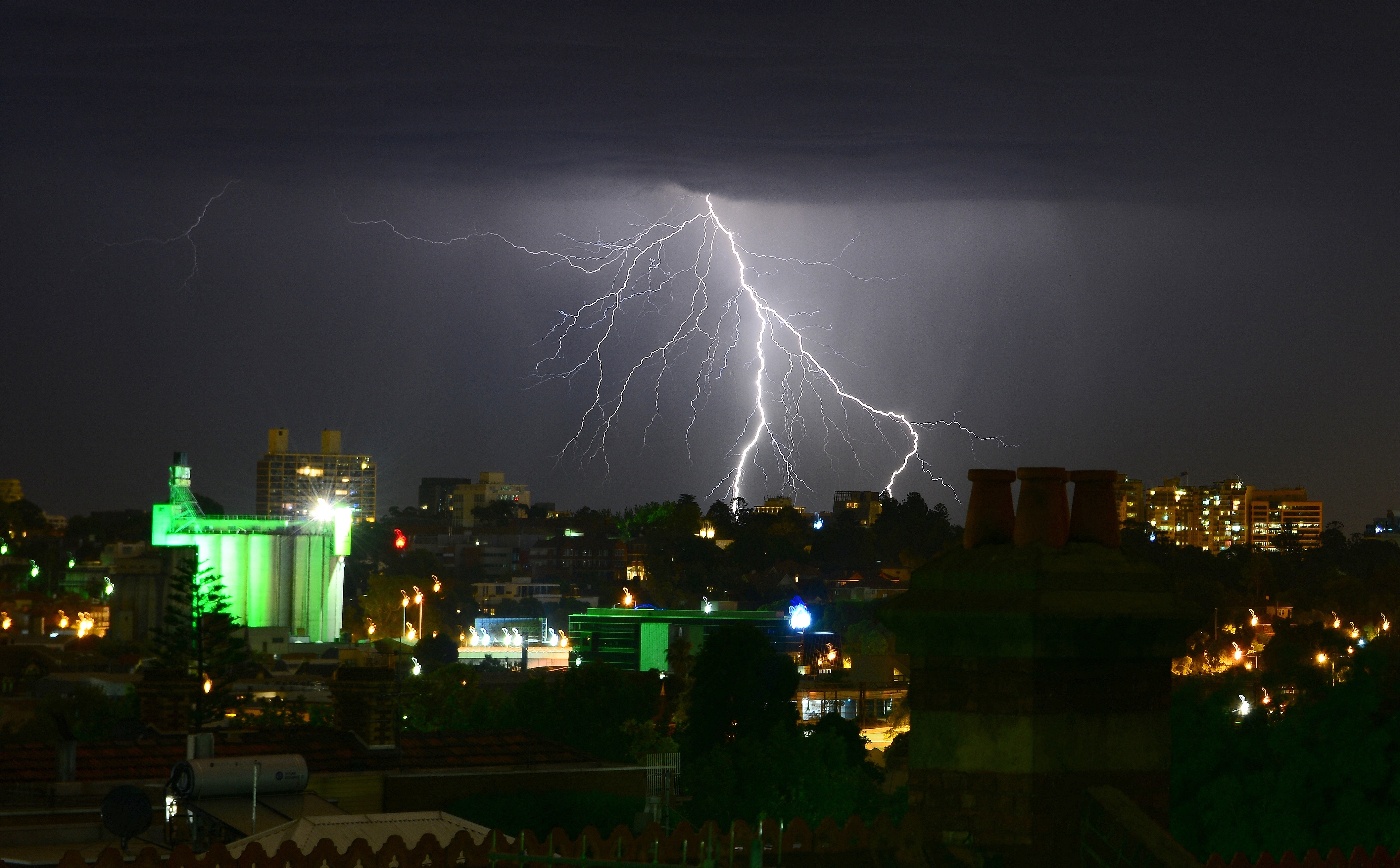
What caused Melbourne's deadly thunderstorm asthma?

Publicly released:
Australia; VIC; TAS
Chris Phutully from Australia, CC BY 2.0 <https://creativecommons.org/licenses/by/2.0>, via Wikimedia Commons

Australian researchers have looked at what could have caused the tragic thunderstorm asthma event in Melbourne on 21 November 2016, and found that it was not likely to have been caused by water is the air breaking up the pollen - which is commonly suggested as the mechanism underlying thunderstorm asthma. Instead, they say the models suggest lightning may have played a role. They looked at mechanisms including mechanical friction from wind gusts, electrical build-up and discharge incurred during conditions of low relative humidity, and lightning strikes. They say their results suggest that these mechanisms likely operated in tandem with one another, but the lightning strike mechanism was the only one to generate a pattern of sub-pollen particles following the path of the storm, and also more accurately describes how the pattern of emergency calls for ambulances evolved after the storm.

Attachments

Note: Not all attachments are visible to the general public. Research URLs will go live after the embargo ends.

Research PLOS, Web page Please link to the article in online versions of your report (the URL will go live after the embargo ends).
Journal/
conference:
PLOS ONE
Research:Paper
Organisation/s: CSIRO, The University of Melbourne, Bureau of Meteorology, University of Tasmania, Environment Protection Authority
Funder: This research has been supported by the Victorian Department of Health and Human Services (contract no. C5949). https://www.dhhs. vic.gov.au/ The funders had no role in study design, data collection and analysis, decision to publish, or preparation of the manuscript.
Media Contact/s
Contact details are only visible to registered journalists.