 Sign In



 Australia; International; QLD
News release
From:
Cracked phone screens could become a thing of the past thanks to breakthrough research conducted at The University of Queensland.
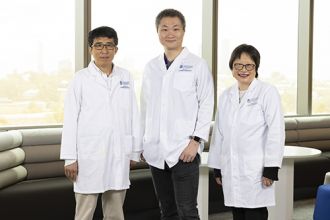
The global team of researchers, led by UQ’s Dr Jingwei Hou, Professor Lianzhou Wang and Professor Vicki Chen, have unlocked the technology to produce next-generation composite glass for lighting LEDs and smartphone, television and computer screens.
The findings will enable the manufacture of glass screens that are not only unbreakable but also deliver crystal clear image quality.
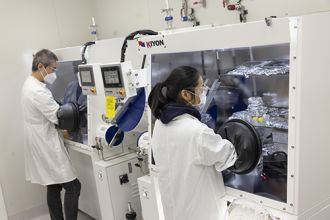
Dr Hou said the discovery was a huge step forward in perovskite nanocrystal technology as previously, researchers were only able to produce this technology in the bone-dry atmosphere of a laboratory setting.
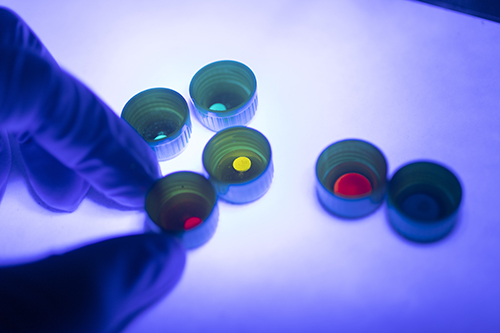
“The emitting materials are made from nanocrystals, called lead-halide perovskites,” he said.
“They can trap light and store energy – think solar panels but on the small scale.
“Unfortunately, these nanocrystals are extremely sensitive to light, heat, air and water – even water vapour in our air would kill the current devices in a matter of minutes.
“Our team of chemical engineers and material scientists has developed a process to wrap or bind the nanocrystals in porous glass.
“This process is key to stabilising the materials, enhancing its efficiency and inhibits the toxic lead ions from leaching out from the materials.”
Dr Hou said the technology was scalable and opened the door for many applications.
“At present QLED or quantum dot light-emitting diode screens are considered the top performer for image display and performance,” he said.
“This research will enable us to improve on this nanocrystal technology by offering stunning picture quality and strength.”
Professor Vicky Chen said it was an exciting development.
“Not only can we make these nanocrystals more robust but we can tune their opto-electronic properties with fantastic light emission efficiency and highly desirable white light LEDs, “ Professor Chen said.
“This discovery opens up a new generation of nanocrystal-glass composites for energy conversion and catalysis.”
The findings have been published in the Journal Science.
This research is a collaborative effort from UQ, the University of Leeds, Université Paris-Saclay and University of Cambridge.
Multimedia

Attachments
Note: Not all attachments are visible to the general public. Research URLs will go live after the embargo ends.


