Tropical cyclone-related deaths vary widely between countries, NZ sees most respiratory deaths

Publicly released:
Australia; New Zealand; VIC
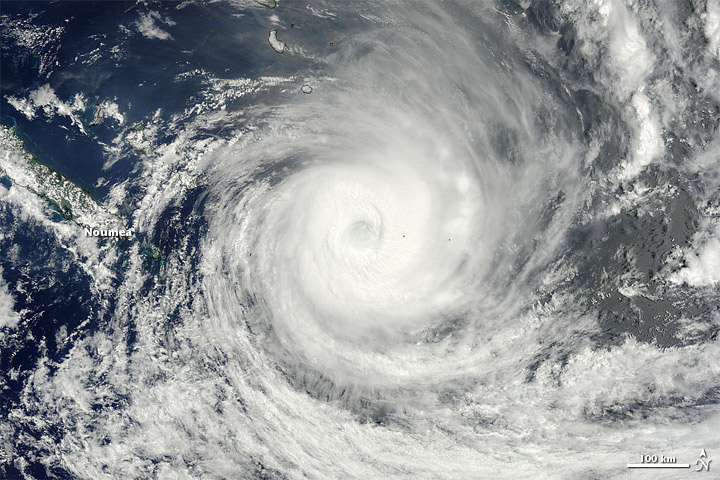
 CC BY 2.0. Credit: NASA Earth Observatory. https://commons.wikimedia.org/w/index.php?curid=20106751
CC BY 2.0. Credit: NASA Earth Observatory. https://commons.wikimedia.org/w/index.php?curid=20106751

An Australian-led analysis of deaths from all causes, heart problems, and respiratory conditions during tropical cyclones in 18 countries that experienced a total of 382 cyclones between 1980 and 2019 found the most deaths occurred in Guatemala, Brazil, and New Zealand for all-cause, cardiovascular, and respiratory deaths, respectively. More severe storms tended to cause a higher number of deaths, although this varied between countries. Deaths related to cyclones have generally decreased since 1980, especially for the Philippines, Taiwan, and the USA, the authors say, although heart-related and all-cause deaths have increased in Japan. The findings highlight the need for differing, targeted strategies to reduce deaths in different countries and regions, the authors conclude

Attachments

Note: Not all attachments are visible to the general public. Research URLs will go live after the embargo ends.

Research PLOS, Web page
Journal/
conference:
PLOS Medicine
Research:Paper
Organisation/s: Monash University, University of Otago
Funder: WH and KJ were supported by China Scholarship Council funds (nos.202006380055 and 202006240087); ZY and WY were supported by a Monash Graduate Scholarship and a Monash International Tuition Scholarship; YZ was supported by NHMRC e-Asia Joint Research Program Grant (GNT2000581); TV and CO acknowledged support from the German Federal Ministry of Education and Research (BMBF) under the research project QUIDIC (01LP1907A); RX was supported by VicHealth Postdoctoral Research Fellowships 2022; SL was supported by an Emerging Leader Fellowship of the Australian National Health and Medical Research Council (GNT2009866); YG was supported by Career Development Fellowship (GNT1163693) and Leader Fellowship (GNT2008813) of the Australian National Health and Medical Research Council; AG was supported by the Medical Research Council UK (grant ID MR/R013349/1), the Natural Environment Research Council UK (grant ID NE/ R009384/1), and the EU’s Horizon 2020 project, Exhaustion (grant ID 820655); SiH and FP are supported by the Health Research Council of New Zealand.
Media Contact/s
Contact details are only visible to registered journalists.