 Sign In



 International
News release
From:
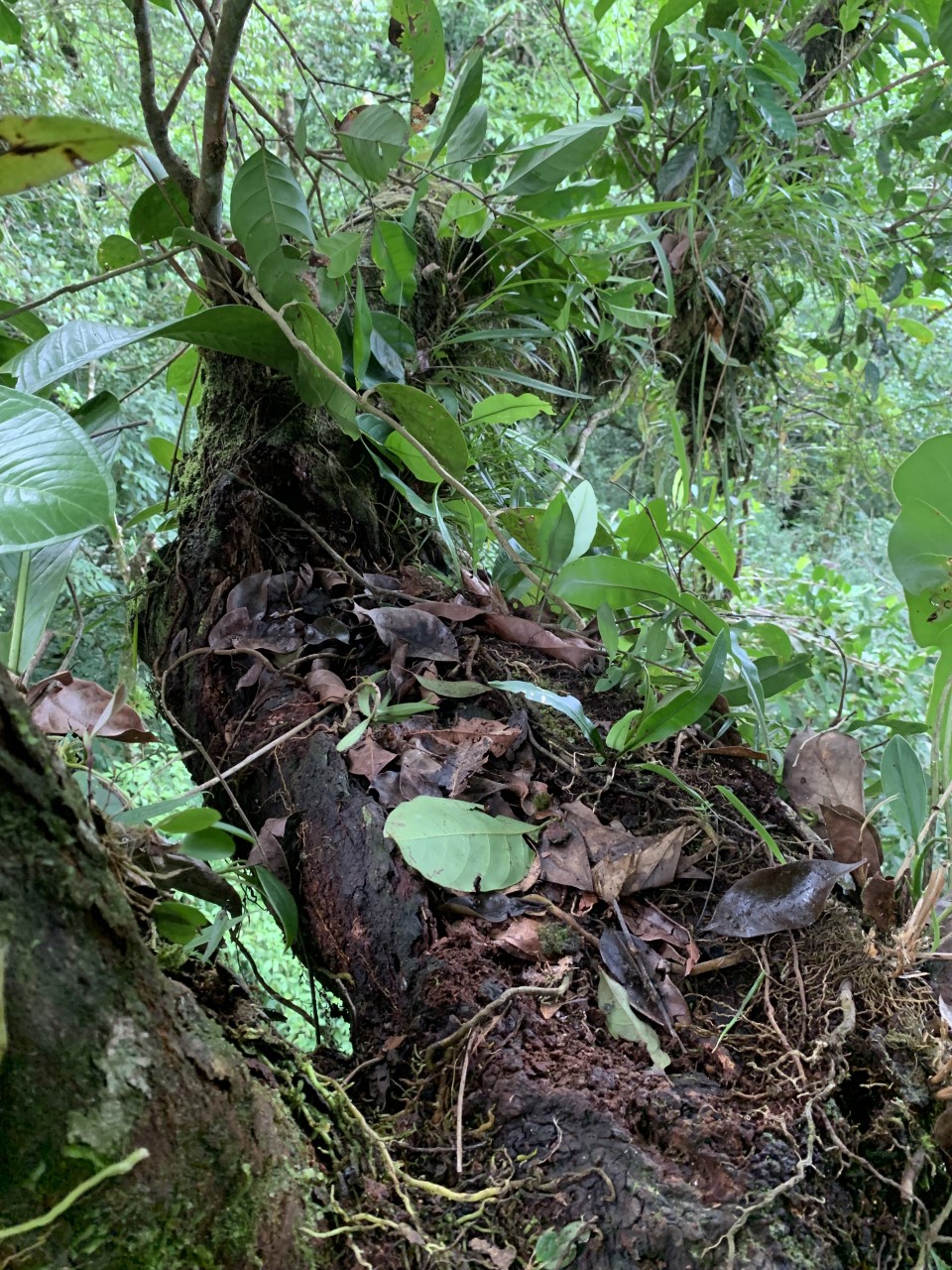
NEW ORLEANS—New research reveals a previously underappreciated way old-growth forests have been recycling and storing carbon: treetop soils. Branches in forest canopies can hold caches of soil that may store substantially more carbon than soils on the ground beneath them, and scientists are just beginning to understand how much carbon canopy soils — which exist on every continent except Antarctica — could store.
The new research on these unique soils, being presented on Wednesday, 15 December at 5:00 p.m. CST at AGU Fall Meeting 2021, marks the first attempt to quantify carbon capture by canopy soils. The work highlights another way old-growth forests are rich, complex ecosystems that cannot be quickly replaced by replanting forests.
Tree branches collect fallen tree leaves and other organic material over hundreds of years, like the ground does. On top of the branches, the plant litter decomposes as it accumulates, forming a carbon-rich layer that can be several inches thick. The researchers climbed up into the rainforest canopy in Costa Rica, instruments in hand, to find out just how much carbon canopy soils can contain.
Active carbon, a short-term storage pool of organic carbon, was three times higher in canopy soil compared to soils underfoot, the researchers found.
“We knew these would be really organic-rich soils, but we didn’t expect the extremely large amount of carbon compared to mineral soils,” said Hannah Connuck, an undergraduate researcher at Franklin and Marshall College who will be presenting the study results.
The researchers are still calculating the total concentration of organic carbon at their research site, but other research has found canopy soils to have up to 10 times higher concentrations of organic carbon, according to soil scientist Peyton Smith, a study co-author and Connuck’s soil science mentor at Texas A&M University.
Connuck and Smith also measured how much carbon dioxide was being released by microbial organisms living in the canopy soils, which is critical for knowing whether soils are storing or releasing carbon overall. They found that even though the microbes were releasing higher volumes of carbon dioxide than ground soils, their rate of carbon storage was rapid enough to compensate, likely making canopy soils a net carbon sink that has not been considered in carbon models yet.
“It could be a substantial carbon sink, and we need to account for it,” Smith said.
Like other soils, canopy soils take a long time to form, and therefore take a long time for a forest to recover if an area of old-growth is cut down. The soils also host unique microbiomes, including highly diverse microbial organisms and canopy-specific plants like epiphytic orchids.
“It’s a good argument for keeping primary and other old-growth forests around, rather than harvesting and replanting with secondary growth forests,” Connuck said.
Attachments
Note: Not all attachments are visible to the general public. Research URLs will go live after the embargo ends.


