Sign In



 Australia; NSW
News release
From:
Treats and training are better for live camel transport: new research
Around the world, millions of camels are farmed for milk and meat while others are used in leisure activities like racing and riding. Yet the treatment of these animals as livestock can be harsh, especially during transport.
New international research, led by Southern Cross University animal welfare expert Associate Professor Barbara Padalino and published in the journal Animals, shows that more humane camel transportation is possible by using food as an incentive in place of physical punishment.
Whipping, shouting and other traditional practices like shackling all increase the stress on the animals during truck loading and unloading, creating potentially hazardous situations for both camels and handlers.
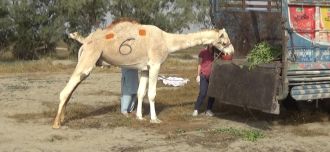
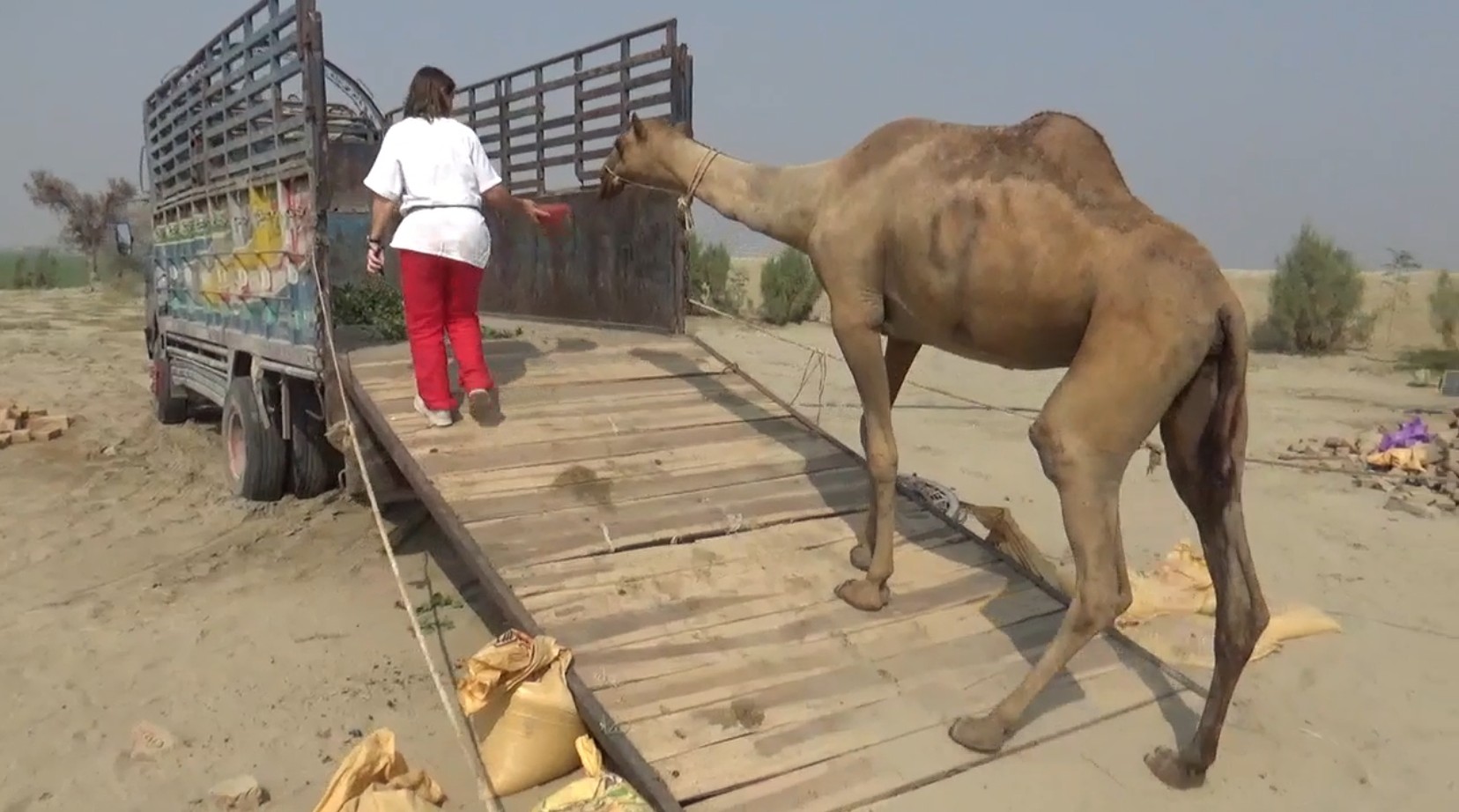
The research team – from the University of Bologna in Italy, Pakistan’s Bahauddin Zakariya University and Southern Cross University in Australia – trained camels of both the Kohi and Barilya breeds to self-load and unload using a combination of positive reinforcement techniques for calm behaviour.
Over the course of 10 days on a mixed-use farm, the dromedary (Camelus dromedarius) (one back hump) camels were taught to approach and enter a transport vehicle. Each time they successfully completed a stage of the loading or unloading, they were rewarded with a ‘treat’ or food supplement and a clicking sound was made by the trainer.
The camels’ wellbeing was measured using infrared thermography, a widely used, non-invasive technique that uses eye temperature as an indicator of stress, fear or pain.
Researchers found the camels responded well over time to the trainer’s clicker and the enticement of additional food, to the point where most would load and unload themselves without aggressive coercion within nine days.
“We tend to think of them as wild animals, but camels demonstrate the same characteristics as other livestock, based on their individual temperament or experience with humans. They can be shy, obstinate or fearful just as much as a horse or a cow during transport,” said Associate Professor Padalino of Southern Cross University.
“By positively reinforcing behaviour, we can train these animals – that can weigh up to 700 kilos – to comply with instructions. This makes a large animal much easier to handle safely during the critical stages of transportation.”
Associate Professor Padalino has previously published research on this technique with horses and donkeys. She said it could theoretically be applied to other large animals such as beef cattle.
Australia has the largest population of feral camels in the world – an estimated one million animals – global population numbers around 40 million animals. While the Australian camel industry is a small one, every year thousands of animals are farmed for meat, dairy and live export; all regarded as a preferable option to aerial culling.
Associate Professor Padalino said the positive reinforcement technique could be used anywhere in the world and the research team is planning to hold training workshops in the Middle East once the geopolitical situation has stabilised.
“There has been great progress in our approach to animal welfare for live exports in recent years. This research demonstrates that with patience and positive reinforcement, we can drastically improve the stress associated with loading and unloading of large animals like camels for transport,” she said.
“This is obviously better for the animal and handler but can also have a positive effect on the quality of meat produced after slaughter.”
Multimedia