 Sign In



 New Zealand
News release
From:
KO NGĀ PUIPUIAKI PŪTAIAO A TE PIRIMIA PRIME MINISTER’S SCIENCE PRIZES
Prime Minister’s Science Prizes announced
Researchers who pioneered a new treatment for newborns with brain injury, an emerging scientist who developed ways to calculate how climate change is influencing extreme weather, and researcher who counters misinformation and disinformation on controversial scientific debates have been awarded Prime Minister’s Science Prizes.
Also recognised are a teacher who is integrating technology, design, and cultural traditions and a student who has developed a smartphone app to improve driver safety.
The Prizes were presented by the Prime Minister of New Zealand, Rt Hon Christopher Luxon, and the Minister of Science, Innovation and Technology, Hon Penny Simmonds, at Parliament on 30 June 2026.
The five Prizes have a combined value of NZ$975,000, which the winners will use to support further research or education.
At the ceremony, the Prime Minister announced the Prime Minister’s Innovation Prize – a new category to recognise individuals or teams who are translating scientific knowledge into real-world products, services, and solutions to benefit Aotearoa New Zealand.
See www.pmscienceprizes.org.nz for more information.
Prime Minister’s Science Prize
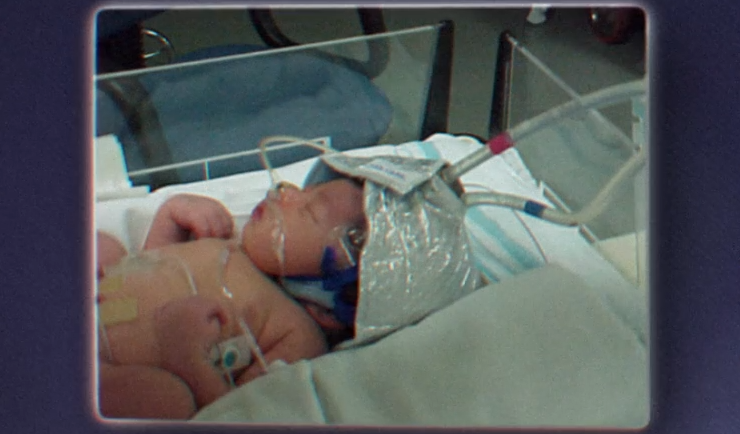
The Prime Minister’s Science Prize for a transformative scientific advance has been awarded to the Fetal Physiology and Neuroscience team at Waipapa Taumata Rau, the University of Auckland. The team, co-led by the late Professor Alistair Gunn FRSNZ and Professor Laura Bennet FRSNZ, with Associate Professor Joanne Davidson, established mild cooling as a treatment for brain injury at birth. Their achievements build on work on therapeutic brain cooling started by Prof Gunn’s mother, the late Professor Tania Gunn.
Worldwide, at least a million babies a year die or develop brain injury due to low oxygen levels at birth. Therapeutic cooling is the only treatment proven to reduce all categories of disability, and results in a better quality of life for these babies. This life-saving treatment is now the standard of care globally and has prevented severe disability for thousands of babies.
Sadly, Prof Gunn died in May. “Prof Alistair Gunn was a world-renowned expert in perinatal neuroscience. He was the driving force behind the development of therapeutic hypothermia,” says Assoc Prof Davidson.
“Alistair was a great inspiration to his colleagues and to all the students and emerging researchers that he mentored over the years. He will be greatly missed by the team in the Fetal Physiology and Neuroscience Group as well as the wider scientific community.”
Prime Minister’s MacDiarmid Emerging Scientist Prize
The Prime Minister’s MacDiarmid Emerging Scientist Prize was presented to Dr Luke Harrington, from The University of Waikato, Te Whare Wānanga o Waikato, for outstanding research on climate science.
Dr Harrington has studied the complex relationship between climate change and the likelihood and intensity of extreme weather events.
He calculates the role of human-induced climate change in elevating the risk of extreme weather – and the resulting social impact and economic costs.
Producing evidence to inform policies in Aotearoa New Zealand and globally, his research enables adaptation plans to mitigate the risks from a warming climate – particularly for vulnerable communities.
“My research focuses on how climate change affects extreme weather and how that flows through to affecting people – both today but also into the future as well,” Dr Harrington says.
Prime Minister’s Science Teacher Prize
The Prime Minister’s Science Teacher Prize is presented to Whaea Nan Walden-Moeung (Te Aitanga-a-Māhaki), of Wellington East Girls’ College.
Whaea Nan Walden-Moeung is an innovative educator who combines the latest technologies like 3D printing, laser cutting, and digital modeling with traditional textiles and cultural narratives.
She empowers her students to engineer contemporary Māori artefacts using both natural and high-tech materials.
Through design showcases, and connections to industry, she is inspiring her students to follow careers in architecture, design, and engineering.
“When I teach technology, it's not just about sewing and making clothes, it's also about producing systems. It's also about using STEM education. So not just technology, but science, mathematics and – my favourite – engineering. To be able to engineer something means to pick it apart and then put it all back together again,” Whaea Nan says.
Prime Minister’s Science Communication Prize
The Prime Minister’s Science Communication Prize is presented to Associate Professor Nic Rawlence from the University of Otago, Ōtākou Whakaihu Waka.
Motivated to inspire the next generation of scientists and their teachers, Associate Professor Rawlence not only works to understand prehistoric ecosystems – he also communicates his discoveries through a range of channels, from social media to educational resources.
He is a prolific blogger and commentator on topics ranging from the genetic code of moa to the latest fossil finds.
He also takes on the role of ‘fact checker’ for controversial topics like de-extinction and genetic modification, adding scientific evidence to these global conversations.
“We look at how these ecosystems functioned and how they responded – or in some cases didn't respond, to our dynamic geological, climatic, and human history. And then how do we actually use that information going forward for evidence-based kaitiakitanga and conservation management in a fast-changing world?,” says Assoc Prof Rawlence.
Prime Minister’s Future Scientist Prize
The Prime Minister’s Future Scientist Prize is presented to Jesse Rumball-Smith, who attended Wellington College.
Modern cars have many advanced safety features, but what about older vehicles? Jesse designed a smartphone app for road safety that seeks to bridge this gap.
The app is built on psychological principles for modifying behaviour.
It monitors drivers for signs of fatigue or ‘road rage’, and also alerts them to environmental hazards or excessive speed.
Overall, the app seeks to reduce road fatalities – in Aotearoa New Zealand and beyond.
“We do not need to wait for our fleet to turn over to these new fancy cars with all these safety features. With a bit of innovation, a bit of behavioural psychology, and the supercomputer in everybody's pockets, we can all be safe on our roads,” says Jesse Rumball-Smith.
Ends
Note: More detailed writeups of all the winners are in the attached media release below.

