 Sign In



 International
News release
From:
Breathalyzer that sniffs out when your body starts burning fat
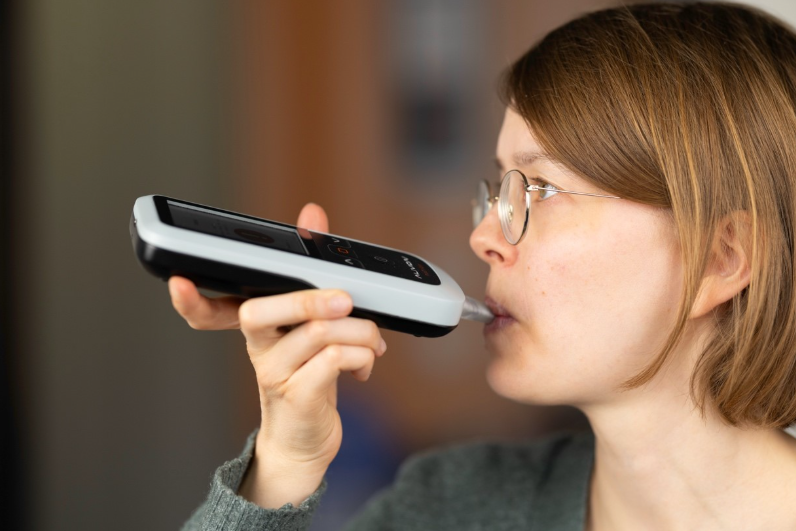
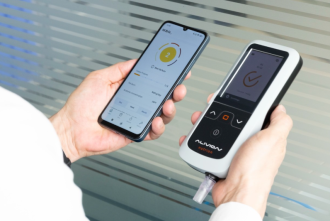
Researchers have developed a breath detector with a chemical sensor that sniffs out when your body is burning fat through a single exhale. Reporting on July 22 in the Cell Press journal Device, the handheld, smartphone-assisted device measures acetone—a molecule that is released into the breath when the body burns fat—in about 90 seconds with laboratory-level accuracy. The technology could help people monitor their metabolism and allow clinicians to personalize treatments for obesity, diabetes, epilepsy, and other metabolic conditions.
Scientists have long used breath acetone as a window into metabolism because its concentration rises as the body shifts from using carbohydrates to fat. But doing so typically requires bulky laboratory instruments or consumer devices that work reliably only at very high acetone levels.
“If we want to make that information available to patients, we need to shrink those technologies into compact, user-friendly devices,” says senior author Andreas Güntner of ETH Zurich. After 10 years of engineering, the team finally built a portable, highly sensitive breath acetone detector for everyday use.
To evaluate the detector, the team tested it with 12 healthy adults under real-world conditions. The handheld detector measured acetone concentrations from 0.2 to 45 parts per million across 312 breath samples. The measurements closely matched those from mass spectrometry—the laboratory gold standard for breath acetone analysis.
The team then monitored breath acetone in four metabolic scenarios: light exercise followed by a high-carb meal, intense exercise followed by a high-carb meal, a fat-rich ketogenic meal, and fasting. They compared the breath measurements with metabolic markers, including blood ketone and glucose, to determine how well the detector tracked changes.
Breath acetone remained low after light exercise followed by a high-carb meal but rose in scenarios of intense exercise, reflecting the body’s increased reliance on fat as a fuel source. Following intense exercise, the participants’ acetone levels dropped after a high-carb meal, remained elevated after a fat-rich meal, and continued to increase during fasting, mirroring changes seen in blood and glucose markers.
“These findings show that we have the high performance needed for applications such as clinical studies, where you really want to distinguish these slight differences in fat metabolism,” says first author Simone Hersberger of ETH Zurich.
For real-world applications, Hersberger says that ease of use and controlled breath sampling are key priorities. During every measurement, the smartphone app coaches users to exhale with the right force and duration for reproducibility. Built-in quality controls can even reject improper breaths or contaminated air to ensure reliable data.
The technology has already moved beyond the laboratory. ETH spin-off Alivion AG has commercialized the breath acetone analyzer under the name “Nutrion.” This handheld device is now being used in clinical studies for epilepsy and by individuals interested in tracking their breath acetone levels as a marker of fat metabolism for weight loss and athletic performance.
“Now it's really time to spread it out into clinical trials and answer questions such as the effectiveness of different fasting therapies by providing personalized guidance,” says Güntner. “We're really moving toward healthcare solutions that, in the future, you won't need to go to the hospital for anymore. You'll be able to do them at home.”
Multimedia

Attachments
Note: Not all attachments are visible to the general public. Research URLs will go live after the embargo ends.


