 Sign In



 International
News release
From:
Secrets of the Great Pyramid’s earthquake resistance
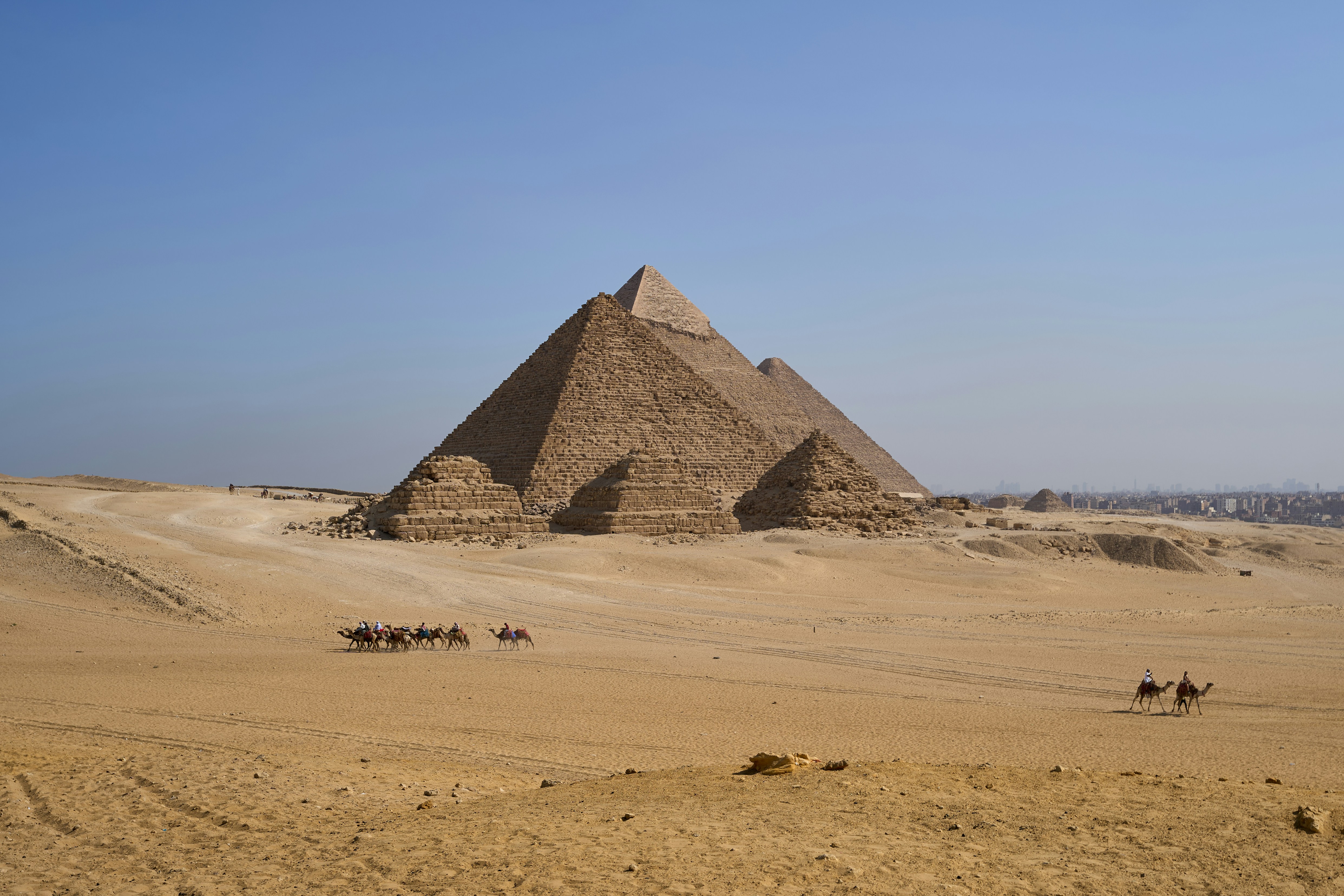
Structural features of the Great Pyramid of Khufu in the Giza pyramid complex in Egypt — also known as the Khufu Pyramid and the Pyramid of Cheops — may have enabled it to withstand earthquakes without sustaining serious damage over the approximately 4,600 years since it was built, according to a study published in Scientific Reports.
The Great Pyramid was completed between approximately 4,600 and 4,450 years ago and has since experienced earthquakes (including one in 1847 with an estimated magnitude of 6.8, and another in 1992 with a magnitude of 5.8) without suffering major damage externally or internally. However, there is currently little evidence to support theories explaining the structure’s resilience.
Asem Salama and colleagues recorded ambient vibrations — generated by human activity, oceanic waves, or climatic changes — at 37 locations around the pyramid, including in its internal chambers, construction blocks, and in the surrounding soil. They found that most vibrations (76%) recorded within the pyramid had a frequency of 2.0–2.6 hertz, which indicates that mechanical stress is evenly distributed throughout the structure. By contrast, vibrations in the surrounding soil had a frequency of approximately 0.6 hertz. The authors suggest that the difference in these frequencies may help protect the pyramid during seismic activity by limiting interactions between the structure and soil that could amplify vibrations.
The authors also assessed how the pyramid’s structure amplified vibrations from the bedrock. There was no amplification in the Subterranean Chamber, which is carved directly into the bedrock. The amplification factor generally increased with height, peaking in the King’s Chamber, where vibrations were amplified by a factor of 4.0 compared to bedrock level. However, in the Relieving Chambers directly above the King’s Chamber, the amplification factor decreased to 3.0. The authors suggest that this could reduce the risk of seismic activity damaging the King’s Chamber, consistent with modern theories that the Relieving Chambers provided structural protection to the King’s Chamber.
The authors note that the pyramid was built on a hard rock (limestone) and has a low centre of gravity, features that may also decrease the risk from seismic activity. However, they caution that it is not possible to determine whether the observed earthquake resistance was an intentional feature of the design.

