 Sign In



 Australia; International; NSW; QLD
News release
From:
Neuroscience: A complete map of the fruit fly brain (N&V) *IMAGES & VIDEO* *PRESS BRIEFING*
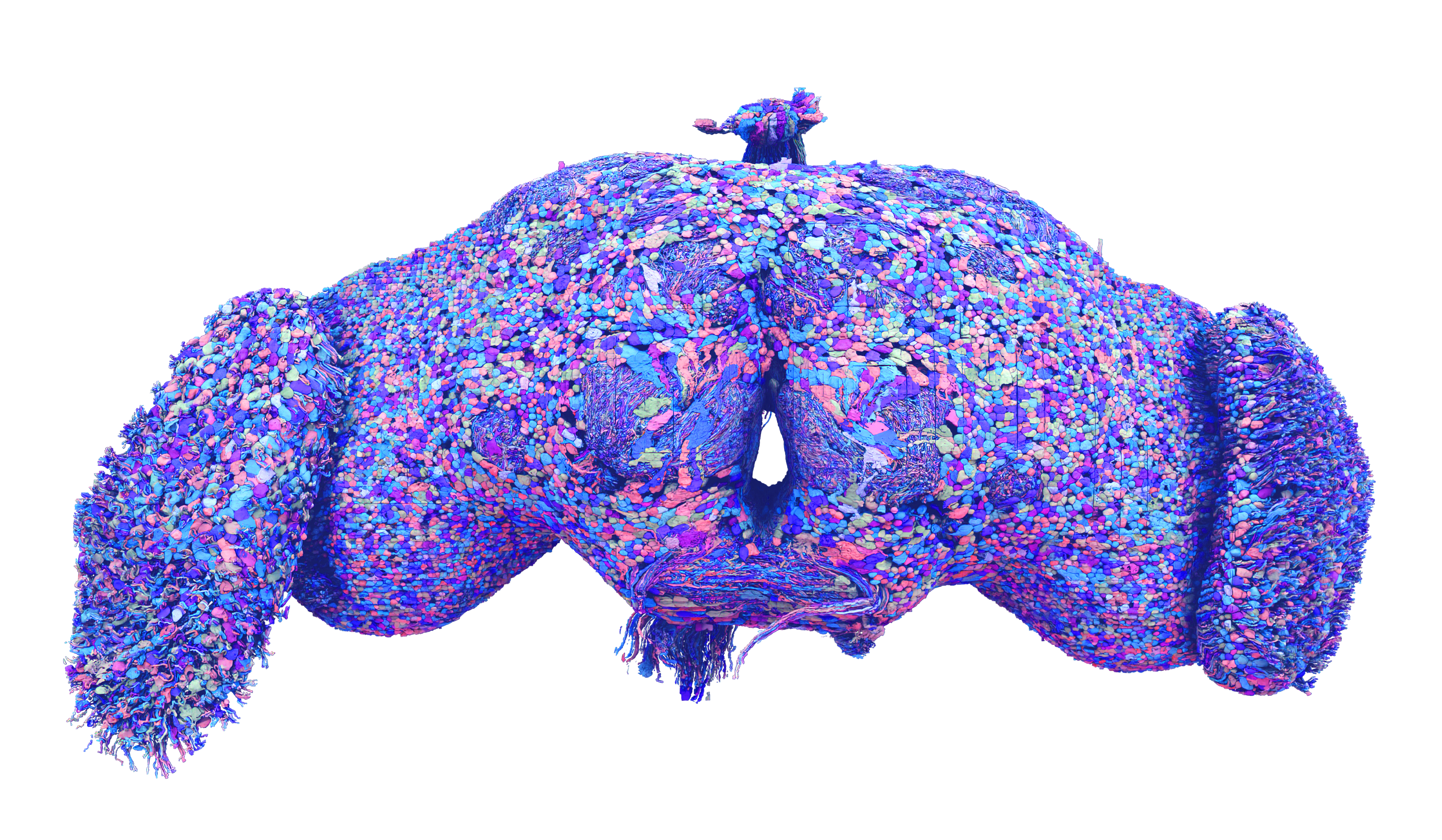
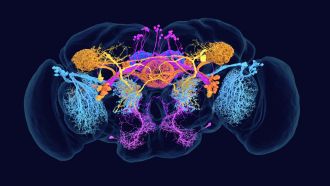
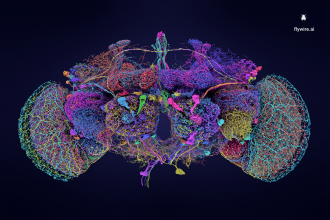
The first wiring diagram of the whole brain of a fruit fly, containing around 140,000 neurons and over 50 million connections, is presented in Nature this week. The map is part of a collection of papers from the FlyWire Consortium. The work offers opportunities to study how the brain functions in greater detail than previously possible and paves the way for mapping the brains of other species.
Brain functions, which underlie a range of sophisticated behaviours, are driven by the activity of neurons and the connections between these brain cells. Mapping out these connections can offer insight into how the brain works. The fruit fly, Drosophila melanogaster, is a commonly used model organism for biomedical science and is an ideal starting point for drawing up a complete wiring diagram of neural circuits. Their brains contain around a million times fewer neurons than human brains, but the fruit fly displays a range of complex behaviours, from flying and navigation to social interactions. While partial maps have previously been constructed for the fruit fly, a complete map for the whole brain has been lacking.
The first complete wiring map, or connectome, of the fruit fly brain is described by Sebastian Seung, Mala Murthy and colleagues. Previously, the largest fruit fly connectome was derived from a ‘hemibrain’, containing around 20,000 neurons connected by around 14 million synapses. The new map from the FlyWire Consortium contains around seven times more neurons (139,255) and nearly four times more synapses (54.5 million). To make sense of the connectome, Davi Bock, Gregory Jefferis and colleagues provide an annotation of the neuronal classes, cell types and functional groups in a second paper. They identify more than 8,400 cell types, of which 4,581 are new (mostly from brain regions outside the previously studied hemibrain). Other papers in the collection shed light on how connectivity between specific neurons drives behaviours such as communication between brain regions or movement.
Together, the work enables the study of how brain function is determined by the structure of brain circuits, providing a valuable resource for neuroscience research. Moreover, the approaches used to construct the wiring diagram of the fruit fly brain set the stage for future large-scale connectome projects in other species, the authors conclude.
Please note that an online press briefing for the papers below will take place UNDER STRICT EMBARGO on Tuesday 1st October at 3.30pm London time (BST) / 10.30am US Eastern Time.
Authors Prof. Mala Murthy (Princeton University), Prof. Sebastian Seung (Princeton University), Dr Gregory Jefferis (MRC Laboratory of Molecular Biology), Dr John Ngai (NIH BRAIN Initiative), Dr Sven Dorkenwald (Allen Institute), Prof. Davi Bock (University of Vermont), Amy Sterling (Princeton), Dr Arie Matsliah (Princeton) and Dr Philipp Schlegel (University of Cambridge) will discuss the research. This will be followed by a Q&A session.
To attend this briefing you will need to pre-register by following the link here. Once you are registered, you will receive an email containing the details for the briefing. You will also be provided with the option to save the details of the briefing to your calendar.
Multimedia

Attachments
Note: Not all attachments are visible to the general public. Research URLs will go live after the embargo ends.


