News release
From:
Springer Nature
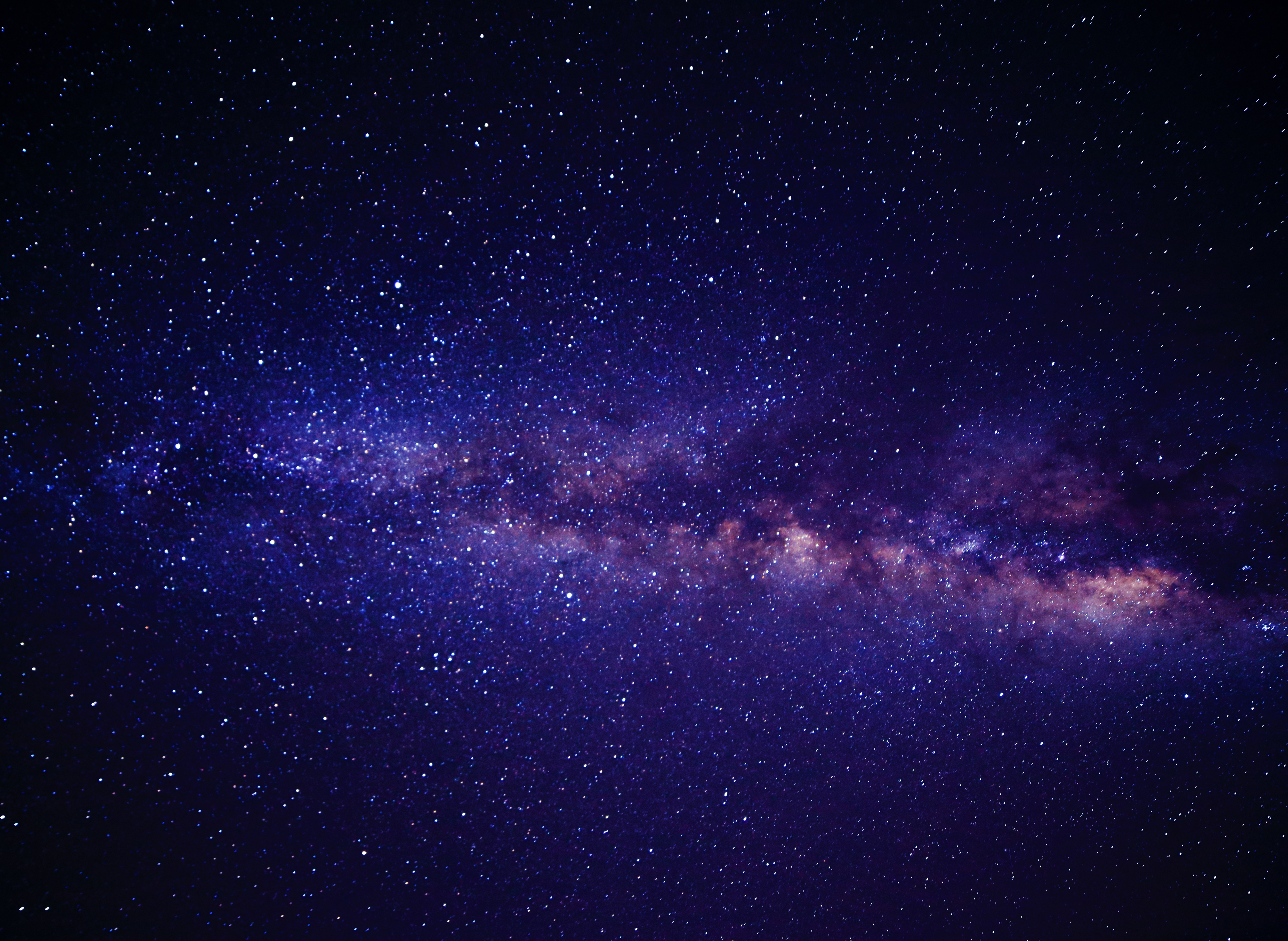
A type of sugar made of four carbon atoms, called erythrulose, has been identified near the centre of the Milky Way galaxy, according to research published in Nature Astronomy. This finding indicates that complex, biologically relevant molecules can form in space and may contribute to the chemical ingredients available for early metabolic and replication processes.
Sugars are important molecules in living systems, helping to provide energy, build important biological structures, and form parts of genetic material. On Earth, erythrulose is commonly found in raspberries and sunless tanning cosmetics. Scientists have long wondered how these molecules first formed on Earth, because experiments show they do not easily form under early Earth conditions. The previous discovery of ribose and glucose in meteorite and asteroid samples has suggested that some sugars may have come from space, but until now, no sugar had been directly detected in the interstellar medium.
Izaskun Jiménez-Serra and colleagues report the detection of erythrulose in a large cloud of gas and dust called G+0.693-0.027, located near the centre of the Milky Way galaxy. They observed the cloud with the Yebes 40-metre and IRAM 30-metre radio telescopes in Spain. The authors identified the sugar by matching signals in the data to the pattern for erythrulose measured in the laboratory, finding 12 matching sets. They also found that erythrulose is at least eight times more abundant in the gas cloud than similar sugars with three carbon atoms, which were not detected in the same location.
The findings suggest that erythrulose can be made from simpler molecules on dust grains in space and may then become part of more complex chemical systems.
Attachments
Note: Not all attachments are visible to the general public.
Research URLs will go live after the embargo ends.

Research
Springer Nature, Web page
The URL will go live after the embargo ends
Journal/
conference:
Nature Astronomy
Organisation/s:
CSIC-INTA, Torrejón de Ardoz, Spain
Funder:
This work is supported by ERC grant OPENS, GA no. 101125858
funded by the European Union. Views and opinions expressed
are, however, those of the author(s) only and do not necessarily
reflect those of the European Union or the European Research
Council Executive Agency. Neither the European Union nor the
granting authority can be held responsible for them. I.J-.S.,
J.G.d.l.C., M.S.-N., V.M.R., J.M.-P., L.C., S.Z., S.M., A.M., A.M.-H.,
A.L.-G., M.A.R.-T. and D.S.A. also acknowledge partial support
from grant number PID2022-136814NB-I00 funded by the Spanish Ministry of Science, Innovation and Universities/State Agency of
Research MICIU/AEI/ 10.13039/501100011033 and by ‘ERDF/EU’.
I.J-.S., A.M. and S.Z. acknowledge partial support from the CSIC
Bilateral project SOULMATE (BIJSP25017). J.G.d.l.C. acknowledges
support from European Funds for Regional Development
and the Autonomous Government of Extremadura (grant no.
GR24020). M.S.-N. also acknowledges a Juan de la Cierva
Postdoctoral Fellowship, project JDC2022-048934-I, funded by
MCIN/AEI/10.13039/501100011033 and by the European Union
‘NextGenerationEU/PRTR’, and a Humboldt Research Fellowship
funded by the Alexander von Humboldt foundation. V.M.R.
aknowledges support through grant RYC2020-029387-I funded
by MICIU/AEI/10.13039/501100011033 and by ‘ESF, Investing in
your future’, and from the Consejo Superior de Investigaciones
Científicas (CSIC) and the Centro de Astrobiología (CAB) through
the project 20225AT015 (Proyectos intramurales especiales
del CSIC). V.M.R. and D.S.A. acknowledge support from grant
CNS2023-144464 funded by MICIU/AEI/10.13039/501100011033
and by ‘European Union NextGenerationEU/PRTR’. D.S.A.
acknowledges the financial support provided by the Comunidad
de Madrid through the grant PIPF-2022/TEC-25475. L.C.
acknowledges support from a research fellowship from the ‘la
Caixa’ Foundation (ID 100010434 – fellowship code LCF/BQ/
PR25/12110012). B.T. acknowledges Spanish Ministry of Science
support from grants PID2022-137980NB-100 and PID2023-
147545NB-I00. A.L-G. and D.S.A acknowledge support from
the Consejo Superior de Investigaciones Científicas (CSIC)
and the Centro de Astrobiología (CAB) through the project
20225AT015 (Proyectos intramurales especiales del CSIC). E.J.C.
acknowledges support from the Basque Government (project
IT1491-22) and from grant PID2023-147698NB-I00 funded by
MCIN/AEI/10.13039/501100011033 and ERDF/EU, and the CSIC
I-LINK project ILINK25125.
 Sign In



 International