News release
From:
Professor Jemma L. Geoghegan (author of this research)
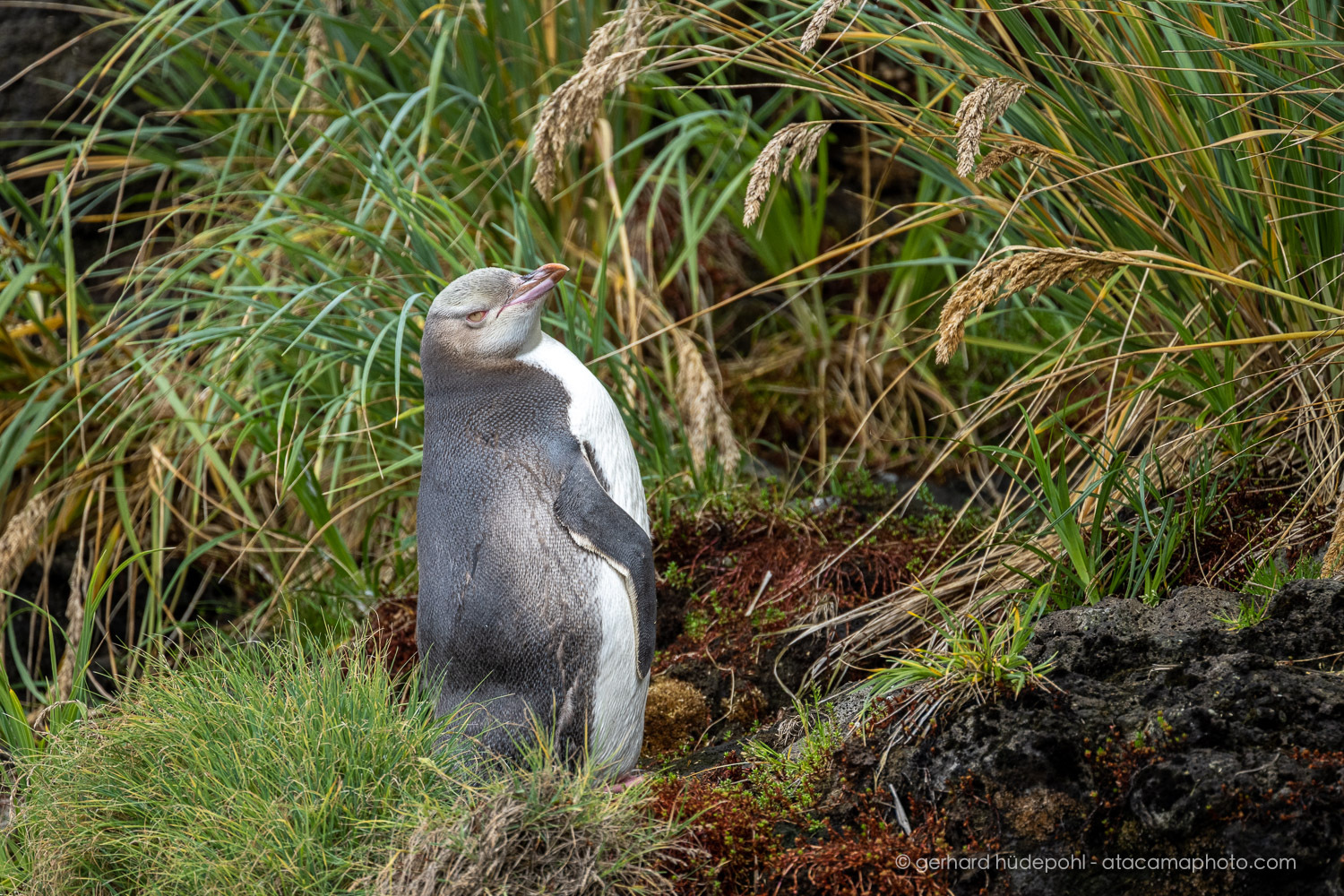
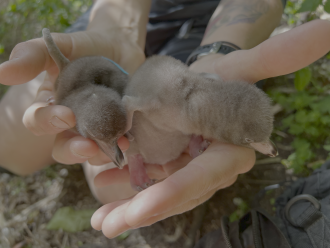
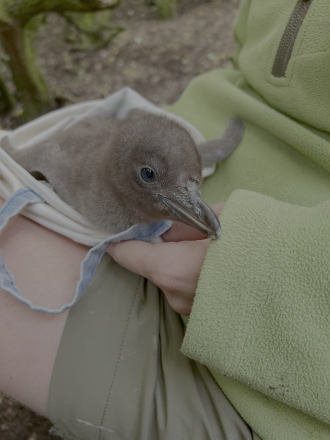
"In this study, we used population genomics to investigate the evolutionary history and disease susceptibility of the endangered yellow-eyed penguin/hoiho, one of the world’s rarest penguin species. Funded through Genomics Aotearoa, we generated whole-genome data from 249 penguins across mainland New Zealand and the subantarctic islands to better understand why chicks in the mainland population have been dying from a severe respiratory disease known as respiratory distress syndrome (RDS).
"Unexpectedly, we found that hoiho are made up of three deeply divergent subspecies with no evidence of migration between them. Our analyses suggest these populations have been separated for thousands of years, much earlier than previously thought. This means the critically endangered northern population is not simply a recent extension of the southern populations, but a distinct evolutionary lineage in its own right.
"We also identified candidate genes linked to immune function and respiratory biology that may help explain why the northern population appears uniquely vulnerable to RDS. These findings provide new insight into the role of host genetics in wildlife disease and have major implications for conservation management.
"Working in partnership with Ngāi Tahu, the kaitiaki of hoiho, we hope this research will support urgent and targeted conservation action for each subspecies, particularly the rapidly declining northern lineage, which now numbers fewer than 115 breeding pairs."
Journal/
conference:
Nature
Organisation/s:
University of Otago, Genomics Aotearoa, Department of Conservation, University of Auckland, The Australian National University, The University of Sydney, Otago Peninsula Ecosystem Restoration Alliance - NZ, Hoiho Technical Group - NZ, Royal Albatross Centre - NZ, Yellow-eyed Penguin Trust - NZ, Otago Polytech - NZ
Funder:
This study was funded by a Genomics Aotearoa project grant awarded to J.G., A.W.S., J.R.W. and J.L.G., with funding to collect samples through postmortem funded by the Department of Conservation’s Wildlife Health Disease Surveillance Programme. Sampling of live birds was funded by the Marine Bycatch and Threats team (Department of Conservation), with travel to sub-Antarctic islands facilitated through Conservation Services Programme contract nos. POP2022-09 and POP2023-03. J.L.G. is funded by a New Zealand Royal Society Rutherford Discovery Fellowship (RDF-20-UOO-007) and the Webster Family Chair for Viral Pathogenesis. J.R.W. was funded by the Morris Animal Foundation (MAF-D22ZO-418 and MAF-D24ZO-701), the Otago Peninsula Ecosystem Restoration Alliance and the Department of Conservation. J.D. was supported by the Australian Research Council. P.K.D. is supported by Genomics Aotearoa and Bioprotection Aotearoa. The Dunedin Wildlife Hospital received funding from the Otago Regional Council’s ECO Fund for the 2024–2025 hoiho breeding season and a Community Fund grant from the Department of Conservation contributed to hoiho care between 2023 and 2025.
 Sign In



 Australia; New Zealand; NSW; ACT