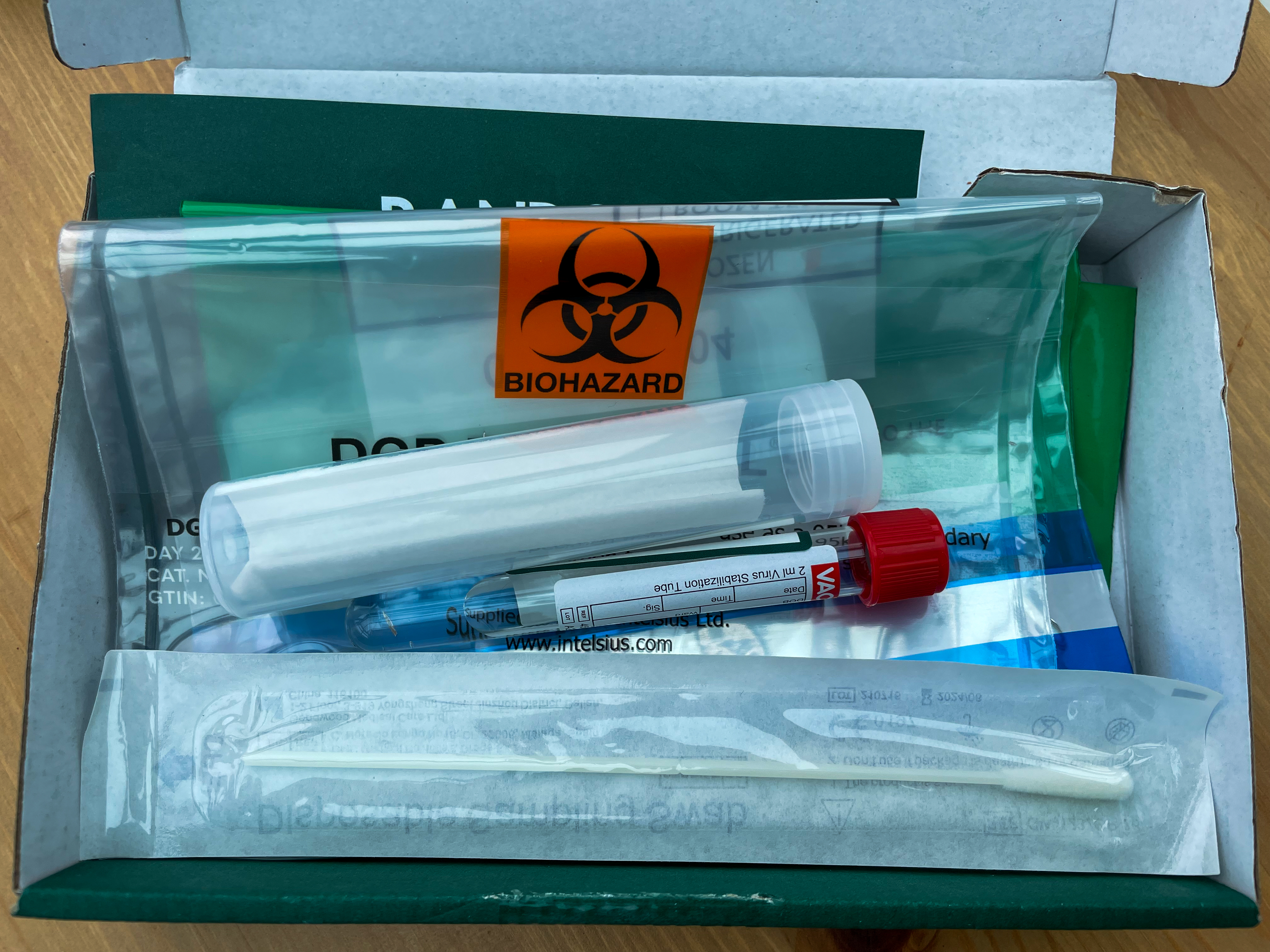
Saliva test for COVID-19 nearly 100% accurate in NZ

Publicly released:
New Zealand

In the first study to validate any saliva test for pinpointing COVID-19 in New Zealand, researchers confirmed that a saliva-PCR test designed at a US university campus was highly accurate at picking up the virus in two NZ laboratories. Finding the test had 99.1% accuracy, the authors say it is an “extremely reliable” option - including for people without symptoms - and could be used for frequent testing like in workplaces.

News release

From: New Zealand Medical Association (NZMA)

Summary

This paper presents the validation results of a qPCR test that was developed at University of Illinois Urbana-Champaign (UIUC) for non-invasively detecting the SARS-CoV-2 virus in saliva and tested in Aotearoa New Zealand laboratory. We used saliva samples that were collected from individuals that had also had nasal swabs taken at the same time. The nasal swabs for just over a third of these people were positive for SARS-CoV-2. Our results showed that the UIUC qPCR test is highly accurate (99.1%) for detecting SARS-CoV-2 in saliva and can detect very low copy numbers of SARS-CoV-2 in saliva. This UIUC qPCR for SARS-CoV-2 is as accurate as the qPCR tests used for detecting SARS-CoV-2 in nasopharyngeal samples in New Zealand. These results confirmed that this reliable option for SARS-CoV-2 testing, including for diagnostic testing for asymptomatic people requiring regular screening.

Key Points

**The SARS-CoV-2 RT-qPCR assay developed at University of Illinois Urbana-Champaign (UIUC) was analytically and diagnostically validated in New Zealand using 33 positive and 114 negative saliva samples that were paired with contemporaneously collected nasal specimens, mostly of nasopharyngeal origin.

**Our local testing using the UIUC RT-qPCR found it to be an assay with high analytical and diagnostic sensitivity and an extremely low limit of detection.

**The accuracy of 99.1% of this UIUC SARS-CoV-2 RT-qPCR makes it an extremely reliable option for SARS-CoV-2 testing, including for asymptomatic people with low viral load.

Journal/
conference:
New Zealand Medical Journal
Organisation/s: Victoria University of Wellington, Rako Science Ltd, NZ; IGENZ Ltd, NZ; University of Illinois at Urbana-Champaign, US
Funder: Competing interests: Dr Walsh reports grants from National Institutes for Health (NIBIB) and from the Rockefeller Foundation during the conduct of the study. He also reports that he is on the Board of Managers for SHIELD T3, an LLC whose mission is to provide SARS-CoV-2 tests based upon the technology described in this manuscript, and that he oversees SHIELD Illinois, a group within the University of Illinois that provides SARS-CoV-2 testing across the state of Illinois based upon the technology described in this manuscript. His remuneration is not supplemented by either the SHIELD T3 or SHIELD Illinois activities. Dr Pitman reports other from Rako Science during the conduct of the study. Dr Dixon-McIver reports other from Rako Science outside the submitted work. Dr Morris reports other from IGENZ outside the submitted work. Dr Grice reports personal fees from Rako Science outside the submitted work, and that Rako Science has licensed trade secrets related to the covidSHIELD protocol. Dr Wang reports they have a patent saliva-based molecular testing for SARS-CoV-2 pending to Diana Rose E Ranoa, Robin L Holland, Fadi G Alnaji, Kelsie J Green, Leyi Wang, Christopher B Brooke, Martin D Burke, Timothy M Fan, Paul J Hergenrother.
Media Contact/s
Contact details are only visible to registered journalists.