 Sign In



 Australia; NSW
News release
From:
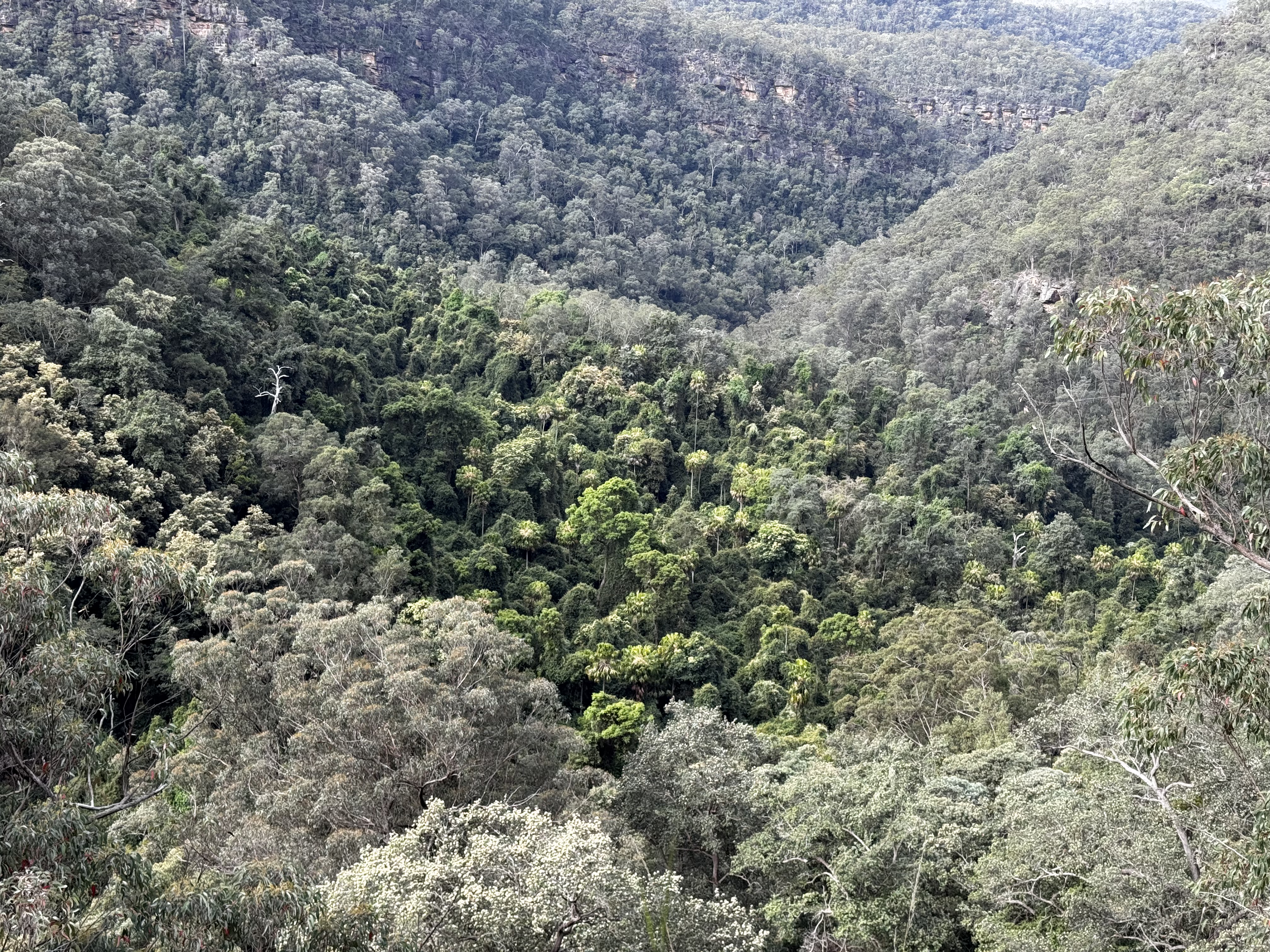
Researchers have uncovered rainforest communities previously hidden within the rugged gullies of the Greater Blue Mountains World Heritage Area that are protecting vegetation not known to grow anywhere else.
The study published today in the journal Vegetation Classification and Survey combined high-resolution mapping with remote field surveys across the Hawkesbury region of New South Wales (NSW) and will assist updating of official maps.
The National Environmental Science Program’s Resilient Landscapes Hub research led by Western Sydney University ecologist Dr Eli Bendall found that more than 90 per cent of rainforest in the study area is likely to be misclassified in official maps as eucalypt forests. In reality, these gullies contain complex, fire-sensitive rainforest systems – with vegetation types not previously recognised in NSW.
“This finding really highlights how important it is to protect these areas from fire, drought and other human impacts,” Dr Bendall said. “These are distinctive, high-diversity rainforests hiding in plain sight with characteristics more typical of coastal regions further north and south.”
Using advanced terrain and canopy modelling, the study identified that rainforest extent was three to four times greater than is shown in the NSW State Vegetation Type Map.
The newly described rainforest types – Hawkesbury Warm Sheltered Gully Rainforest and Hawkesbury Subtropical-Dry Bench Rainforest – support ancient Gondwanan plant lineages that existed more than 180-million years ago, regionally rare species, and high levels of plant diversity.
The rainforests are also home to large and previously unknown populations of the Critically Endangered Rhodamnia rubescens, small-to-medium rainforest tree commonly known as Scrub Turpentine or Brown Malletwood.
Many sites have no record of fire and the new mapping generated by the study will assist land managers to plan appropriate fire management actions for the surrounding areas.
“These rainforests do not respond well to fire,” Dr Bendall said. “If they burn, they will lose their complexity and their capacity to support rich biodiversity will be diminished.”
The authors recommend urgent vegetation-map updates and strengthened protection measures to ensure these newly recognised rainforest communities continue to thrive.
The World Heritage Listed Greater Blue Mountains are a priority place in the Australian Government’s Threatened Species Action Plan.
Attachments
Note: Not all attachments are visible to the general public. Research URLs will go live after the embargo ends.


