Rise like a Phoenix: This native Aussie plant comes back stronger after cultural burning

Publicly released:
Australia; NSW; VIC; SA
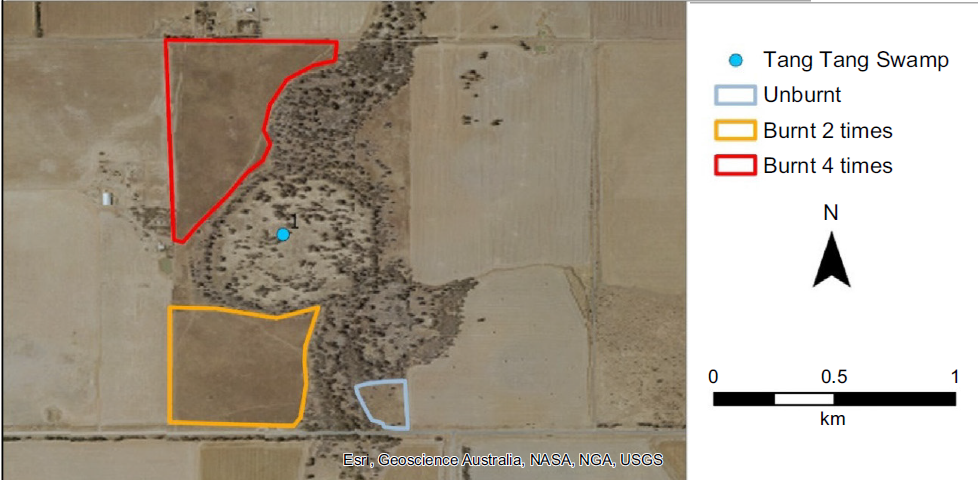
Adapted from the paper's Fig. 1. The study site showing the locations of the burn treatments in Tang Tang Swamp, Dja Dja Wurrung Country, Victoria. Credit: Price, et al

Aussie researchers have discovered a native plant that not only survives, but also multiplies after being burnt. This phoenix-like plant, known as Maireana, highlights the importance of cultural burning performed by Indigenous Australians. The team compared burnt and unburnt grasslands on Dja Dja Wurrung Country in South Australia, where cultural burning has recently been reintroduced after 180 years. Compared with unburnt grassland, the burnt areas saw increases in plant density, height, and fruiting in native plants M. enchylaenoides and M. humillima. The study highlights the potential of cultural fire to support the recovery of native grasslands where First Nations management has been disrupted.

Journal/
conference:
Australian Journal of Botany
Research:Paper
Organisation/s: Charles Sturt University
Funder: This research was funded by the Herman Slade Foundation.
Media Contact/s
Contact details are only visible to registered journalists.