 Sign In



 International
News release
From:
How do astronauts adapt when transitioning between Earth and outer space?
Astronauts take time to adjust how strongly they grip and move objects when transitioning between Earth and space, basing their adjustments on predictions their brains make about mistakes.
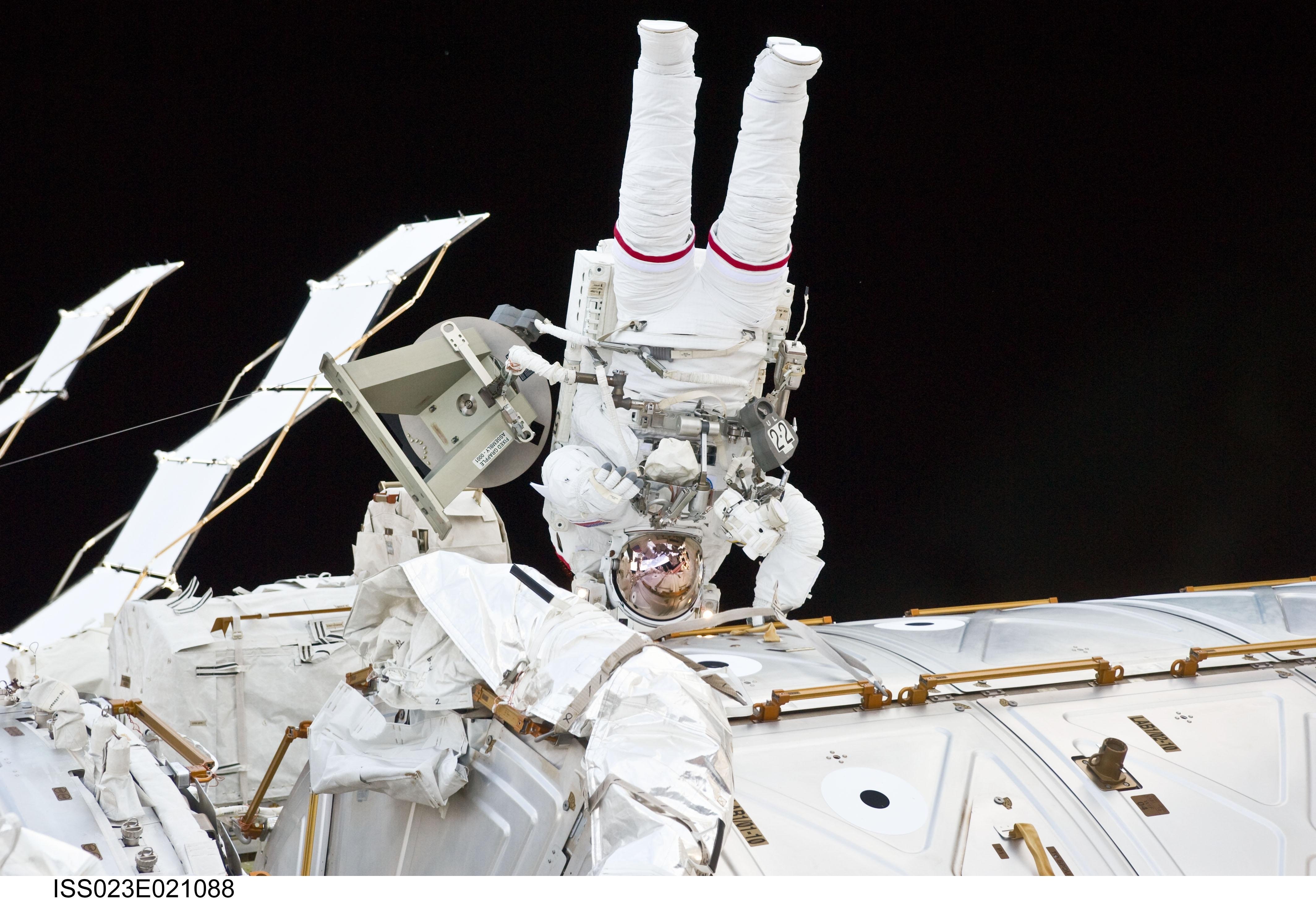
On Earth, people grip objects to ensure they don’t fall. In space, this process changes: When astronauts hold an object without moving it and then let go, the object doesn't fall because there is no gravity. But when astronauts move the object any which way, inertia takes the object up, down, left, or right if the hand grip is not steady. Philippe Lefèvre and colleagues at Université catholique de Louvain and Ikerbasque explored how astronauts adapt their hand grip when transitioning between environments with and without gravity.
The researchers discovered that gravity has a lasting imprint on the brain even after people are in environments where gravity is not present for several months. Astronauts overcompensated with their hand grip on objects in space because their brains anticipated gravity’s pull. This overcompensation was especially true when astronauts were moving objects around. Similarly, after returning to Earth, astronauts initially made incorrect predictions about how they were holding and manipulating objects, but they progressively adjusted their grip over time.
According to the researchers, this work suggests that the brain adapts to different gravitational environments gradually, and that control strategies for grip strength often depend on the brain’s predictions about the risk of making accidents. Lefèvre expresses excitement about seeing these findings be published, noting the intense preparation and work it took to coordinate with the space agency and await successful flight of a spacecraft, a process that spanned close to 20 years when combined with data compilation and analyses. The researchers look forward to publishing more data collected from astronauts on point-to-point movement accuracy with objects, adjustments following object collision, and adjustments based on skin friction with objects.
Attachments
Note: Not all attachments are visible to the general public. Research URLs will go live after the embargo ends.


