 Sign In



 International
News release
From:
Climate change: Strategies for protecting Venice under rising sea levels
Four potential strategies — including movable barriers, ring dikes, closing the Venetian Lagoon, and relocating the city — that could help Venice adapt to future sea-level rise over the next 300 years are compared in a paper published in Scientific Reports. The authors suggest that their findings could inform long-term planning for the city, although rapid action is essential.
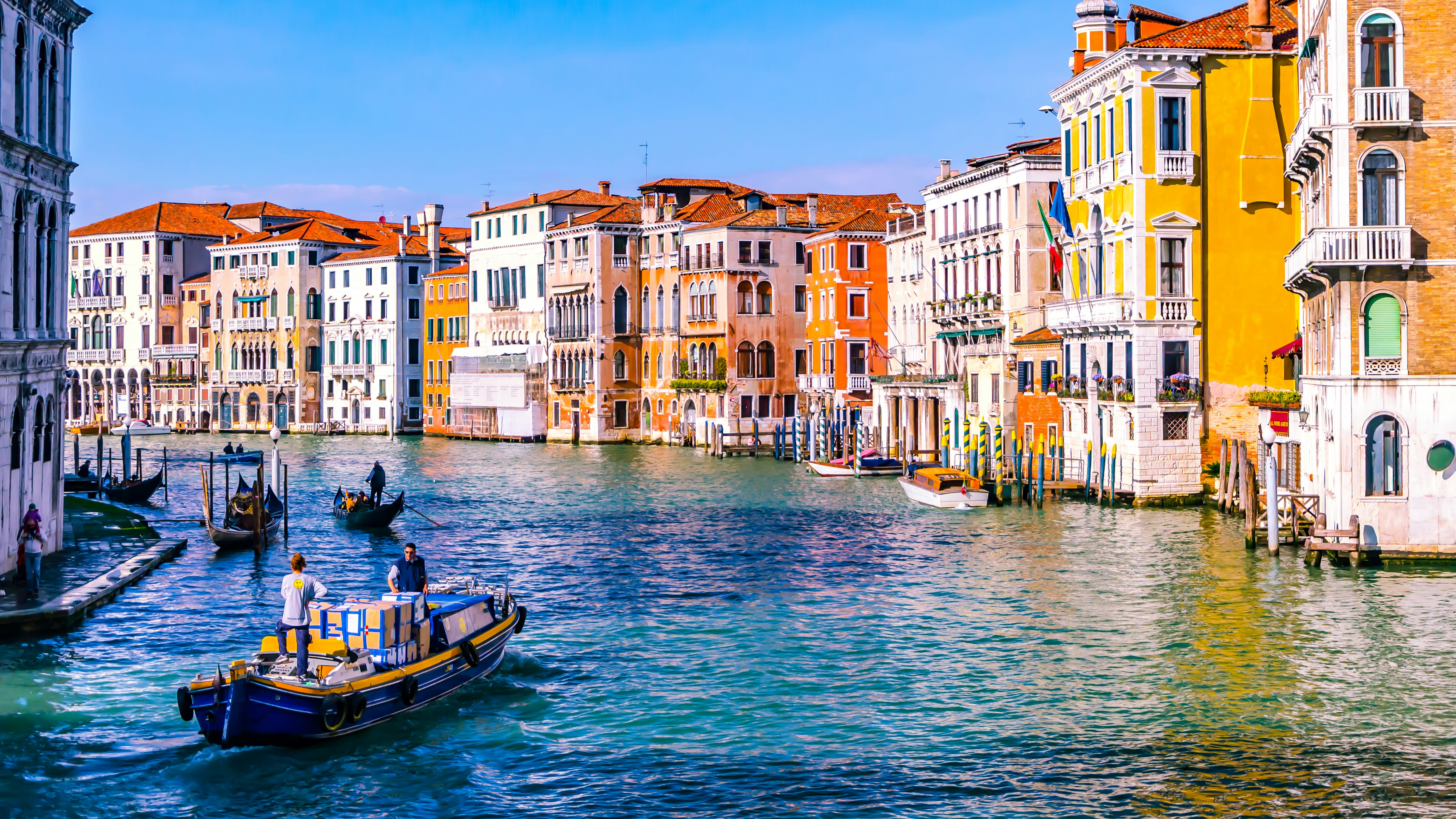
Venice is a UNESCO World Heritage Site within the Venetian Lagoon and has flooded increasingly often over the past 150 years. The city’s current flood defences include a trio of movable barriers at the lagoon’s edge.
Piero Lionello and colleagues assessed existing and potential adaptation strategies for Venice against localised sea-level-rise projections from the IPCC’s Sixth Assessment Report. The authors estimate that, if additional measures are implemented, the existing movable barriers may be effective against sea-level rise of up to 1.25 metres. They note this benchmark is likely to be exceeded under a low-emissions scenario (SSP1-RCP2.6) by 2300 due to climate change and ground subsidence. Alternative options explored by the authors include protecting the centre of Venice with dikes that would separate it from the rest of the lagoon; closing the lagoon with a “super levee”; or relocating the city, its residents and historic landmarks inland. They estimate that dikes may be necessary beyond 0.5 metres of sea-level rise, which may occur before 2100 under the SSP5-RCP8.5 very high emissions scenario. The closed-lagoon strategy could also be viable beyond 0.5 metres of sea-level rise, and the authors estimate that this could protect the city against sea-level rise of up to 10 metres. They propose that relocating the city may be necessary beyond 4.5 metres of sea-level rise, which is projected to occur after 2300.
The authors used the costs of previous engineering projects (adjusted for inflation to 2024 prices) to estimate the potential costs and feasibility for each adaptation strategy. They report that the overall cost of building Venice’s existing flood defence system was €6 billion and estimate that construction of dikes could cost between €500 million and €4.5 billion. Closing the lagoon with a super levee could initially cost more than €30 billion, and relocating the city could cost up to €100 billion.
The authors note that there is no optimal adaptation strategy. Any approach taken must balance the wellbeing and safety of Venice’s residents with economic prosperity, the future of the lagoon’s ecosystems, heritage preservation, and the region’s traditions and culture. They caution that, as the construction of large-scale interventions such as permanent barriers can take between 30 and 50 years, early planning is essential.

