 Sign In



 Australia; International; SA
News release
From:
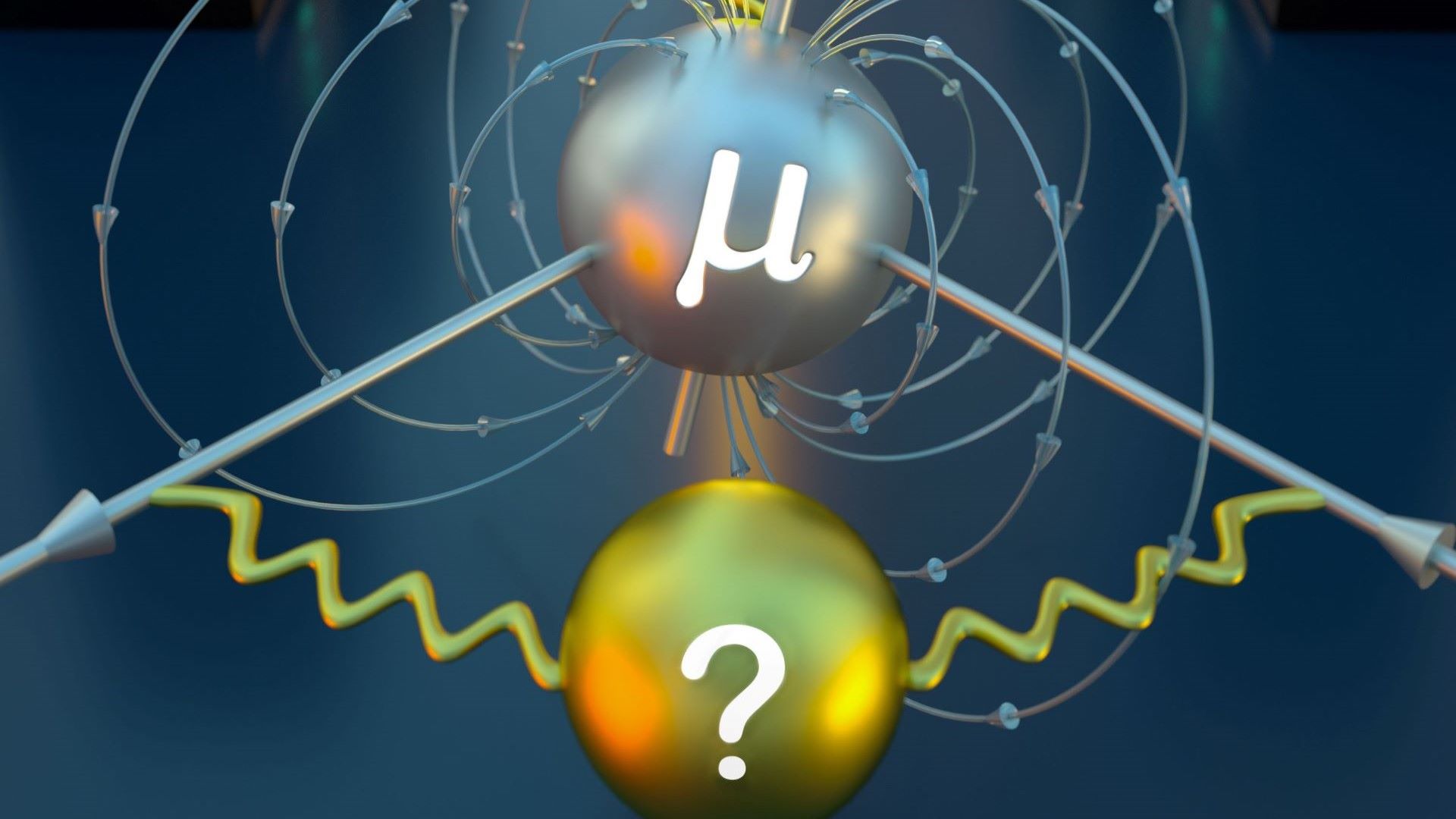
An international team of physicists has achieved a breakthrough in understanding something that has puzzled scientists for decades: the discrepancy between experimental measurements and theoretical predictions of magnetic properties of the muon, a heavier cousin of the electron.
Published in Nature today, the study – involving researchers from Europe, the US and Australia – delivers the most precise calculation to date of a key component underpinning the muon’s magnetic moment.
The muon is a subatomic particle similar to an electron but around 200 times heavier. Muons are produced when cosmic rays (high-energy particles from space) hit Earth’s atmosphere. Roughly 50 of these muons pass through the human body every second.
Like the electron, the muon behaves as a tiny magnet. The strength of this magnetism (its magnetic moment) has long served as a powerful test of the Standard Model, the theory describing the fundamental particles and forces of nature.
For years, the strength of the muon’s magnetism has exhibited a persistent discrepancy between theory and experiment, hinting at the possibility of undiscovered physics beyond the Standard Model. However, the new study finally resolves this discrepancy, reinforcing this model, rather than breaking it.
Adelaide University award-winning physicist Dr Finn Stokes said the research focuses on the most uncertain part of the theoretical prediction: the “hadronic vacuum polarization” contribution, which arises from the complex interactions of quarks and gluons governed by quantum chromodynamics (QCD).
“These strong-force effects are really difficult to calculate with high precision,” Dr Stokes said.
“To overcome this challenge, we used a novel hybrid approach that combines large-scale computer simulations with experimental data.”
Using some of the world’s most powerful supercomputers and a technique known as lattice QCD, the researchers performed calculations at a higher resolution than ever before, allowing them to significantly reduce uncertainties. The result is almost twice as precise as the previous worldwide consensus.
The team determined the hadronic vacuum polarization contribution with unprecedented accuracy, leading to a new Standard Model prediction for the muon’s magnetic moment. This updated prediction agrees with the latest experimental measurements to within just 0.5 standard deviations.
Dr Stokes said the work demonstrates the power of combining theoretical and experimental techniques to tackle some of the most challenging problems in physics.
“This is a major step forward in our ability to test the Standard Model. With this reduction in uncertainties, we can now compare theory and experiment with unprecedented precision, providing a remarkable validation of the Standard Model to 11 decimal places.”
‘Hybrid calculation of hadronic vacuum polarization in muon g-2 to 0.48%’ is published in Nature. DOI: 10.1038/s41586-026-10449-z

