 Sign In



 New Zealand
News release
From:
New paper calls for urgent national deer management strategy
Key points:
- Rapidly rising wild deer numbers in New Zealand are driving a slow, often hidden decline in native forests, threatening their ability to regenerate and protect biodiversity, soils, stored carbon, waterways and downstream human communities.
- Researchers are calling for a nationally coordinated strategy that balances urgent deer control in high-priority areas with the social, recreational and food value of deer in some other areas.
The need for a national deer management strategy to manage native forest decline is highlighted in a new research paper, published today. Led by Te Whare Wānanga o Waitaha | University of Canterbury (UC) Emeritus Professor David Norton, the paper Deer in the headlights: sleepwalking our way to a native forest catastrophe warns of a slowly developing crisis that is often hard to see.
“Our mature trees can live for three, four or five hundred years, so we’re looking at centuries-long replacement cycles and aren’t seeing changes happening overnight,” Emeritus Professor Norton says.
“You can walk into a forest and see a beautiful canopy, but there may be nothing underneath it except moss because deer have taken out the intermediate layer. The forest is still there and looks beautiful, but when it goes through its replacement cycle, a lot of those elements like seedlings and shrubs aren’t there anymore.”
The damage caused by deer go beyond just eating plants, Emeritus Professor Norton says.
“Deer also damage forests by trampling the forest floor. Unlike moa, the large native birds that once moved through New Zealand forests on broad, avian feet, deer have narrow, cloven hooves that exert much greater pressure on the ground. This removes leaf litter, compacts the soil and can affect water infiltration and overall soil health.
“While as an ecologist I would like to see no deer in New Zealand, this is not going to happen because they’ve also got social value, so I think we need to look at New Zealand native forests and ask: what areas are high priority for biodiversity conservation and climate change resilience, areas where we should be trying to get rid of all deer, and where can we accept the presence of a well-managed deer herd for recreational hunting?
“We need to work in partnership — hunters and conservationists, farmers, and plantation foresters, government and iwi — because we all want to have a liveable country and we want this environment to be here in the future.”
Before people arrived, around 75 to 80 per cent of Aotearoa New Zealand was covered in native forest. Today, that figure is about 25 to 30 per cent, Emeritus Professor Norton says.
He says native forests provide more than recreational value for New Zealanders.
“Our forests provide us with a massive amount of resilience. They’re a huge store of carbon, they provide habitat for so much of our flora and fauna, and they protect our watersheds and look after our downstream human communities.
“If forests start collapsing or changing and we have intense rainfall events, which are increasing due to climate change, less water and sediment will be held back in the system, and we will see more damage downstream.
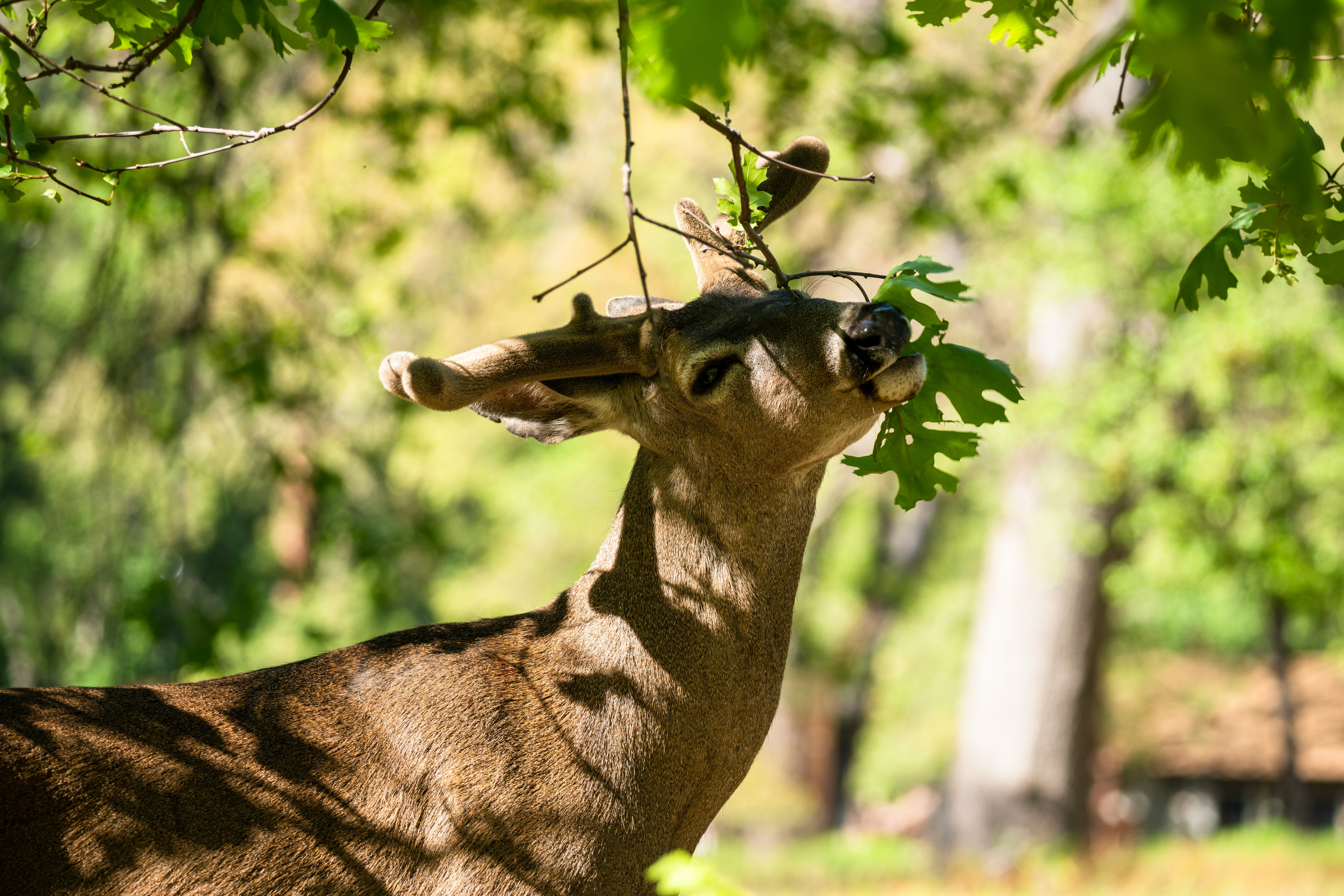
“Broadleaf is a really good example of deer impacts. You can see the foliage starts up at the height a deer browses to and there’s nothing below that. At some point, when those trees die, there are no more seedlings coming in and it will disappear.”
Expert Reaction
These comments have been collated by the Science Media Centre to provide a variety of expert perspectives on this issue. Feel free to use these quotes in your stories. Views expressed are the personal opinions of the experts named. They do not represent the views of the SMC or any other organisation unless specifically stated.
Emeritus Professor David Norton, School of Forestry, University of Canterbury
"In our paper we argue that our native forests are facing a slowly unfolding catastrophic crisis because the numbers of deer have risen to unsustainable levels. Native forests are critical for many reasons: as habitat for native biodiversity, providing resilience to catchments, as vast stores of carbon, and for their cultural values to Māori and Pākehā alike. However, these values are seriously compromised by high deer numbers. Deer are causing irreversible harm to both old-growth and regenerating native forests through browsing and impacts on forest floor soil and litter. The flow-on effects from these include changes in understorey and eventually canopy composition, reduced habitat quality for fauna, especially our endemic forest birds, and the loss of resilience to sever storm events resulting in reduced water retention and enhanced sediment loss.
"Introduced mammalian herbivores, especially deer, and climate change stress natural forests. Their combined impacts are likely to be far worse than their effects individually. While the effects of climate change on old-growth forests cannot be directly mitigated, their vulnerability can be reduced by reducing the impacts of feral deer. Regenerating forests can also be protected so that they stand the best chance of being resilient to climate change as they age and mature. Looking after our native forests is critical for all of us.
"Control of deer is, however, complex, especially because of the social values these animals have. Ecologically, the only outcome for healthy native forests is to reduce deer to effectively zero densities. But deer control cannot be undertaken in isolation from other values, especially the importance of deer for recreation and as a source of protein. We conclude the paper by proposing that a national deer strategy and control programme is developed and implemented. We believe that this strategy must prioritise native biodiversity and climate change resilience over any other values that deer might have. This will require that in many places, deer numbers are reduced to zero, while in other places deer are managed for their social values.
"Part of managing some areas for social values could include the recently announced Herds of Special Interest (HOSI). However, establishment of HOSI should be done after we have prioritised our native forests for native biodiversity conservation and climate change resilience. Unfortunately, this has not been the case. Further HOSI must include clear targets for deer numbers that are based on native biodiversity outcomes rather than numbers desired for hunting.
"We argue strongly that ignoring the deer problem any longer will result in a catastrophic outcome for our native forests and for all people in New Zealand."

