 Sign In



 Australia; NSW; SA
News release
From:
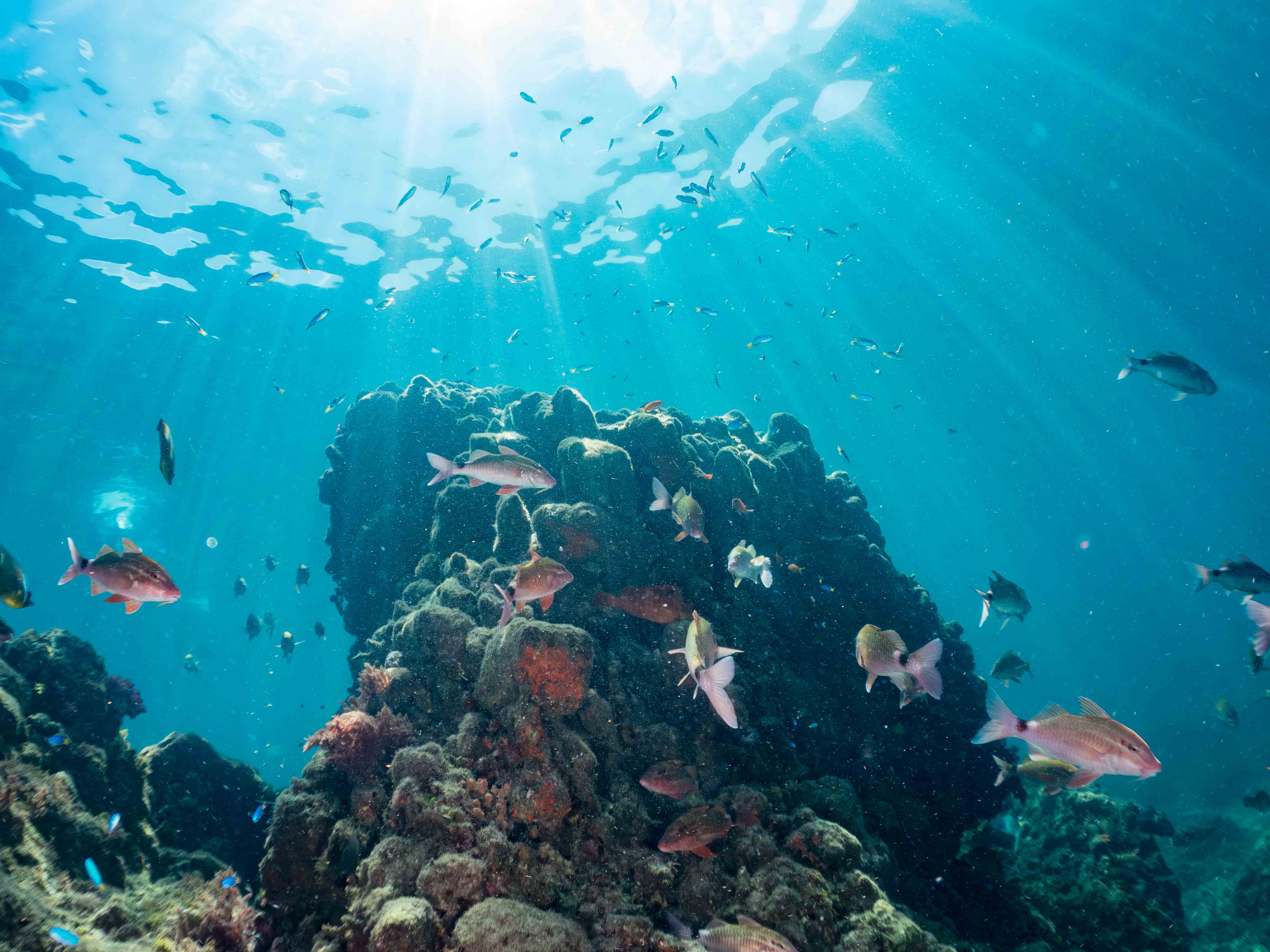
A new study from Adelaide University has found that when ocean acidification makes reef habitat less complex, the fish living there gather in smaller shoals that offer less social protection.
“Watch a reef long enough and you realise that fish are almost never alone. They move in groups, feed in groups, and react to danger as a group,” said lead author Dr Angus Mitchell, from Adelaide University.
“For small reef fish, being part of a shoal is a survival strategy – more eyes spot predators sooner, more bodies mean any one fish is less likely to be the unlucky one.”
Mitchell’s study found that the size of a fish shoal affects their collective and individual behaviour.
“Fish in bigger groups tend to be bolder, as they forage more efficiently, stay out in the open more, and spend less time hiding,” said Dr Mitchell, whose study was published in theJournal of Animal Ecology.
Importantly, the study found that these changes in behaviour were not attributable to the direct impacts of higher temperatures and lower pH.
“The direct effects of warming, acidification, and heatwave stress on individual fish behaviour were mostly minimal,” said project leader Professor Ivan Nagelkerken, from Adelaide University.
“Across all reef types, even during a heatwave, the fish behaved in much the same way. They kept feeding. They did not suddenly become more active.”
Dr Mitchell said while studies looking into direct impacts of climate change on the environment are important, the broader context should also be considered when assessing climate change impacts.
“In the real world, fish do not experience climate change in isolation; they experience it as members of communities, shaped by the habitat around them and the other individuals they live alongside,” he said.
“Our results suggest that even when individual fish seem to be coping fine behaviourally under climate stress, the social structures supporting their behavioural expression can quietly fall apart.”
Ocean acidification driven by climate change is causing a decline in reef complexity around the world.
Professor Nagelkerken and his team were able to project the impacts on reef fish of future levels of ocean acidification by examining reefs where natural processes increase localised levels of acidity.
“The reefs we work at in Japan are unusual in that they are near volcanic CO2 seeps on the seafloor, which create climatic conditions analogous to projected future ocean conditions,” Professor Nagelkerken said.
“Some reefs sit under present-day seawater chemistry, others are warmer, and some experience both elevated temperature and acidity together.
“These natural climate analogues allowed us to ask real ecological questions in a natural setting.”

