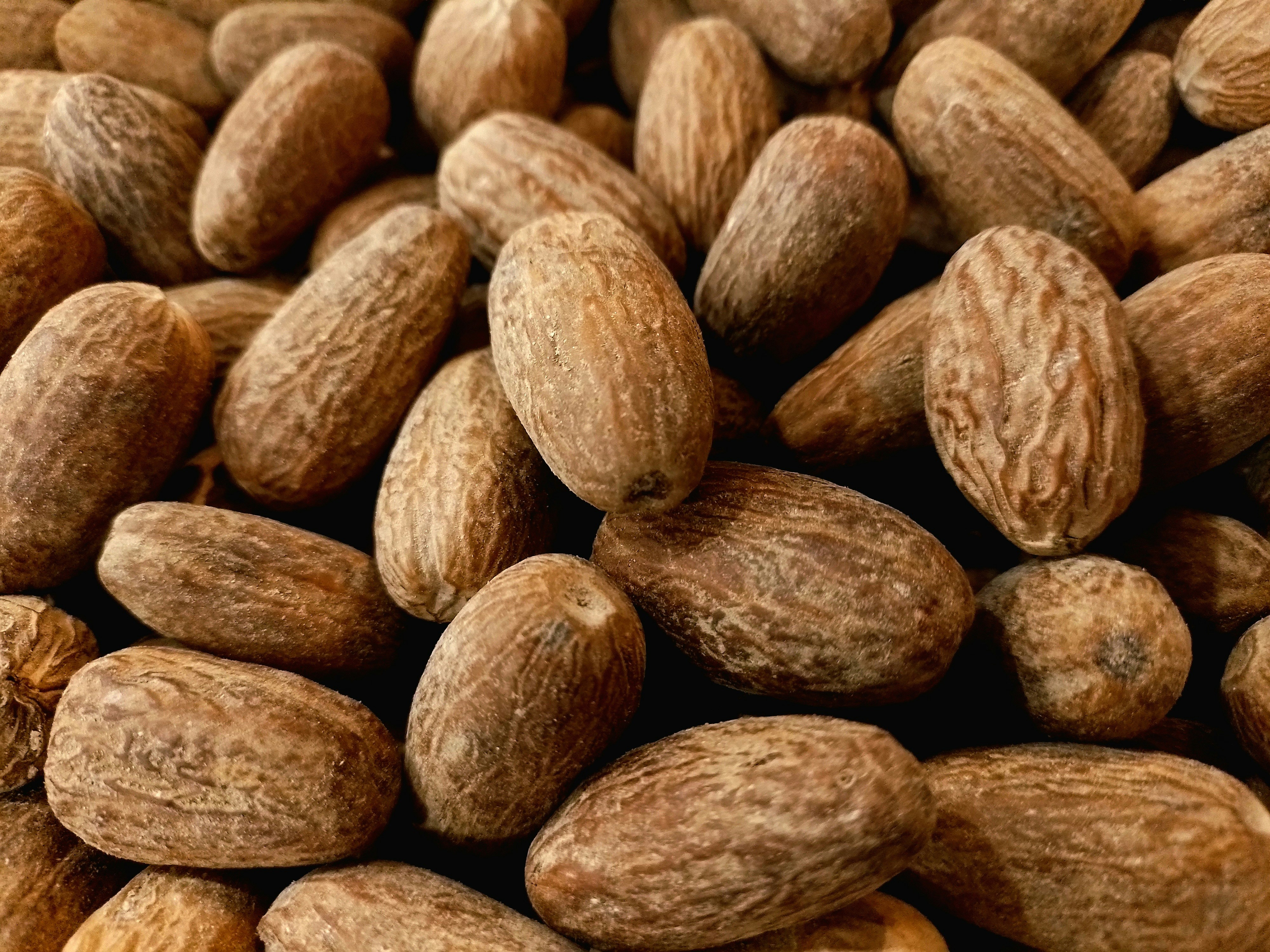
Nutmeg's origins confirmed

Publicly released:
International
CC-0
CC-0

Nutmeg (Myristica fragrans), one of the world’s most iconic spices, probably evolved on the Banda Islands in the South Moluccas in eastern Indonesia, before it migrated north to the North Moluccas, and from there conquered the world as it was carried much further afield by early foodies, according to international scientists. The team looked at the DNA of 400 nutmeg plants across the Moluccas archipelago, finding that genetic diversity is highest in the North Moluccas. Normally, genetic diversity is highest in a species' area of origin, but their analysis suggested the plant originated further south in the Banda Islands in the South Moluccas, where they found it has recently undergone a reduction in genetic diversity. They found the plants are likely to have moved northwards naturally around 15,000–10,000 years ago, before being spread far and wide as part of human trade.

News release

From: The Royal Society

Retracing the center of origin and evolutionary history of nutmeg Myristica fragrans, an emblematic spice tree species

Nutmeg, one of the world’s most iconic spices, has long been thought to originate from the tiny Banda Islands in eastern Indonesia. By combining nuclear microsatellites and whole chloroplast genomes from nearly 400 trees across the Moluccas, our study reveals a more nuanced story. We uncovered two main genetic groups: a highly diverse northern cluster (Ternate, Tidore, Bacan) and a southern cluster (Banda, Ambon) that has undergone a recent bottleneck. Despite this reduced diversity, demographic modelling points to the South Moluccas as nutmeg’s centre of origin, with natural migration northward and later human trade further reshaping its genetic landscape.

Attachments

Note: Not all attachments are visible to the general public. Research URLs will go live after the embargo ends.

Research The Royal Society, Web page The URL will go live at some point after the embargo ends
Journal/
conference:
Proceedings of the Royal Society B
Research:Paper
Organisation/s: Politeknik Negeri Lampung, Indonesia
Funder: This study was authorized by Indonesian National Research and Innovation Agency (BRIN) with research permit to JD (144/SIP/FRP/E5/ Ditk.KI/V/2018) and collecting permit to JK (B-3382/IPH.1/KS.02.04/IX/2019 and B-75/IV/KS.01.04/3/2022). We also greatly appreciate the support from the Indonesia Endowment Fund for Education (LPDP) to JK with grant No. 0003719/AFR/D/BUDI-2018. This project was also supported by the Agropolis Fondation under the reference ID 1502-503 and 1502-504 through the "Investissements d’avenir" programme (Labex Agro: ANR-10-LABX-0001-01), under the frame of I-SITE MUSE (ANR-16-IDEX-0006).
Media Contact/s
Contact details are only visible to registered journalists.