Sign In



 Australia; NSW; SA
News release
From:
Latest research on a new class of silicon-compatible metal oxides paves the way for development of advanced electronic devices including high-density data storage, ultra low energy electronics, flexible energy-harvesting and wearable devices.
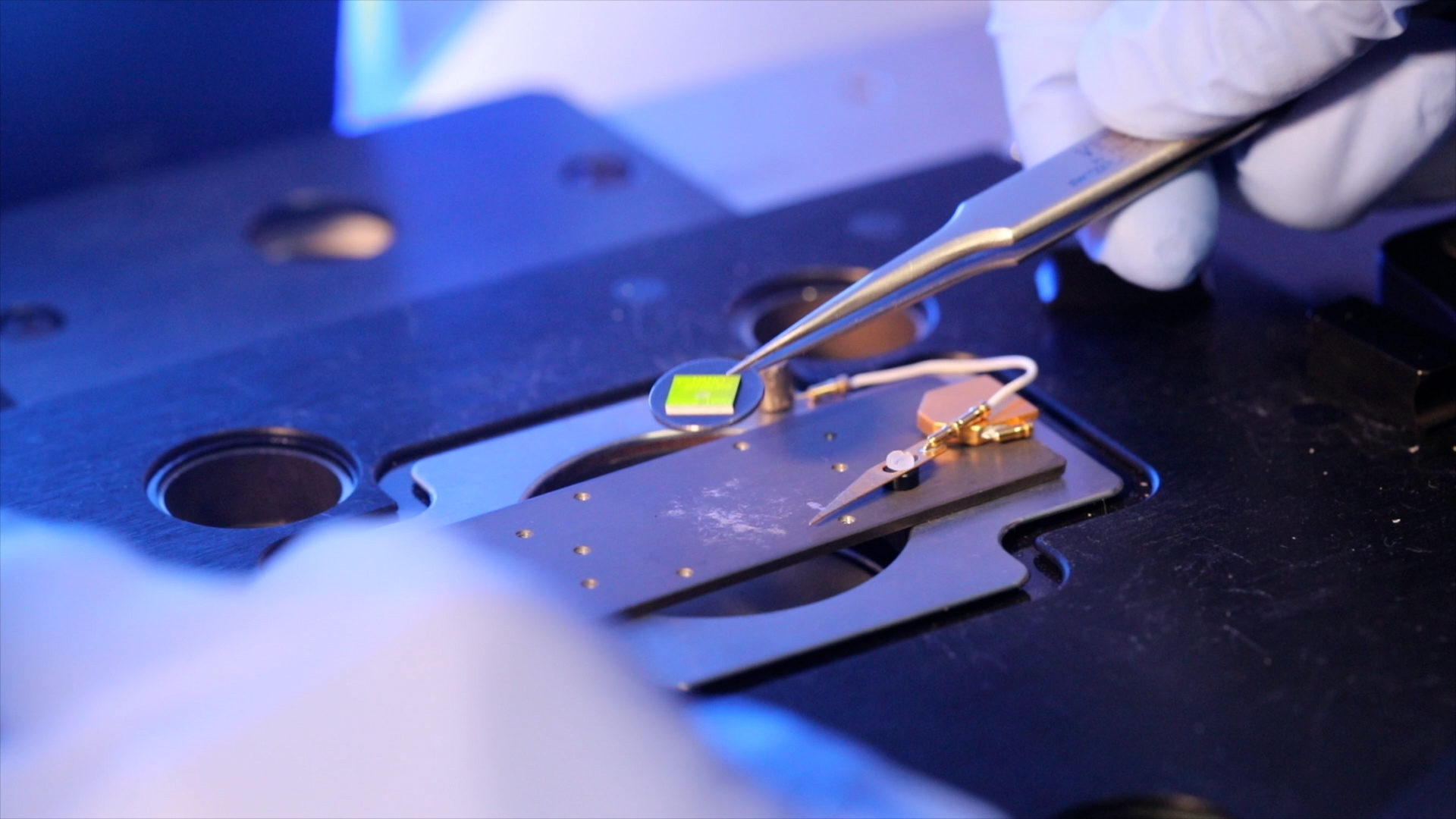
The Flinders University and UNSW Sydney research, published in the American Chemical Society ACS Nano journal, provides the first observation of nanoscale intrinsic ferroelectricity in magnesium-substituted zinc oxide thin films – with wurtzite crystal structures.
Ferroelectricity akin to magnets exhibit a corresponding electrical property known as permanent electric polarization, which stems from electric dipoles featuring equal but oppositely charged ends or poles.
The polarization can be repeatedly altered between two or more equivalent states or directions when subjected to an external electric field and thus the switchable polar materials are under active consideration for numerous technological applications, such as fast nano-electric computer memory and low-energy electronic devices.
“The research findings offer significant insights into the switchable polarization in a new class of much simpler silicon-compatible metal oxides with wurtzite crystal structures which lay a foundation for the development of advanced devices,” says Flinders University corresponding and last author Dr Pankaj Sharma.
UNSW Sydney Professor Jan Seidel says, “The demonstrated materials system offers very real and important implications for new technology and translatable research.”
Historically, this technologically important property has been found to exist in complex perovskite oxides that incorporate a range of transition metal cations, leading to diverse physical phenomena such as multiferrocity, magnetism or even superconductivity.
“But integrating these complex oxides into the semiconductor manufacturing processes has been a significant challenge due to stringent processing requirements related, for instance, to thermal budget and precise control of multiple constituent elements. So this study provides a potential solution,” explains first author Haoze Zhang (UNSW Sydney).
The article, ‘Robust Switchable Polarization and Coupled Electronic Characteristics of Magnesium-Doped Zinc Oxide’ (2023) has been published in ACS Nano 2023, 17, 17148–17157, doi: 10.1021/acsnano.3c04937
Multimedia