Debunking a core chemistry concept taught in classrooms everywhere

Publicly released:
Australia; International; NSW
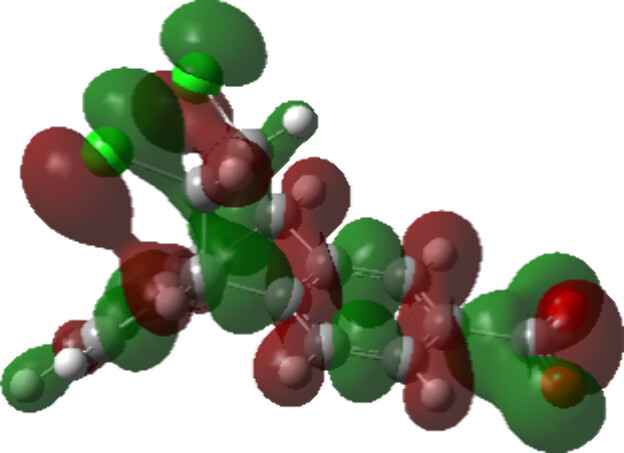
Molecular orbital of an organic molecule showing electron density across the entire molecule. This molecular orbital approach to teaching foundational chemistry concepts is critical to our revised framework which removes the need for complicated long-range effects as proposed in text books.

A new study has revealed that a core idea taught in chemistry classrooms around the world may be wrong. The study has revisited how chemistry textbooks explain the behaviour of electrons inside molecules, a concept used to understand why chemicals react the way they do. Using modern computer modelling, they found that the traditional explanation (the inductive effect), developed nearly a century ago, does not match current evidence in important cases. The team propose a simpler, more consistent way of explaining these ideas that could improve chemistry teaching and provide scientists with a clearer foundation for understanding molecular behaviour.

News release

From: The University of Newcastle

A new study has revealed that a core idea taught in chemistry classrooms around the world may be wrong.

Dr Edwin Johnson, Lecturer at the University of Newcastle, co-authored the paper with academics from University of Cardiff and University of New England.

“Our Australian–UK study has revisited how chemistry textbooks explain the behaviour of electrons inside molecules, a concept used to understand why chemicals react the way they do,” Dr Edwin said.

“Using modern computer modelling, we found that the traditional explanation (the inductive effect), developed nearly a century ago, does not match current evidence in important cases.

“We propose a simpler, more consistent way of explaining these ideas that could improve chemistry teaching and provide scientists with a clearer foundation for understanding molecular behaviour,” Dr Edwin said.

Organic chemistry underpins medicines, advanced materials, manufacturing, agriculture and many technologies people rely on every day.

Dr Edwin said the way chemists understand and teach molecular behaviour influences how future scientists learn to explain, predict and design chemical systems.

“If a foundational concept is taught inaccurately, misunderstandings can carry into more advanced science and research.

“By revisiting a long-standing textbook explanation with modern tools, our work aims to improve chemistry education and strengthen the conceptual foundations that support chemical innovation,” he said.

The paper was published in the Journal of Chemical Education and authored by Dr Mark Elliot from the University of Cardiff in collaboration with Dr Edwin from University of Newcastle and Dr Kasimir Gregory from the University of New England.

Multimedia
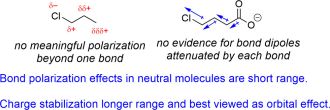
Old theory of electron density changes along an organic molecule
Journal/
conference:
Journal of Chemical Education
Research:Paper
Organisation/s: The University of Newcastle, The University of New England, University of Cardiff
Funder: The calculations described in this work were undertaken using the supercomputing facilities at Cardiff University operated by Advanced Research Computing at Cardiff (ARCCA) on behalf of the Cardiff Supercomputing Facility and the HPC Wales and Supercomputing Wales (SCW) projects. We acknowledge the support of the latter, which is part-funded by the European Regional Development Fund (ERDF) via the Welsh Government.
Media Contact/s
Contact details are only visible to registered journalists.