 Sign In



 Australia; International; NSW; QLD
News release
From:
- MMV367/GSK3772701 shows promise as a future treatment for malaria patients in the context of emerging drug resistance.
- It belongs to a novel class of molecules called pyrrolidinamides, that target the malaria parasite in a completely new way by potentially disrupting its lipid metabolism.
- In a disease where elimination progress has stalled in recent years, new medicines are essential.
Brisbane, Australia & Geneva, Switzerland, 15 July 2026: The early-stage trial of a potential novel non-artemisinin malaria drug found it rapidly killed the malaria parasites and was generally well tolerated in infected volunteers, showing it is a promising candidate for uncomplicated malaria that could help meet a need for new medicines to overcome the growing threat from parasite drug resistance.
The compound MMV367/GSK3772701 appears to work by blocking two important enzymes, potentially disrupting a vital metabolic process the malaria parasite needs to survive in red blood cells.
This novel mechanism of action has been tested against malaria parasites in humans, with the Phase 1 trial conducted by QIMR Berghofer researchers in collaboration with UniSC Clinical Trials and sponsored by the not-for-profit Medicines for Malaria Venture (MMV) and GSK.
Malaria is a major global health problem: there are more than 280 million cases annually[1] and progress has stalled in recent years. Malaria medicines have repeatedly been compromised by drug resistance, as malaria parasites become less sensitive to the medicines used to treat them. Partial resistance to artemisinin derivatives, the current mainstay of malaria treatment, has been observed for two decades in South-East Asia, and more recently in Africa.[2]
The new study, published in the journal Science Translational Medicine, involved 12 healthy volunteers who were infected with a small number of Plasmodium falciparum malaria parasites under carefully controlled conditions, and then treated with different single doses of MMV367/GSK3772701.
A single dose of 20 milligrams or higher was fast acting, taking just two to four hours to kill half the parasites in the bloodstream of trial participants; a speed of killing comparable to artemisinins, the main component of current standard of care.
Associate Professor Bridget Barber, the head of the Clinical Malaria Group at QIMR Berghofer and an Infectious Diseases Physician at Royal Brisbane and Women’s Hospital (RBWH), said the investigational drug MMV367/GSK3772701 showed potent activity against Plasmodium falciparum malaria parasites.
“There is a continuous need for new antimalarials because of the threat of resistance of the parasites to first-line therapies. This potential treatment belongs to an entirely new class of antimalarials which work in a different way to the existing treatments," said A/Prof Barber.
“Our study found that doses over 20 mg were generally well tolerated by participants and rapidly killed the malaria parasites, and we saw no evidence of drug resistance. In the right combination with other anti-malaria compounds, it also has the potential to be administered as a single-dose therapy, rather than multiple doses of current standards of care.”
The study findings support the further testing of MMV367/GSK3772701 in patients with malaria in endemic regions, such as in sub-Saharan Africa. Stephan Chalon, a lead author of the study and MMV’s Vice President of Experimental Medicine and Clinical Development, said “MMV is pleased to have participated in the early studies to identify a potential fast-acting, single-dose, non-artemisinin alternative for malaria patients. Malaria elimination will only be achieved by filling the drug pipeline with novel compounds that can pick up the baton when and if current options fail.”
“The fight against malaria is far from over, and the emergence of drug resistance is a constant challenge,” said Dr. Harmony P Garges, GSK’s Chief Global Health Officer. “These early data are encouraging and represent a crucial step forward in our efforts to develop new treatment options for the many millions of people impacted by this devastating disease every year.”
About the studies
MMV367/GSK3772701 was discovered by GSK. The two initial Phase1 studies (first-in-human study and the controlled human malaria infection (CHMI) study) were sponsored by MMV in partnership with GSK. The CHMI Phase 1 study was led by QIMR Berghofer researchers in collaboration with UniSC Clinical Trials, with the support of the Gates Foundation.
The compound continues to be developed by GSK and will be tested in patients impacted by acute uncomplicated malaria.
The study is available at this link https://www.science.org/doi/10.1126/scitranslmed.aec1863 in Science Translational Medicine with DOI 10.1126/scitranslmed.aec1863
The researchers would like to thank the trial participants without whom this research would not be possible.
About malaria
There are more than 280 million cases each year and an estimated 610,000 people die from the disease. Children account for 75 per cent of those deaths and progress on malaria elimination has stalled in recent years.[3]
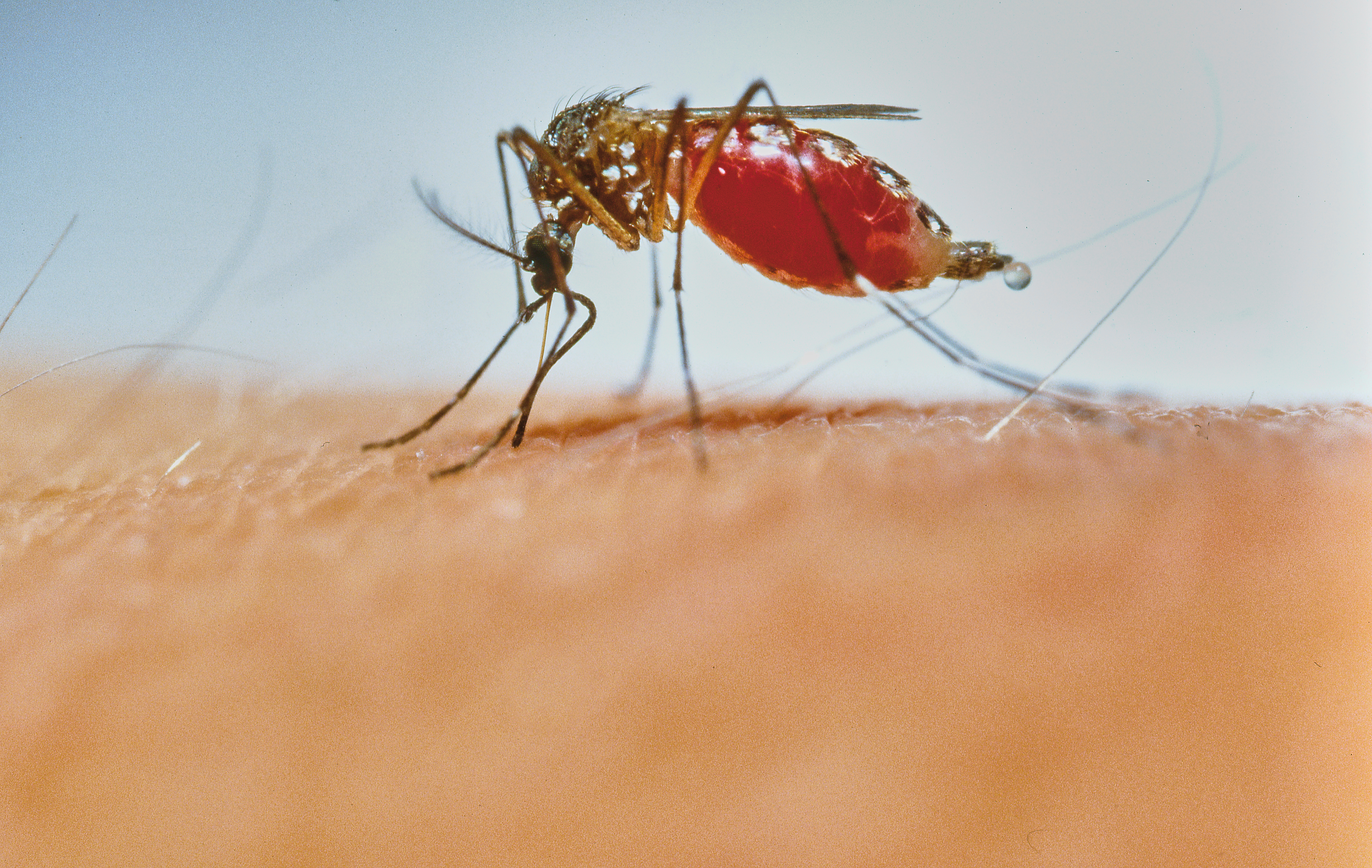
The disease is caused by a parasite that is spread to humans by a bite from an infected mosquito. The deadliest of the malaria parasites is Plasmodium falciparum which can rapidly lead to severe symptoms and death if not treated. It causes the majority of cases in Africa and around half of all diagnoses in South-East Asia.
About QIMR Berghofer
QIMR Berghofer is a world-leading, translational medical research institute based in Brisbane, Australia. Established in 1945, the Institute is home to almost 1,000 scientists, clinician-scientists, support staff, and students working across four key research programs of Cancer Research, Infection and Inflammation, Population Health, and Brain and Mental Health. QIMR Berghofer seeks to deliver better health and wellbeing through impactful medical research that responds to the foremost health challenges of our time. For more information, visit www.qimrb.edu.au
About MMV
MMV is a not-for-profit product development partnership working to discover, develop and deliver medicines to treat, prevent and eliminate malaria. Since 1999, over 1.48 billion people have benefited from our co-developed medicines. With over 600,000 malaria deaths every year, we unite partners to close remaining antimalarial access and innovation gaps. Find out more at www.mmv.org
About GSK
GSK is a global biopharma company with a purpose to unite science, technology, and talent to get ahead of disease together. Find out more at www.gsk.com
About UniSC Clinical Trials
UniSC Clinical Trials is a world-class clinical trials network partnering with global pharmaceutical and biotech companies, and healthcare professionals across South-East Queensland.
[1] WHO World Malaria Report 2025
[2] Uwimana A et al. “Emergence and clonal expansion of in vitro artemisinin-resistant Plasmodium falciparum kelch13 R561H mutant parasites in Rwanda” Nat Med. 26(10): 1602–8 (2020).
Balikagala B A et al. “Evidence of Artemisinin-Resistant Malaria in Africa” N Engl J Med. 385(13): 1163-71 (2021).
Artemisinin resistance is linked to specific mutations in the parasites, notably affecting the gene kelch13; the presence of these mutations is being closely monitored by WHO.
Henrici RC, Namazzi R, Lima-Cooper G, et al. Artemisinin Partial Resistance in Ugandan Children with Complicated Malaria. JAMA. 2025;333(1):83–84.
[3] WHO World Malaria Report 2025
Multimedia



Attachments
Note: Not all attachments are visible to the general public. Research URLs will go live after the embargo ends.


