 Sign In



 International
News release
From:
Geology: Seafloor crust formation caught in the act (N&V)
The first-known direct observations of a seafloor spreading event at a mid-ocean ridge in the Indian Ocean are presented in Nature. The observations offer insight into how new oceanic crust is created.
Mid-ocean ridges are submarine networks of tectonic boundaries where new oceanic crust is formed from cooling magma and added to the seafloor. While two-thirds of Earth’s surface has been created at these ridges, little is known about how they behave during discrete spreading events.
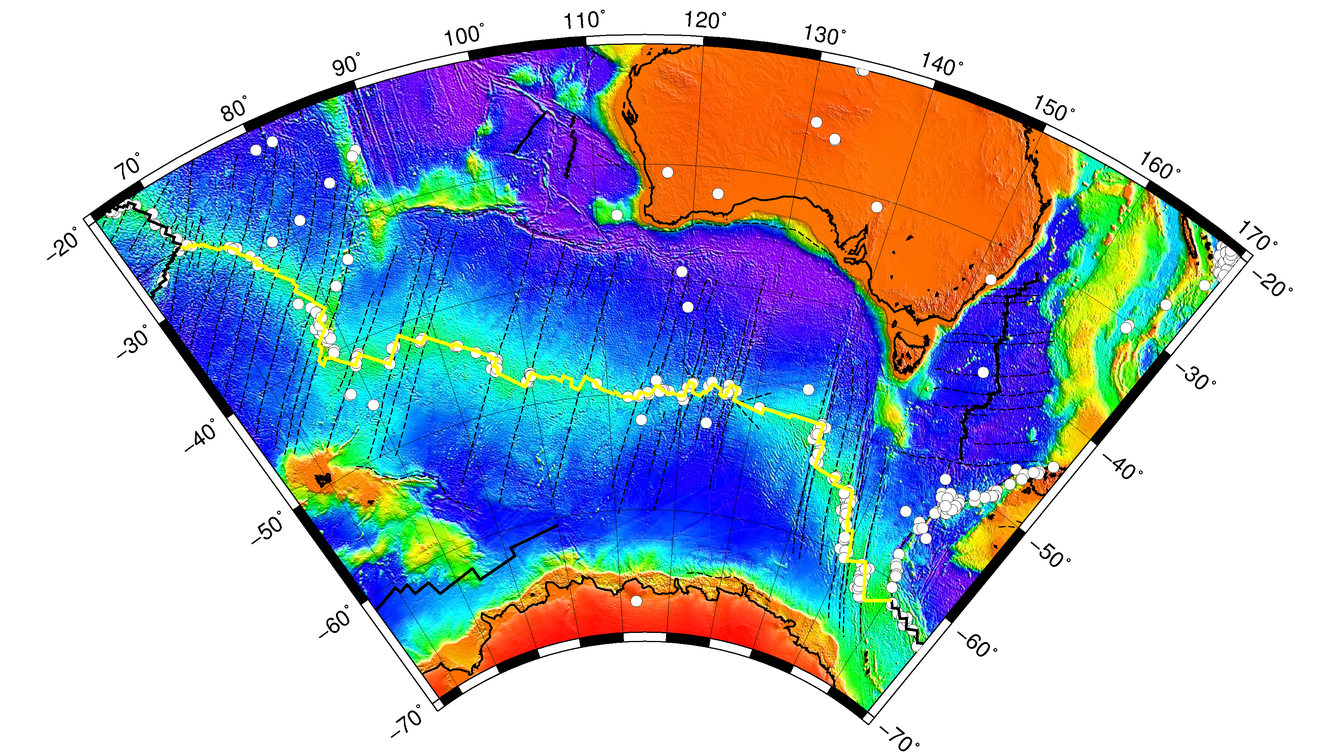
Jean-Yves Royer and colleagues set up an autonomous observatory to collect seismic and seafloor mapping data from the Southeast Indian Ridge, which forms the boundary between the Australian and Antarctic plates in the Indian Ocean. They were fortunate to have deployed their instruments in time to capture the seafloor near the ridge move a total of 4.2 metres across 6 days following an episode of earthquakes on 26 April 2024. The authors propose that the deformation was due to the deflation of a 2.5-kilometre-wide magma reservoir located 3.6 kilometre beneath the crust. The researchers estimate that this event released upwards of 160 million cubic metres of lava to the seafloor. Seafloor movement peaked directly after the earthquake event at 5 centimetres per minute, before slowing to 1.2 centimetres per day 7 days later.
The findings offer a more comprehensive picture of how mid-ocean ridges behave during the short duration of seafloor spreading events. The authors suggest that such events release strain accumulated along the tectonic plate boundary over several decades. Future research should include analysis of different mid-ocean ridge systems, such as those without magma that are dominated by earthquakes. In an accompanying News & Views, Ingo Grevemeyer and Lars Ruepke note that the spreading of tectonic plates on the ocean floor is less well understood than on land, as it is harder to make observations at depth. They write: “The work of Royer and colleagues shows that it is now possible to perform surveys of this sector, as have been achieved on land.”
Attachments
Note: Not all attachments are visible to the general public. Research URLs will go live after the embargo ends.


