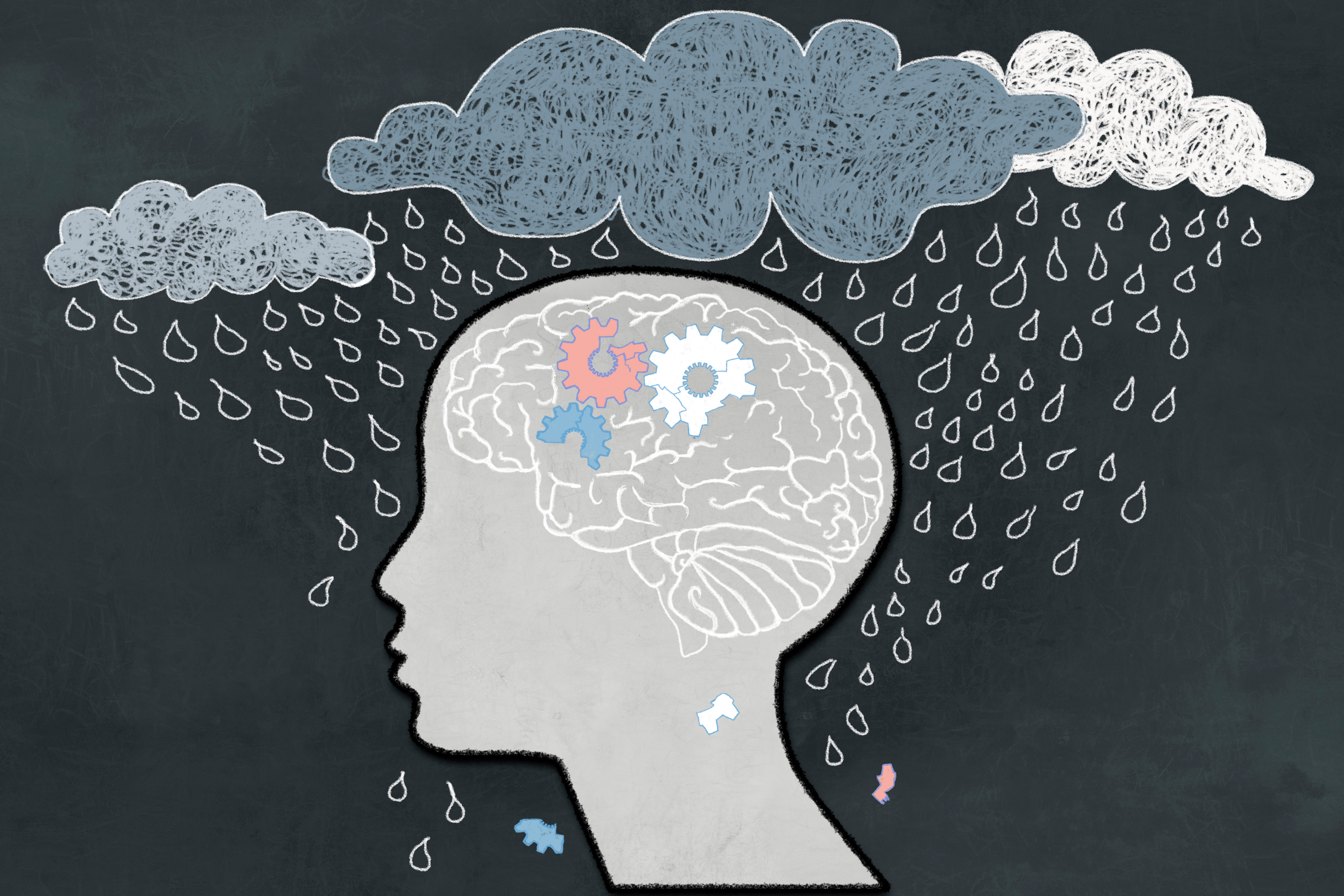
Symptoms of depression and anxiety appear in just 14 days without these five daily habits

Publicly released:
Australia; NSW
Adobe Stock Photo
Adobe Stock Photo

New research from Macquarie University has found removing everyday positive mental health behaviours for just two weeks can rapidly trigger symptoms of depression and anxiety in otherwise healthy adults.

News release

From: Macquarie University

New research from Macquarie University has found removing everyday positive mental health behaviours for just two weeks can rapidly trigger symptoms of depression and anxiety in otherwise healthy adults. These symptoms then resolve once those actions are resumed.
The behaviours, known as The Big Five/The Things You Do, include:
  • Maintaining realistic thinking
  • Engaging in meaningful activities
  • Having goals and plans
  • Keeping healthy routines, including sleep
  • Staying socially connected
What the research did 
Researchers conducted a randomised controlled, staged behavioural experiment in healthy adults, measured against a control group:
  1. Baseline (2 weeks): participants continued normal daily routines
  1. Restriction (2 weeks): everyday behaviours were deliberately reduced
  1. Resumption (5 weeks): routines were reintroduced over four weeks

What it found 
Mental wellbeing deteriorated rapidly in the experimental group during the restriction phase.

While 97 per cent  of people in the intervention group had been in the ‘healthy’ range for symptoms of depression at the start of the trial, only 31 per cent remained in the ‘healthy’ range by the end of the restriction phase, with almost 70 per cent having developed ‘mild’ or ‘moderate’  depression symptoms.
“We've known for some time that certain daily actions are linked to good mental health. What this study shows is the other side of that coin,” said Professor Nick Titov of the School of Psychological Sciences at Macquarie University and Scientific Advisor at online mental health clinic MindSpot.
“We found that when people stop doing these things, their mental health deteriorates. Within two weeks of restricting key daily actions, the majority of participants moved from healthy to experiencing symptoms of depression and anxiety.”
Key takeaway 

The study helps explain how depression and anxiety can emerge from the loss of ordinary daily behaviours, such as disruptions to sleep, activity, routine and social connection, and not just from major trauma or biology.

“This isn't about big gestures or expensive treatments. It's about the small things we do each day,” said Macquarie University eCentreClinic co-director Professor Blake Dear.

“Our research shows that when life gets hard and we stop the basics – like doing little things that we enjoy, exercising, seeing friends, keeping a routine – that's when we become vulnerable.

“The good news is that getting back to those basics can make a real difference.”

Quotes from participants 
  • “The disruption period was hard for me to climb out of. (It) has taken longer than I thought (it would)... my mental health is more fragile than I once thought.”
  • “I learnt that my mental health can be improved by doing healthy habits and it has been affected by stopping these habits or restricting them.”
  • “I think having a strong sense of purpose and feeling like I’m working towards the achievement of that is really important to my sense of wellbeing.”
Interviews: Photography, filming and case studies available
Journal/
conference:
JMIR Formative Research
Research:Paper
Organisation/s: Macquarie University
Funder: This research was partially funded by the Western Australia Primary Health Alliance (WAPHA).
Media Contact/s
Contact details are only visible to registered journalists.