 Sign In



 Australia; International; NSW
News release
From:
Palaeontology: Mummified reptile reveals early breathing system
Mummified fossil reptile remails, dated to approximately 289–286 million years ago, shows that early amniotes (a group that includes reptiles, birds, and mammals) breathed by moving their ribcages. The fossils, described in Nature this week, reveal what may be the oldest-known preserved cartilage and protein traces from a land vertebrate. The findings offer new clues about how the first reptiles may have breathed on land.
The move from water to land was a major step in vertebrate evolution, and early amniotes needed new ways of breathing to survive in dry environments. Earlier amniotes mainly relied on throat-based and skin-based respiration, whereas later amniotes used their ribs and chest to draw air into the lungs. Because soft tissues almost never fossilize, direct evidence of how and when this shift happened is lacking.
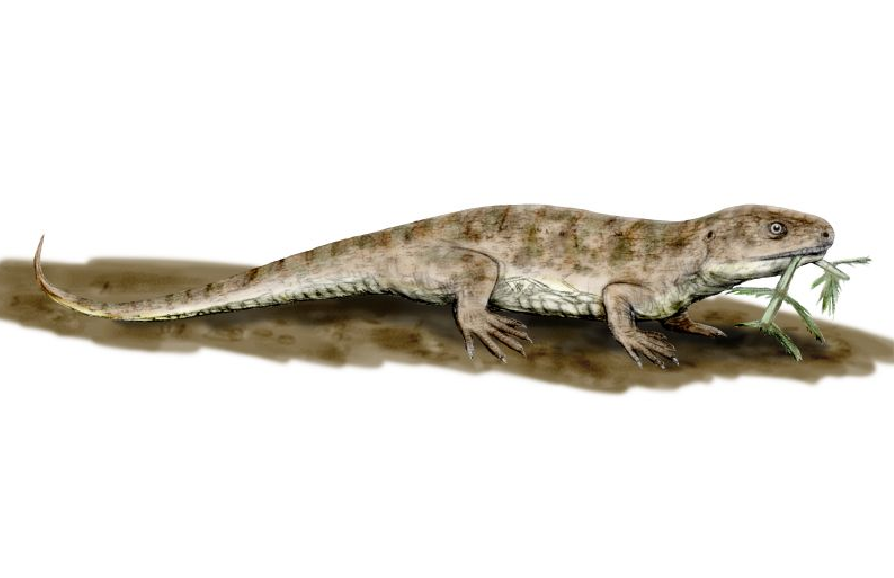
Robert Reisz, Ethan Mooney, and colleagues analysed the remains of an early reptile called Captorhinus, which were found in a cave system from the early Permian period in what is now Oklahoma, USA. The well-preserved specimens were encased in fine clay and saturated with oil, revealing previously unknown structures. These include preserved three‑dimensional skin, cartilage around the ribs and shoulders, and traces of protein in cartilage, bone, and skin. The fossils include a multi‑part cartilaginous sternum, at least four pairs of sternal ribs, intermediate ribs, long cervical rib extensions and cartilages. These structures show how the ribcage connected to the shoulder girdle and formed a flexible breathing system similar to that of living reptiles.
The authors conclude that this is the earliest-known complete amniote ribcage with its cartilaginous breathing components intact. This finding suggests that early amniotes had a cartilaginous sternum and that breathing using rib movement may have supported later evolutionary changes in movement, feeding, and body shape. The fossils also show that soft tissues and proteins can survive for far longer than expected, although their preservation probably depended on the unusual cave conditions at the site, meaning that such finds will remain rare. Future work may investigate how widespread these features were among other early amniotes.

