 Sign In



 International
News release
From:
Sport: Men twice as likely to “hit the wall” during marathons
Male runners may be twice as likely as female runners to suddenly slowdown — known as “hitting the wall” — during a marathon, according to a study published in Scientific Reports. The authors suggest that men may be able to reduce this risk by starting races more slowly and speeding up throughout the race.
Although previous studies have reported that men tend to slow down during races, it has been unclear whether this occurs in large cohorts.
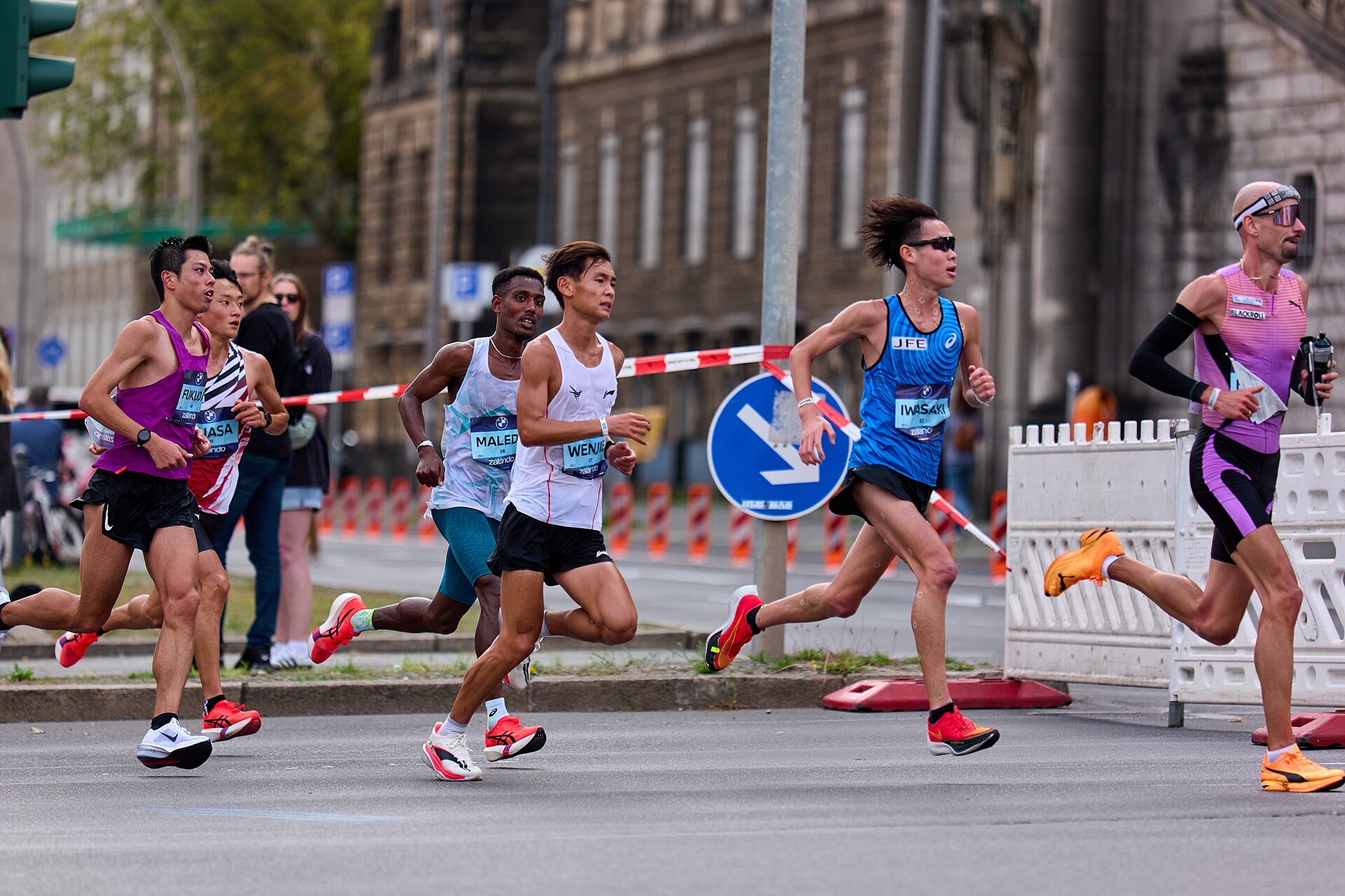
Beat Knechtle and colleagues analysed Berlin Marathon race times between 1999 and 2025 using data from 873,334 electronic timers. Over this period, 76% of runners were male and more than half were aged between 35 and 49 years. Only those who completed the 42-kilometre marathon were included in the analysis and the same individual may have been represented in multiple years. The authors defined “hitting the wall” as deceleration of at least 20% during the second half of a race, relative to the first half. They found that although male runners tended to finish the marathon faster than female runners — with average race times of four hours and two minutes versus four hours and 29 minutes, respectively — male runners were twice as likely to “hit the wall”. Among runners who completed the marathon in under three hours, male runners were six times more likely to “hit the wall” than female.
Analysis of 856,759 race times indicated that the pace of male runners tended to be less regular than that of female runners. Men tended to slow down later in the race than women — at around 25 kilometres versus 20 kilometres, respectively — however, more women maintained an even pace throughout the race than men, with 52% of women and 36% of men not slowing down at a clear point in the race. During the final five kilometres of the race, men also tended to slow down by 18%, while women only slowed down by 13%.
As previous research has reported that women may be better able to conserve levels of glycogen — a stored form of the energy source glucose — when running, the authors speculate this could help them maintain their speed. They also propose that men may slow down after overestimating their competitive abilities at the beginning of a race. However, further research is needed to investigate these potential mechanisms, and the authors note that their findings relate to one marathon course only.
Attachments
Note: Not all attachments are visible to the general public. Research URLs will go live after the embargo ends.


