 Sign In



 International
News release
From:
Peer-reviewed Observational study People
In schools, masks and air cleaners were associated with stopping COVID-19
Study of two Swiss schools shows the virus spread frequently among students during Omicron wave
A new study shows that masking and portable air cleaners reduced the spread of the virus that causes COVID-19 in two Swiss schools. A team led by Nicolas Banholzer and Kathrin Zürcher of the University of Bern, Switzerland, publish these findings on May 18th in the open access journal PLOS Medicine.
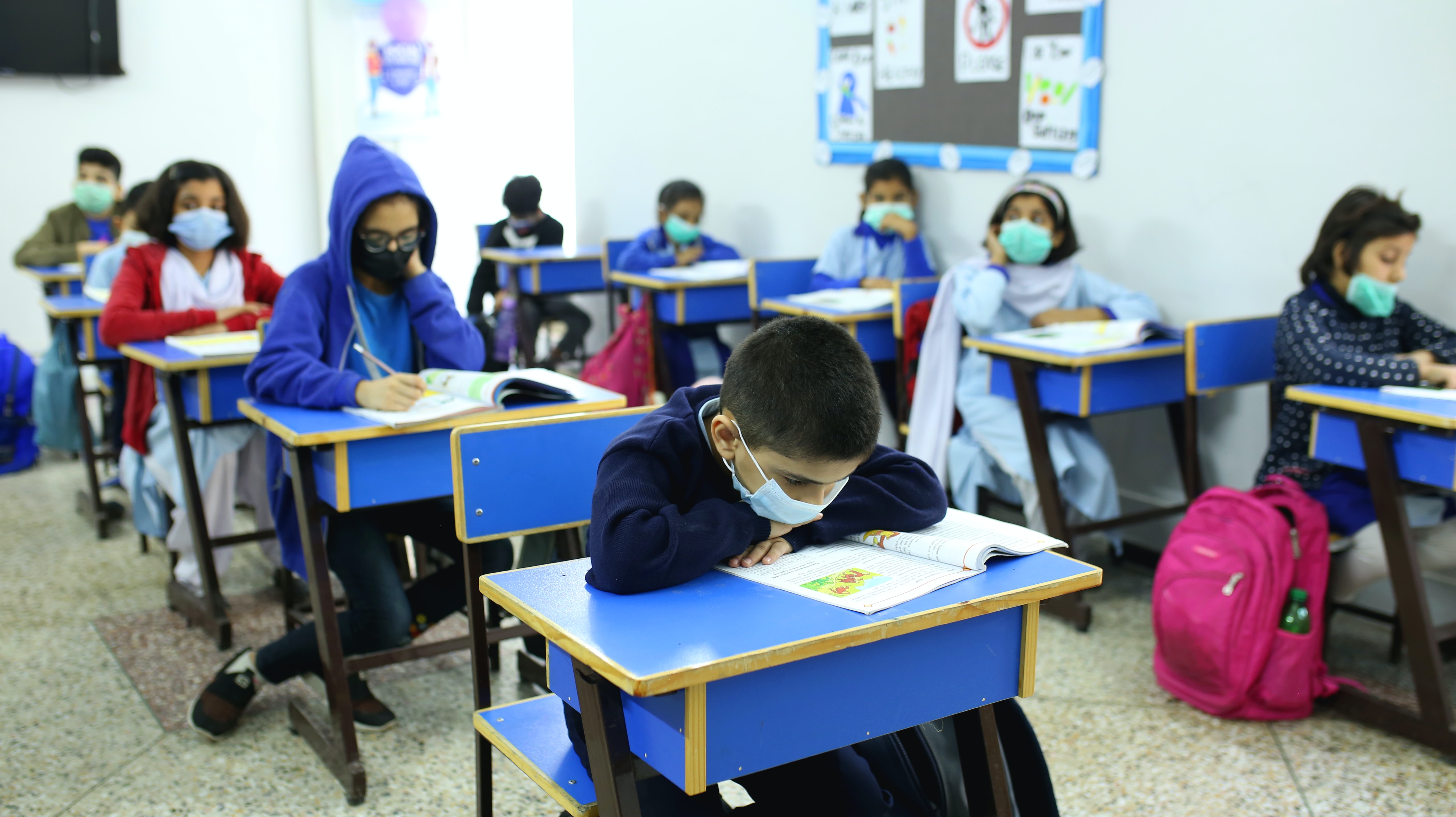
During the early part of the COVID-19 pandemic, public health authorities worldwide closed schools to prevent the virus’ spread. This decision sparked intense debate over the role of school children in transmission – a risk that is still poorly understood. In the new study, researchers used molecular, environmental and epidemiological data to understand how the virus that causes COVID-19 spread in two secondary schools in Switzerland, from January to March 2022 during the Omicron wave. The study included 90 students and looked at viral transmission in classes with and without masking or air cleaners.
The researchers consistently detected salivary and airborne SARS-CoV-2, the virus that causes COVID-19, in air samples and samples from students throughout the study period. However, concentrations of airborne SARS-CoV-2 were, on average, 70% lower with mask mandates and 40% lower with air cleaners. The findings suggest that between 2 and 19 infections could be avoided while masks were mandated.
The levels of airborne virus detected within the schools indicated that SARS-CoV-2 was continually transmitting among students, and that mask mandates were highly effective at reducing airborne concentrations, thus potentially preventing transmission. The researchers conclude that this monitoring approach could be used during future epidemics of respiratory viral infections to help understand transmission patterns, and whether suggested infection control measures are effective in reducing transmission.
Coauthor Lukas Fenner adds, “Although our study has several limitations, including the observational nature of our study and that detecting SARS-CoV-2 in the air or aerosols does not necessarily mean transmission, we found that mask mandates reduced transmission in classrooms, and both masks and air cleaners reduced aerosol concentrations.”
Attachments
Note: Not all attachments are visible to the general public. Research URLs will go live after the embargo ends.


