Sign In



 International
News release
From:
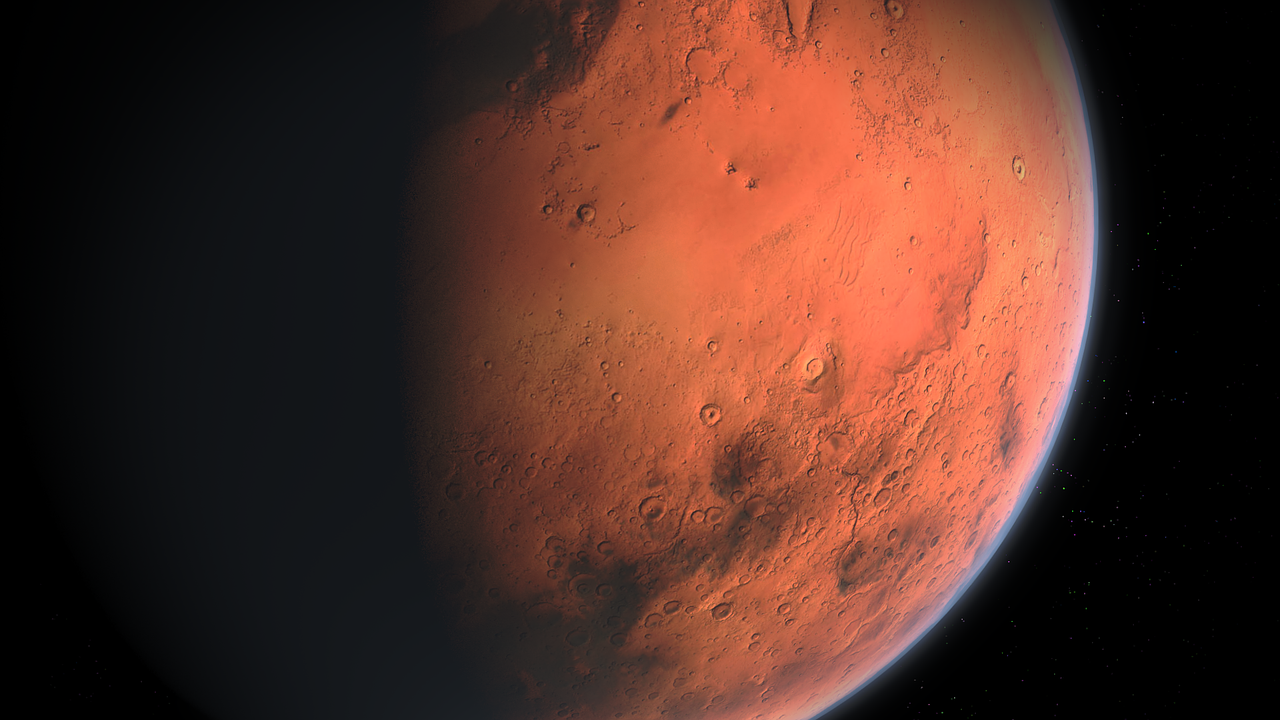
Planetary science: InSights into the geology of the Elysium Planitia on Mars *IMAGE*
Images of the subsurface of Elysium Planitia on Mars to around 200 metres in depth, derived using seismic data from NASA’s InSight mission, suggest the presence of a shallow sedimentary layer sandwiched between lava flows. The findings, published in an analysis in Nature Communications aid our understanding of Martian geological history.
The InSight lander arrived on Mars on 26 November 2018, touching down in the Elysium Planitia region. Mars has been the target of numerous planetary science missions, but NASA’s InSight mission is the first to specifically measure the subsurface using seismic methods.
Cédric Schmelzbach and colleagues used seismic data to analyse the composition of Elysium Planitia. Using these data, the authors examine the shallow subsurface to around 200 metres in depth. They found the site has a regolith layer, of dominantly sandy material, approximately 3 metres thick, above a layer around 15 metres thick of coarse blocky ejecta (rocky blocks that were ejected after a meteorite impact and fell back to the surface). Below these top layers, they identified around 150 metres of lava flows, which are largely consistent with the expected subsurface structure. The authors use crater counts from existing literature to date the shallow layers to approximately 1.7 billion years ago, during the Amazonian period, and deeper lava flows approximately 3.6 billion years ago during the Hesperian period. The authors also identified an additional 30–40 metres thick layer, which has low seismic velocity, suggesting it contains weak sedimentary materials relative to the stronger basalt layers. The authors propose this layer could be composed of sedimentary deposits sandwiched between the Hesperian and Amazonian basalts, or within the Amazonian basalts themselves.
Multimedia