Long-term exposure to polluted air may lead to depression in older people

Publicly released:
International
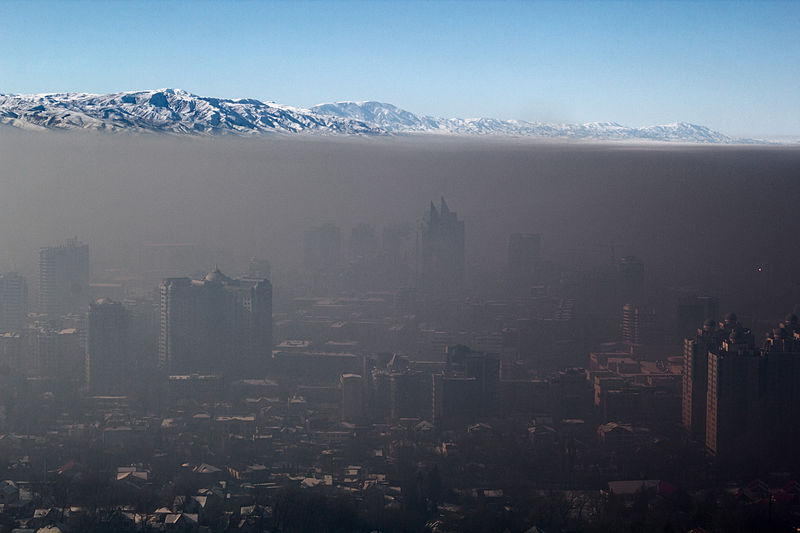
Smog_over_Almaty By Igors Jefimovs - Own work, CC BY 3.0

Long-term exposure to air pollution may lead to depression in older people, according to US scientists. The team looked at the health records of nearly 9 million people in the USA, around 1.5 million of whom developed depression after the age of 64. They matched these health records with an estimate of people's long-term exposure to fine particulate matter (PM2.5), nitrogen dioxide (NO2), and ozone (O3), which they calculated by looking at where people had lived throughout their lives. The scientists accounted for several other factors thought to be important in determining whether someone will develop depression. They found that for each five-unit increase in fine particulate matter exposure, depression risk increased by 0.9%, for the same increase in nitrogen dioxide exposure it increased by 0.6%, and for the same increase in ozone exposure, it increased by 2%.

News release

From: JAMA

Association of Long-term Exposure to Air Pollution With Late-Life Depression in Older Adults

About The Study: Harmful associations were observed between long-term exposure to air pollution and increased risk of a late-life depression diagnosis in this study including 8.9 million Medicare enrollees. 

Attachments

Note: Not all attachments are visible to the general public. Research URLs will go live after the embargo ends.

Research JAMA, Web page The URL will go live after the embargo ends
Journal/
conference:
JAMA Network Open
Research:Paper
Organisation/s: Harvard T.H. Chan School of Public Health, USA, Emory University, USA
Funder: This work was supported by NIH grants (R01 AG074357, R01 ES032418, R21 ES032606, P30 ES000002) and US Environmental Protection Agency (EPA) grant RD-83587201.
Media Contact/s
Contact details are only visible to registered journalists.