Sign In



 Australia; QLD
News release
From:
Leafy vegetables could be used to extract toxic metals from contaminated soil for use in medical technologies and energy projects.
University of Queensland geochemist Dr Amelia Corzo-Remigio said powerful X-rays confirmed crops in the Brassicaceae family had strong ‘phytomining’ potential because of the mechanisms they evolved to extract traces of the metal thallium from polluted soil.
Dr Corzo-Remigio said kale, cabbage, broccoli, cauliflower, mustard, and Brussels sprouts were already known to ‘accumulate’ thallium and were therefore closely monitored for potential consumer and environmental health risks.
Despite this awareness, Dr Corzo-Remigio said there was a distinct lack of research into the mechanisms of thallium uptake and the potential for this trait to be used in mineral extraction.
“Thallium is extremely toxic, but it is also a valuable and industry critical metal used in medical technologies, optical glass, and semiconductors,” Dr Corzo-Remigio said.
“So, while posing a significant health risk to humans, many of these same Brassicaceous plants could present a clear opportunity in sustainable mining.”
Using advanced analytical techniques, Dr Corzo-Remigio and researchers at UQ’s Sustainable Minerals Institute (SMI) found the Brassica oleracea – or kale - accumulated thallium in crystallised form, and therefore may be compatible with metallurgical extraction methods.
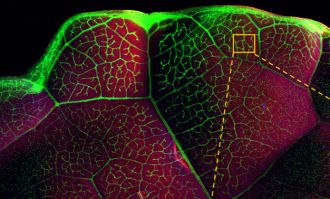
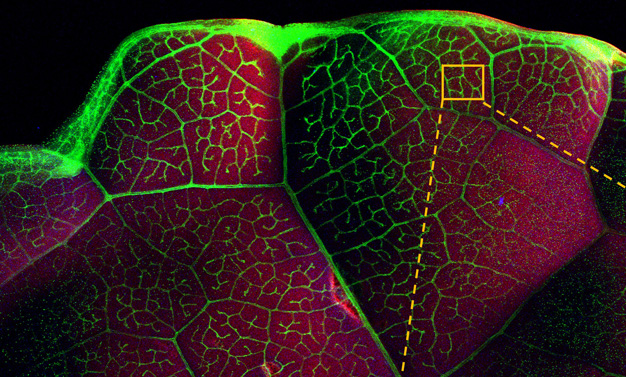
“Simultaneous use of micro-X-ray fluorescence (μXRF) and X-ray diffraction mapping (XDM) on live kale plants gave us an unprecedented view of how and where thallium is located in these plants,” Dr Corzo-Remigio said.
“In particular, we found thallium chloride crystal deposits along the veins inside the leaves.
“This indicates potential for phytomining and, potentially, a sustainable thallium supply.”
Phytominig and bioremediation experts at SMI’s Centre for Environmental Responsibility in Mining said non-conventional mining methods such as phytomining will become key to securing certain metals needed to advancing medical technologies and transitioning our economy to a renewable energy supply.
Dr Corzo-Remigio said phytomining with Brassicaceous plants also has the potential to help tackle emerging environmental problems arising from mining activities.
“There’s a dual need to remediate and rehabilitate soils while also supplying critical elements in the most sustainable way possible,” Dr Corzo-Remigio said.
“It looks like plants in the Brassicaceae family can be part of the answer.”
The research is published in the journal Metallomics
Collaborations and acknowledgements
Dr Corzo-Remigio’s work was supported by Dr Antony van der Ent, an Honorary Senior Fellow at SMI’s Centre for Environmental Responsibility in Mining who is based at the Wageningen University and Research Laboratory in The Netherlands.
Other collaborators were based at the University of Adelaide, Queensland University of Technology, and at the Deutsches Elektronen-Synchrotron (DESY) in Germany.
Multimedia